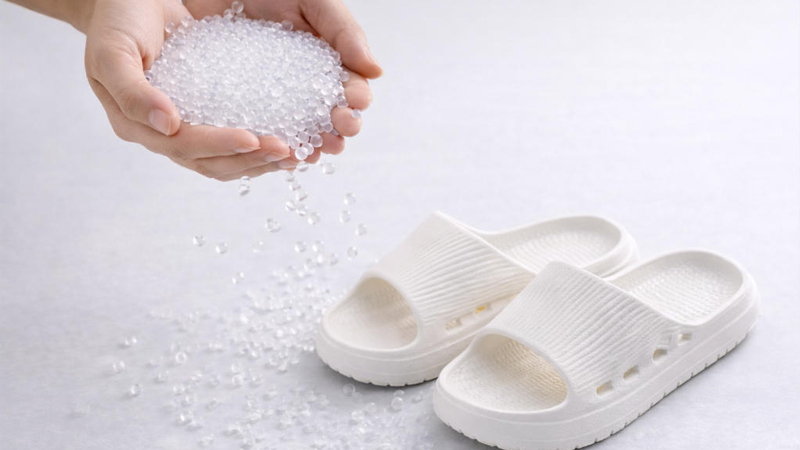
When buyers ask which slipper material is the safest place to start with, EVA is often the first option worth evaluating.
Not because it is perfect. It is not.
But in real OEM projects, EVA usually gives one of the best balances of comfort, weight, customization flexibility, and production efficiency.
Featured Snippet
EVA in slippers refers to Ethylene Vinyl Acetate foam, a lightweight and flexible material widely used for slipper soles and footbeds. It is valued for cushioning, low weight, water resistance, and cost efficiency, making it one of the most common materials in indoor, casual, and OEM slipper manufacturing.
For many wholesale projects, material choice affects much more than feel underfoot. It also changes shipping weight, mold decisions, anti-slip performance, and long-term durability.
For a broader material overview, see our complete guide to slipper materials.
What Is EVA Material in Slippers
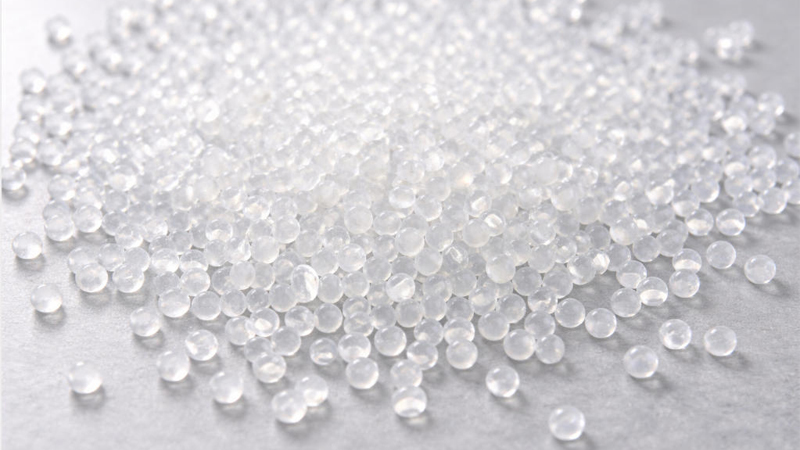
EVA stands for Ethylene Vinyl Acetate, a copolymer foam material used across footwear, packaging, sports equipment, and many everyday products.
In slippers, EVA is most commonly used for:
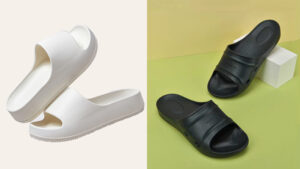
- one-piece molded slippers
- midsoles
- footbeds
- lightweight outsoles
- indoor comfort styles
The reason EVA appears so often in slipper manufacturing is simple: it sits in a very practical middle ground.
It is softer than many rigid plastics, lighter than rubber, easier to color than some traditional sole materials, and easier to scale for mass production than many premium constructions.
From a buyer’s point of view, EVA is not just “soft foam.” It is a material platform that can be adjusted in density, hardness, thickness, and surface texture depending on the target product.
Some EVA slippers are made for:
- soft indoor comfort
- spa or hotel use
- lightweight travel slippers
- casual retail slides
- low-cost promotional slippers
Others are engineered with firmer formulations for more support and longer wear.
That is why two EVA slippers can look similar but feel completely different in actual use.
Quick Definition Table
| Item | EVA in Slippers |
|---|---|
| Full name | Ethylene Vinyl Acetate |
| Material type | Foamed polymer |
| Main benefits | Lightweight, cushioning, water resistance |
| Common uses | Slippers, midsoles, footbeds, sandals |
| OEM advantage | Easy to mold and customize |
To compare EVA with other common sole materials, visit our slipper materials guide.
Key Physical Properties of EVA Foam
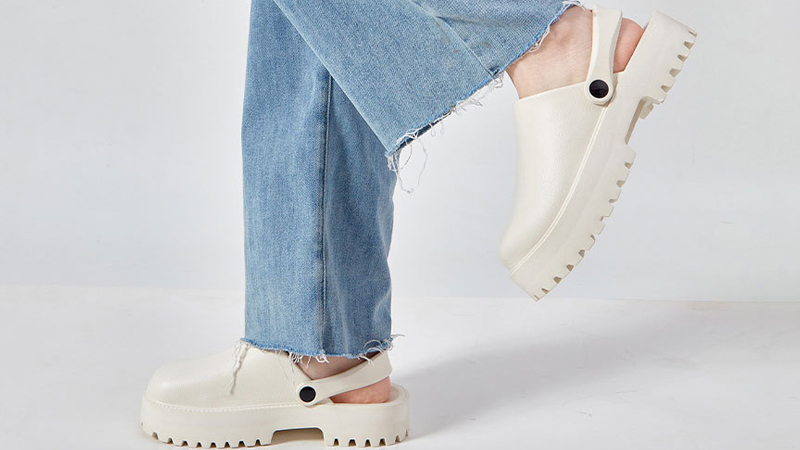
In simple terms, EVA is light, soft, resilient, and commercially flexible.
More specifically, the most important physical properties are the following.
1. Low Weight
This is usually the first thing buyers notice.
Compared with rubber, EVA significantly reduces product weight. In wholesale projects, that matters not only for comfort but also for shipping cost. A lighter slipper can lower freight cost, especially in large-volume orders.
2. Cushioning
EVA compresses under pressure and helps absorb impact. This is why it is widely used in footbeds and midsoles. It is especially useful in slippers designed for home wear, spa use, and casual walking.
3. Rebound
Good EVA does not only compress. It also recovers. That recovery helps create a softer and less tiring walking experience.
4. Water Resistance
Because EVA has a closed-cell foam structure, it resists water absorption much better than fabric-based materials. This makes it practical for bathroom, poolside, and easy-clean slipper applications.
5. Adjustable Density and Hardness
This is where EVA becomes much more interesting from an OEM perspective.
Manufacturers can adjust formulation and processing to create:
- softer, lighter EVA for comfort styles
- firmer EVA for support
- denser EVA for better durability
- hybrid structures for balanced performance
EVA Property Overview
| Property | Typical EVA Behavior | Why It Matters for Slippers |
|---|---|---|
| Weight | Very light | Improves comfort and lowers freight |
| Cushioning | High | Better indoor comfort |
| Rebound | Medium to high | Less foot fatigue |
| Water absorption | Low | Good for easy-clean use |
| Hardness range | Adjustable | Supports different market positions |
| Abrasion resistance | Moderate | Suitable for indoor and light casual use |
This also explains why EVA is commonly chosen for custom slipper OEM projects where buyers want cost control without giving up comfort.
EVA Density and Hardness in Slipper Design
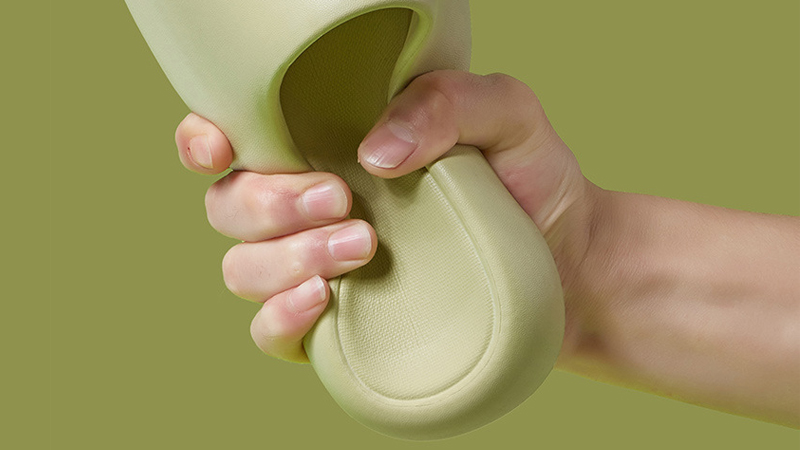
Density and hardness matter much more in product development than many buyers initially expect.
When a buyer says:
- “I want softer”
- “I want more stable”
- “I want a more premium feel”
- “I want lower complaint rate”
those requests are often connected to density and hardness, even if those exact technical terms are not used.
Density
In simple terms, density affects how light, soft, and durable the EVA feels.
Lower-density EVA usually feels:
- lighter
- softer
- more cushioned
But it may also:
- wear faster
- feel less stable
- deform more easily under repeated pressure
Higher-density EVA usually feels:
- firmer
- more stable
- more durable
But it may also:
- feel less plush
- weigh a bit more
- lose some of the soft first impression
Hardness
Hardness is often measured using Shore scales in footwear testing. Buyers do not need to memorize the scale, but they do need to understand the result:
- softer EVA = more comfort, less support
- firmer EVA = more support, less immediate softness
Practical Design Logic
For indoor comfort slippers, a softer EVA can work well.
For slippers that need more structure, or for heavier users, slightly firmer EVA often delivers better long-term performance.
Density and Hardness Trade-Off
| Design Goal | EVA Preference |
|---|---|
| Soft indoor comfort | Lower density, softer hardness |
| Better structural support | Medium density, firmer hardness |
| Improved durability | Higher density |
| Lightweight travel slipper | Lower density |
| More stable casual slide | Medium density or hybrid structure |
This is one reason why many buyers later compare EVA vs PVC slippers or EVA vs rubber sole when deciding how much softness they really need.
How EVA Slippers Are Manufactured
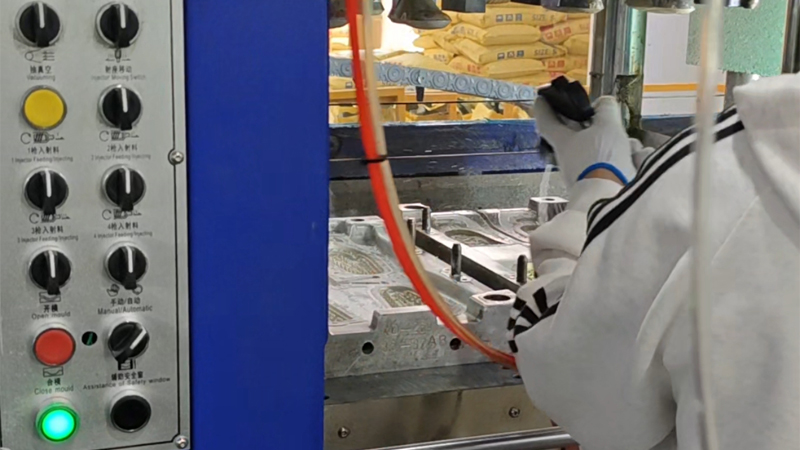
EVA slippers are not made in just one way. Different factories use different molding and foaming methods depending on product type, budget, and target market.
The most practical way to understand this is through the production logic that directly affects consistency, cost, and product positioning.
Basic EVA Slipper Production Flow
- EVA raw material preparation
- Additives and color mixing
- Foaming or molding process
- Shaping and cooling
- Surface finishing or trimming
- Logo, texture, or packaging customization
Common Manufacturing Routes
Injection Molded EVA
This is common for one-piece slippers and simple molded structures.
Advantages:
- fast for mass production
- good consistency
- suitable for repeatable OEM projects
Compression Molded EVA
This route can be used when manufacturers need more control over shape or structure.
Advantages:
- useful for some thicker sole constructions
- workable for more customized shaping
Flat-Sheet or Foam Block Processing
Some EVA applications begin as foam sheets, then get cut, laminated, or pressed for other footwear components.
This is less common for basic one-piece slides, but useful in some footwear systems.
Basic Process Comparison
| Process | Best For | Main Advantage | Typical Limitation |
|---|---|---|---|
| Injection molding | One-piece slippers | High efficiency | Less flexibility in some structures |
| Compression molding | Structured soles | Shape control | Slower than simple injection |
| Sheet processing | Laminated parts | Flexible application | More assembly steps |
Understanding the manufacturing process helps buyers evaluate EVA slipper quality, customization options, and production feasibility.
Why EVA Is Popular in Slipper Manufacturing
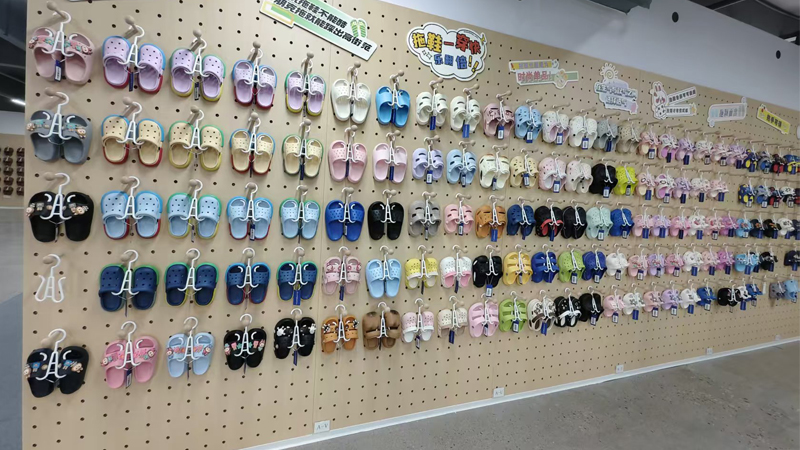
EVA is popular because it solves several manufacturing and commercial problems at the same time.
1. Lower Shipping Weight
For export buyers, weight is never a minor issue.
A lightweight EVA slipper can reduce shipping cost, especially in large orders, e-commerce replenishment, and lower-value product lines.
2. Good Mold Compatibility
EVA works well with common slipper mold development. It can support many outsole shapes, footbed curves, and one-piece structures without becoming too complicated for factories.
3. Comfortable for Mass Market Use
EVA gives a “soft enough” wearing experience that works for broad commercial categories, including:
- home slippers
- simple resort slippers
- low-to-mid retail collections
- lightweight casual slides
4. Easy Color Development
For branding, EVA offers strong color flexibility. This is useful when buyers want to match:
- seasonal collections
- private label identity
- hotel color systems
- retail trend palettes
5. Broad Product Fit
EVA is not limited to one niche. It can serve:
- budget-friendly indoor styles
- hospitality slippers
- minimalist casual slides
- branded comfort lines
Common EVA Product Fits
| Project Type | Why EVA Works |
|---|---|
| Home slippers | Soft and light |
| Hotel slippers | Efficient for bulk production |
| Casual retail slides | Good comfort-cost balance |
| Travel slippers | Lightweight and packable |
| Entry-level private label | Flexible in design and MOQ planning |
For buyers evaluating real applications, EVA is commonly used in:
- indoor slippers
- hotel slippers
- custom private label slippers
Limitations of EVA Material
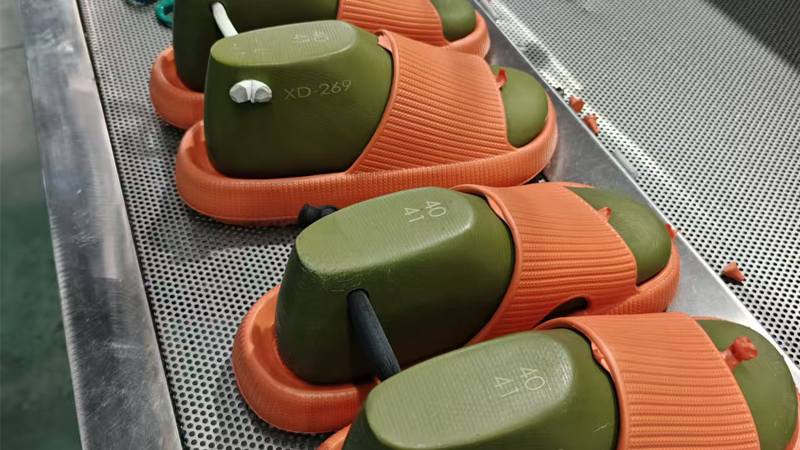
EVA has many strengths, but it is not ideal for every project.
Understanding its limitations helps buyers choose more realistic product structures and reduce avoidable complaints later.
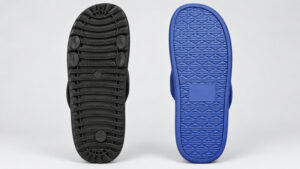
1. EVA Is Less Abrasion Resistant Than Rubber
This is one of the biggest practical limits.
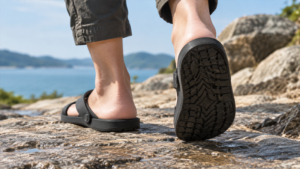
EVA works well for indoor use and light casual wear, but if the slipper is used on rough outdoor surfaces every day, the sole can wear down faster than rubber.
That is why many brands use EVA and Rubber Combination Sole: Benefits, Structure & OEM Guide structures for more demanding use.
2. Long-Term Compression Can Reduce Stability
When EVA is too soft, too light, or expanded too aggressively, it may feel less stable over time.
In real OEM projects, this can often be improved through:
- density adjustment
- lower expansion ratio
- thicker structure
- outsole geometry optimization
In real OEM projects, these issues are usually improved through density adjustment, material formulation control, and better structural design.
3. High Heat Can Affect Performance
EVA generally performs well in daily life, but extreme heat exposure can reduce dimensional stability. In some cases, prolonged heat can affect shape retention more than buyers expect.
4. Grip on Wet Smooth Floors Can Be Limited
EVA is not automatically a high-grip outsole material.
If the tread pattern, hardness, or surface texture is poorly designed, wet-floor performance may be weaker than rubber or some TPR compounds.
This can be improved through outsole engineering.
For applications requiring stronger traction, buyers may consider rubber outsole structures or hybrid sole designs.
5. Production Defects Can Appear
In manufacturing, EVA may also show defects such as:
- shrinkage after molding
- bubbles
- surface holes
- uneven cell structure
- color inconsistency
These are not reasons to reject EVA as a material. They are reminders that EVA quality depends heavily on formulation, mold control, foaming consistency, and factory experience.
EVA Limitation Snapshot
| Issue | Typical Cause | Possible Solution |
|---|---|---|
| Fast wear | Low abrasion resistance | Add rubber outsole or adjust density |
| Poor stability | Over-soft or high expansion structure | Lower foaming ratio, optimize geometry |
| Weak wet-floor grip | Smooth texture or soft sole pattern | Improve tread design |
| Shrinkage | Molding / cooling imbalance | Better process control |
| Surface bubbles / holes | Foaming inconsistency | Improve material and process stability |
For buyers interested in advanced EVA foam technology, see:
Supercritical EVA vs Traditional EVA Slippers: A Guide for OEM Buyers
When Should OEM Buyers Choose EVA
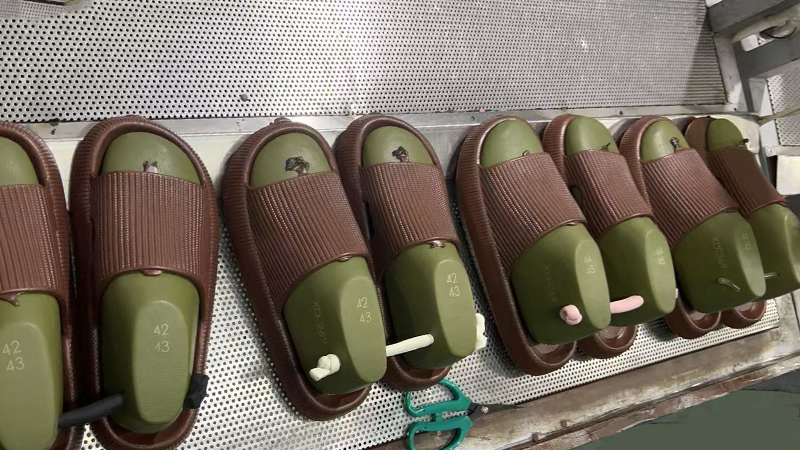
In practical sourcing, the question is not simply “Is EVA good?”
A better question is:
When is EVA the right business decision?
EVA Is a Good Choice When
- comfort matters more than extreme durability
- the project is indoor or light casual use
- lower freight weight matters
- buyers need scalable color customization
- the product needs a strong comfort-cost balance
EVA Is Less Ideal When
- the slipper will face heavy outdoor abrasion
- the use environment is constantly wet and slippery
- the buyer wants very high structural longevity
- premium positioning requires other surface textures or materials
OEM Decision Guide
| Buyer Scenario | EVA Suitability | Notes |
|---|---|---|
| Home slipper collection | High | Strong comfort and low weight |
| Hotel guest slipper | High | Good for bulk efficiency |
| Outdoor heavy-use slipper | Medium to low | Consider rubber or hybrid outsole |
| Boutique premium indoor line | Medium | Depends on desired texture and price |
| Entry-level custom slides | High | Easy to mold and color |
For project development, these related resources may also be useful:
- EVA vs Rubber Sole: Which Is Better for Comfort and Durability
- EVA and Rubber Combination Sole: Benefits, Structure & OEM Guide
EVA vs Other Slipper Materials
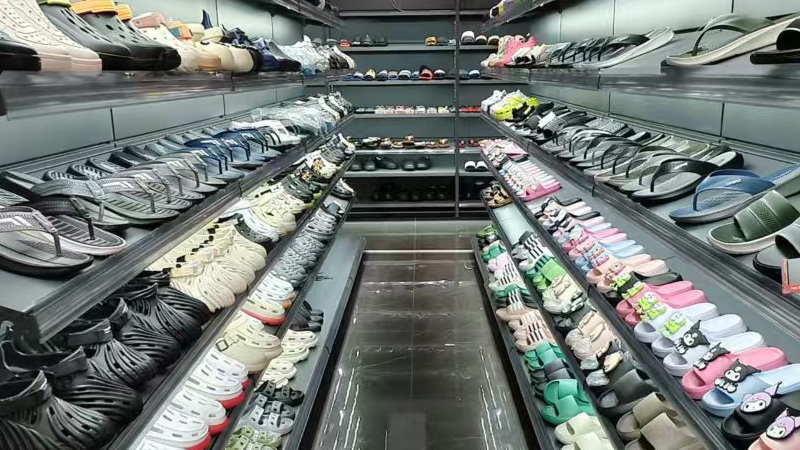
EVA is often evaluated against other common slipper materials, especially when buyers are comparing comfort, cost, durability, and use environment.
EVA vs PVC
EVA is usually softer and more comfortable. PVC is often cheaper and better suited to low-cost waterproof projects.
Continue reading:
EVA vs PVC slippers
EVA vs Rubber
EVA is lighter and more cushioning-focused. Rubber is heavier but more durable and more reliable for grip and abrasion resistance.
Continue reading:
EVA vs rubber sole
EVA vs PU
EVA is often more lightweight and cost-efficient. PU can feel more premium in some structures and may suit higher-end indoor projects better.
Continue reading:
PU vs EVA slippers
Quick Comparison Table
| Material | Main Strength | Main Limitation |
|---|---|---|
| EVA | Comfort and low weight | Less durable than rubber |
| PVC | Cost and waterproofing | Less cushioning |
| Rubber | Grip and abrasion resistance | Heavier |
| PU | Premium feel and structure | Higher cost |
Conclusion
EVA remains one of the most practical slipper materials in modern OEM manufacturing because it balances comfort, light weight, mold flexibility, and scalable production.
It is not the strongest outsole material, and it is not the answer to every product type. But for indoor slippers, casual slides, hotel use, and many private label projects, EVA is often one of the most efficient materials to start with.
For a broader material comparison, return to our complete guide to slipper materials.
EVA Slippers FAQ
What is EVA material in slippers
EVA is a lightweight foamed polymer material used in slipper soles and footbeds. It offers cushioning, low weight, and good manufacturing flexibility for OEM and wholesale projects.
Is EVA a good material for slippers
Yes. EVA is one of the most widely used slipper materials because it balances comfort, weight, customization, and cost. It is especially suitable for indoor and casual slipper designs.
Is EVA better than PVC for slippers
EVA is generally softer and more comfortable, while PVC is often cheaper and more waterproof. The better choice depends on budget, usage environment, and product positioning.
Are EVA slippers durable
They can be durable for indoor and light casual use, but they usually do not match rubber in abrasion resistance. For heavier use, many buyers consider hybrid structures.
Can EVA slippers be customized for OEM orders
Yes. EVA supports molding, color development, logo application, and different density options, which makes it highly suitable for private label and OEM slipper production.