
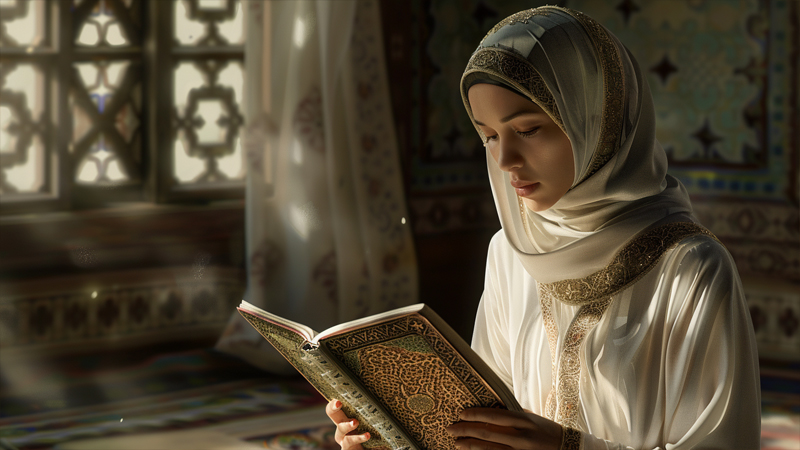
I remember sitting with my friend Yasmin, flipping through her worn Quran. "People think it’s just about cloth," she said. "But hijab is so much deeper."
Hijab is mentioned in the Quran, but not as a headscarf. It refers to modesty and behavior for both men and women, with interpretations varying across cultures and scholars.
Let’s uncover what the Quran truly says about hijab.
Yasmin pointed to a page: "These verses are like seeds – they grow differently in each person’s heart."
Key verses:
- Surah An-Nur (24:31)1: Calls for modesty, covering adornments, and lowering gaze
- Surah Al-Ahzab (33:59)2: Mentions outer garments for protection and recognition
- Surah Al-Ahzab (33:53): Discusses privacy and respectful interaction
| Verse | Main Message | Context |
|---|---|---|
| 24:31 | Modesty for women | Social conduct |
| 33:59 | Outer garments | Protection |
| 33:53 | Privacy | Interaction with Prophet’s family |
The layers of meaning
When I first read these verses, I thought they were straightforward. But Yasmin showed me how Arabic words carry multiple meanings. Khimar3 (often translated as headscarf) originally meant any covering, like a tablecloth or curtain.
The Quran doesn’t specify how much to cover – that’s where culture steps in. In 7th-century Arabia, women used their shawls (khimar) to cover their heads. The Quran advised them to draw these shawls over their chests for modesty.
How do Islamic scholars interpret these verses?
My professor once said: "If the Quran is a symphony, scholars are its conductors – each bringing their own style."
Main interpretations:
- Traditional: Headscarf is obligatory
- Progressive: Modesty is situational, not fixed
- Cultural: Local customs shape practice
The spectrum of belief
I’ve met women like Leila, who sees hijab as a divine command, and Aisha, who views it as a personal choice. Both find their answers in the same verses.
Scholars like Ibn Taymiyyah4 emphasized covering everything except hands and face. Others, like Amina Wadud5, argue that modesty is about behavior, not just clothing.
What historical context surrounds hijab in Islamic texts?
Yasmin once took me to a museum exhibit on pre-Islamic Arabia. "Hijab wasn’t invented by Islam," she said. "It was reformed."
Historical influences:
- Pre-Islamic Arabia6: Veiling was a status symbol for elite women
- Early Islam: Hijab became about equality, not class
- Ottoman Empire: Local styles influenced modern hijab
The evolution of practice
In 7th-century Medina, hijab distinguished Muslim women from others. It was practical – protecting them from harassment in crowded markets. Over time, it became a symbol of identity.
I once saw a 19th-century painting of an Egyptian woman in a flowing milaya laf. Her hijab looked nothing like today’s styles. It reminded me that faith stays the same, but cultures change.
How do modern Muslims apply Quranic teachings on hijab?
At a university panel, I heard a young woman say: "My hijab is my flag, my protest, my poetry."
Modern trends:
- Fashion hijabs: Bold colors, sportswear integration
- Digital activism: #HijabFashion7 on Instagram
- Professional adaptations: Hijabs for doctors, athletes, astronauts
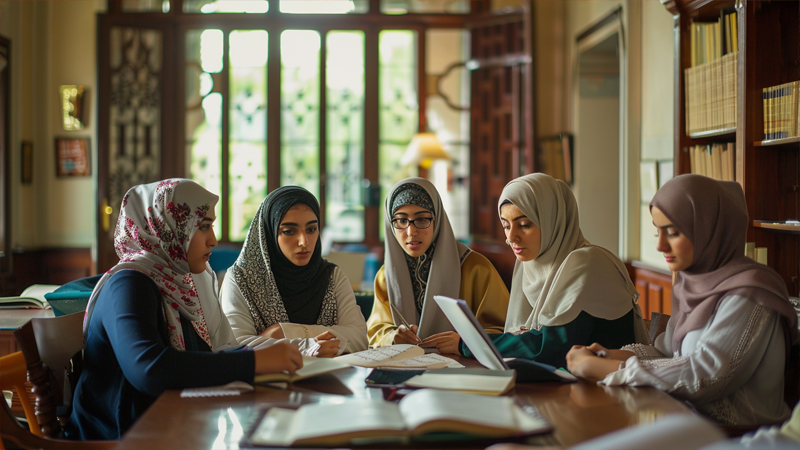
The hijab in 2023
When I visited a hijab startup in Jakarta8, I was amazed. They’ve created hijabs with UV protection, moisture-wicking fabrics, and even Bluetooth-enabled designs.
Yet, debates continue. Some argue these innovations dilute hijab’s spiritual meaning. Others see them as making faith accessible in a modern world.
Conclusion
The Quran’s hijab is a mirror – reflecting faith, culture, and personal journey. Its meaning grows with each generation.
-
Explore this verse to understand the Quran's perspective on modesty and its implications for both men and women. ↩
-
This verse highlights the importance of outer garments for protection and recognition in Islamic culture. ↩
-
Discover the original meanings of Khimar and how it relates to the concept of modesty in Islam. ↩
-
Learn about Ibn Taymiyyah's interpretations and how they influence contemporary discussions on hijab. ↩
-
Explore Amina Wadud's progressive views on modesty and how they challenge traditional interpretations. ↩
-
Understanding the historical context of hijab can provide insights into its evolution and significance in Islam. ↩
-
Investigate how social media trends like #HijabFashion shape contemporary expressions of faith and identity. ↩
-
Discover how modern hijab startups are blending tradition with innovation to meet contemporary needs. ↩