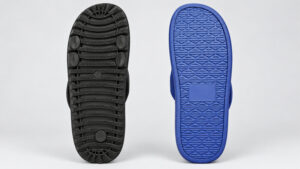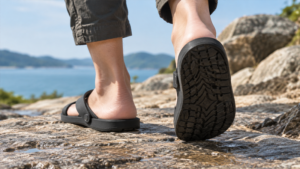
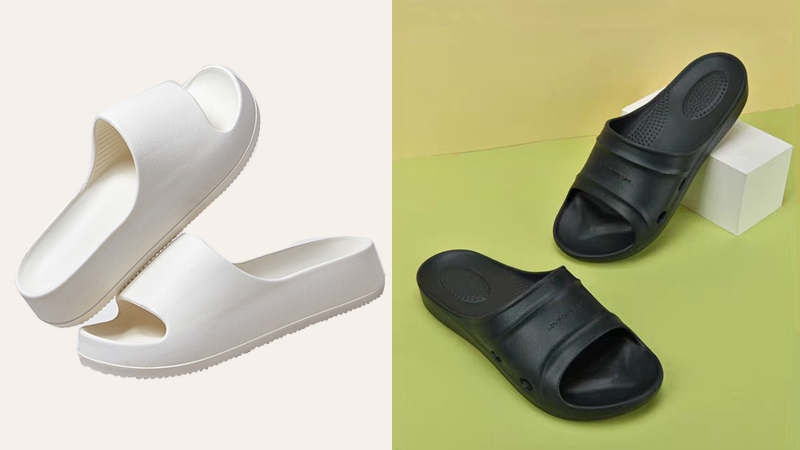
When buyers compare slipper sole materials, EVA and rubber are two of the most common options considered.
Not because one material is always better.
But because they are designed for different performance needs.
EVA is widely used when buyers need lightweight comfort, flexibility, and efficient production.
Rubber is often selected when durability, abrasion resistance, and stronger ground grip are more important.
However, in real OEM slipper production, the best solution is not always choosing only one material.
Many commercial slipper designs combine both:
- EVA provides cushioning and lightweight comfort
- Rubber improves wear resistance and traction in high-contact areas
For wholesale buyers, the right choice depends on:
- target market
- usage environment
- product positioning
- durability expectations
The following comparison will help buyers understand the strengths and limitations of each sole structure.
For a complete overview of slipper materials and their applications, see our complete guide to slipper materials.
Featured Snippet
EVA soles are usually lighter, softer, and more comfortable for daily wear, while rubber soles provide better durability, abrasion resistance, and anti-slip performance. For many wholesale slipper projects, EVA + rubber combination soles offer the best balance between comfort, durability, and performance.
EVA vs Rubber Sole: Quick Comparison
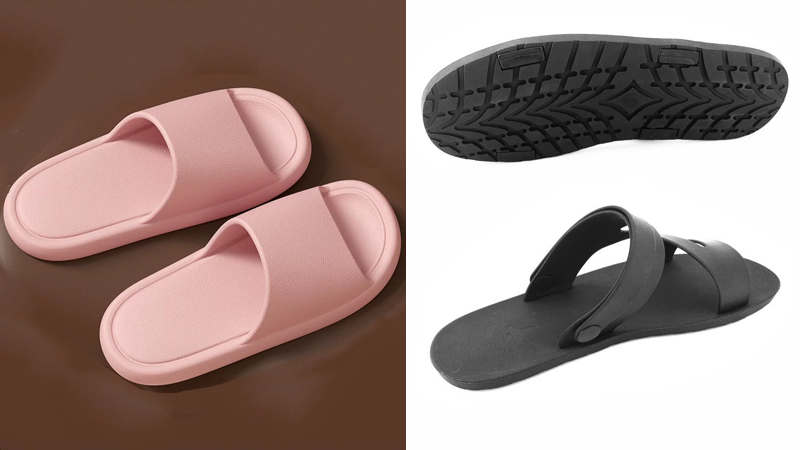
Before comparing each performance factor in detail, the table below shows the main differences between EVA and rubber soles from a wholesale buyer’s perspective.
| Factor | EVA Sole | Rubber Sole |
|---|---|---|
| Weight | Lightweight | Heavier |
| Comfort | Softer and more cushioned | Firmer and more stable |
| Flexibility | Excellent | Good |
| Durability | Moderate | Higher |
| Wear resistance | Lower than rubber | Excellent |
| Anti-slip performance | Depends on tread design | Usually stronger |
| Cost | More cost-efficient | Higher |
| Best use | Indoor, casual, lightweight slippers | Outdoor, wet-floor, durable slippers |
In simple terms:
- Choose EVA when comfort, lightweight feel, and cost control are the priority.
- Choose rubber when durability, traction, and longer outsole lifespan are more important.
- Choose EVA + rubber combination soles when you need a balance between comfort and performance.
For buyers comparing different slipper materials, our slipper materials guide provides a broader overview of EVA, rubber, PVC, PU, and fabric options.
What Does Rubber Sole Mean in Slippers?
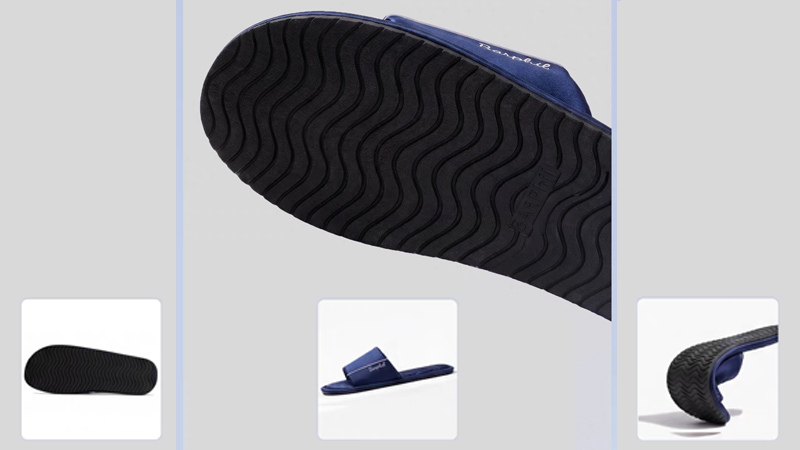
One common misunderstanding among slipper buyers is assuming that a “rubber sole slipper” means the entire slipper is made from rubber.
In actual slipper manufacturing, rubber usually refers to the bottom contact layer that improves durability and grip.
A slipper can use rubber in several different ways depending on the product goal.
The three most common structures are:
Full Rubber Sole
A full rubber sole means the outsole is made completely from rubber.
This structure provides:
- excellent abrasion resistance
- strong ground contact
- better durability for outdoor use
- longer outsole lifespan
However, full rubber soles also have some disadvantages:
- heavier product weight
- higher material cost
- less cushioning compared with EVA
Because of these trade-offs, full rubber slippers are usually used for products where durability is more important than lightweight comfort.
Typical applications include:
- outdoor slippers
- work-related footwear
- high-durability footwear programs
EVA Slippers with Rubber Anti-Slip Patch
This is one of the most common structures used in commercial slipper production.
Instead of making the entire sole from rubber, manufacturers add rubber patches only to key contact areas, such as:
- heel area
- forefoot area
- high-wear zones
This approach keeps the advantages of EVA while improving outsole performance.
Benefits include:
- lightweight comfort from EVA
- better grip from rubber
- lower cost compared with full rubber
- better balance between comfort and durability
For many bathroom slippers, hotel slippers, and casual slippers, EVA with rubber patches is often a more practical solution than using full rubber soles.
EVA Midsole + Rubber Outsole
This structure uses EVA as the cushioning layer and rubber as the bottom protection layer.
The typical design includes:
- EVA layer for softness and shock absorption
- rubber outsole for wear resistance and traction
This combination is often used for:
- premium casual slippers
- outdoor slides
- higher-quality private label footwear
For OEM buyers looking for a balance between comfort and durability, this structure is often worth considering.
Learn more about this approach in our guide to EVA and rubber combination sole structure.
EVA Sole Explained: Lightweight Comfort and Cushioning
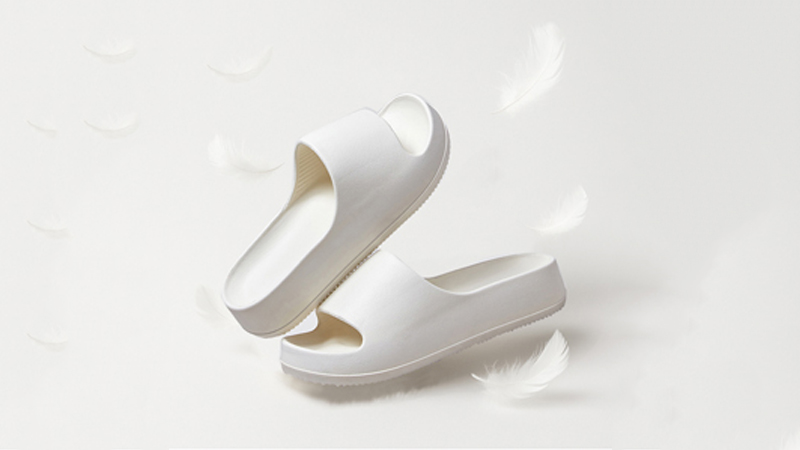
EVA is one of the most widely used materials in slipper manufacturing because it offers a strong balance between comfort, weight, flexibility, and production efficiency.
EVA stands for Ethylene Vinyl Acetate, a foam-based material commonly used in:
- one-piece molded slippers
- casual slides
- indoor home slippers
- hotel slippers
- lightweight footwear
For wholesale buyers, EVA is usually selected when the product needs to feel soft, lightweight, and comfortable during daily wear.
Learn more about EVA material properties, manufacturing, and OEM applications in our guide to What Is EVA Material in Slippers? Properties, Manufacturing & OEM Guide.
Why EVA Feels Comfortable
The main reason EVA is popular in slippers is its foam structure.
Compared with denser materials, EVA can provide:
- lightweight wearing experience
- soft underfoot cushioning
- good flexibility
- shock absorption
- comfortable barefoot feeling
This makes EVA especially suitable for products where users wear slippers for longer periods.
Common applications include:
- home comfort slippers
- casual slides
- travel slippers
- hotel guest slippers
EVA Density and Hardness Affect Performance
Not all EVA slippers feel the same.
The final performance depends greatly on:
- EVA density
- hardness level
- foaming technology
- outsole structure
Lower-density EVA usually feels softer and lighter, but may have weaker support and durability.
Higher-density EVA usually provides:
- stronger support
- better shape retention
- improved wear resistance
However, it may also feel firmer.
For wholesale projects, the goal is usually not choosing the softest EVA, but finding the right balance between:
- comfort
- durability
- support
- price
A medium-density EVA structure is often preferred because it provides a good balance for daily-use slippers.
Advantages of EVA Sole
For wholesale buyers, EVA soles offer several commercial advantages:
| Advantage | Benefit |
|---|---|
| Lightweight | Lower product weight and better wearing comfort |
| Soft cushioning | Better user experience |
| Easy molding | Efficient OEM production |
| Color flexibility | Suitable for different market styles |
| Cost efficiency | Suitable for large-volume programs |
Limitations of EVA Sole
Although EVA has many advantages, it also has some limitations.
Compared with rubber, EVA usually has:
- lower abrasion resistance
- weaker performance on rough surfaces
- less natural grip on wet floors
- higher risk of compression after long-term heavy use
This is why EVA alone is not always the best solution for products requiring maximum durability or outdoor performance.
For projects where durability and traction are the priority, buyers often consider rubber soles or EVA + rubber combination structures.
Rubber Sole Explained: Durability and Ground Protection
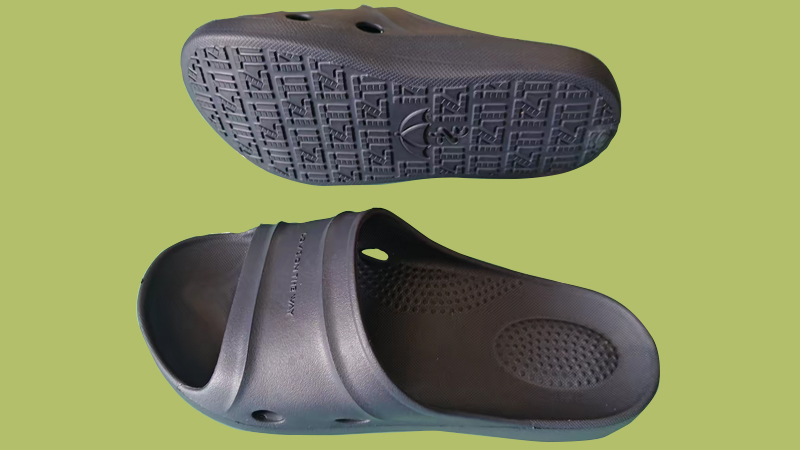
Rubber is one of the most traditional outsole materials in footwear because of its excellent durability and grip.
In slipper manufacturing, rubber is mainly used where the product needs stronger contact performance with the ground.
Compared with EVA, rubber is:
- denser
- heavier
- more wear-resistant
- better suited for high-friction environments
For a detailed explanation of rubber sole applications, see our guide to Rubber Sole Slippers: Durability & Anti-Slip Benefits.
Why Rubber Performs Better for Durability
The biggest advantage of rubber is abrasion resistance.
When slippers are used on:
- outdoor surfaces
- concrete floors
- rough ground
- frequently wet areas
the outsole experiences more friction.
Rubber can usually handle this type of wear better than EVA.
This makes rubber a strong choice for:
- outdoor slippers
- poolside slippers
- bathroom slippers
- premium casual slides
- products requiring longer service life
Rubber Sole Advantages
| Advantage | Benefit |
|---|---|
| High wear resistance | Longer outsole lifespan |
| Strong grip | Better ground traction |
| Good wet-floor performance | Suitable for more demanding environments |
| Stable structure | Better support during walking |
Limitations of Rubber Sole
Despite its durability advantages, rubber also has trade-offs.
Compared with EVA, rubber soles are usually:
- heavier
- more expensive
- less soft underfoot
For comfort-focused slippers, a full rubber structure may not provide the same lightweight and cushioned feeling that EVA offers.
This is why many slipper manufacturers use rubber only where it creates the most value, such as the outsole contact area.
EVA vs Rubber Sole: Comfort Comparison
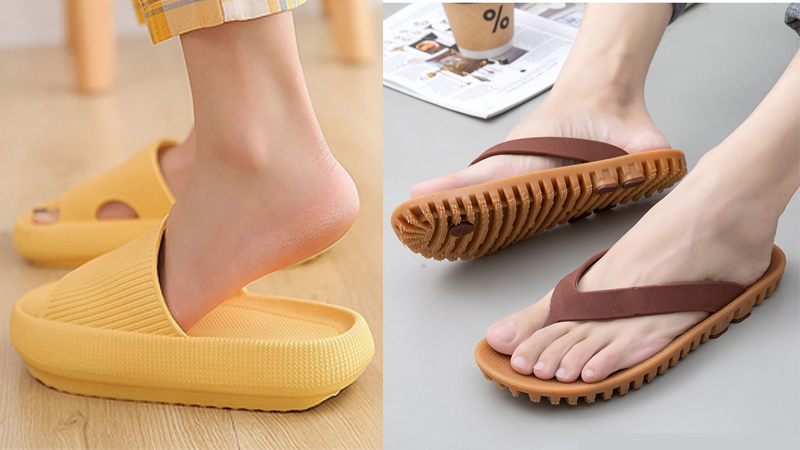
When comparing slipper comfort, EVA usually has the advantage because of its lightweight foam structure.
However, comfort is not only about softness.
A comfortable slipper also needs:
- suitable support
- stable walking feel
- proper flexibility
- appropriate hardness
EVA Comfort Advantages
EVA is usually preferred when buyers want:
- lightweight feeling
- soft cushioning
- comfortable barefoot experience
Lightweight Feel
EVA slippers are significantly lighter than rubber-based designs.
This makes them comfortable for:
- daily home use
- travel
- long periods of indoor wear
Soft Cushioning
EVA provides a softer feeling under the foot.
Many users prefer EVA because it feels:
- flexible
- springy
- less tiring
This is especially important for comfort-oriented products.
Better Barefoot Experience
Many slippers are worn without socks.
For barefoot use, EVA usually provides a warmer and softer contact feeling compared with rubber.
This is why EVA is commonly used in:
- home slippers
- hotel slippers
- casual lifestyle footwear
Rubber Comfort Characteristics
Rubber is not uncomfortable, but its strength is different.
Rubber provides:
- stronger ground feedback
- better walking stability
- firmer support
However, a full rubber sole can feel:
- heavier
- firmer
- less cushioned
For this reason, many premium slipper designs combine EVA cushioning with rubber outsole protection.
Comfort Comparison Table
| Comfort Factor | EVA Sole | Rubber Sole |
|---|---|---|
| Lightweight feeling | Excellent | Moderate |
| Softness | Excellent | Moderate |
| Cushioning | Excellent | Good |
| Walking stability | Good | Excellent |
| Barefoot comfort | Excellent | Moderate |
| Long indoor wear | Excellent | Good |
| Outdoor comfort | Good | Excellent |
For wholesale buyers:
- If the main selling point is comfort and lightweight feel, EVA is usually the better choice.
- If the main selling point is stable walking and durability, rubber has an advantage.
- If the product needs both, EVA + rubber combination soles are often the most balanced solution.
EVA vs Rubber Sole: Durability Comparison
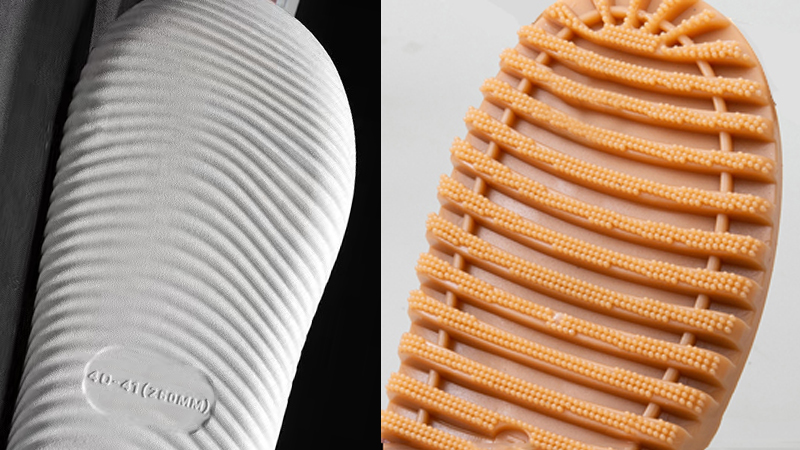
Durability is one of the biggest differences between EVA and rubber soles.
While EVA focuses more on comfort and lightweight performance, rubber is usually selected when the product needs stronger resistance against wear and repeated impact.
However, durability does not only depend on the material itself.
It also depends on:
- material quality
- density and hardness
- outsole design
- usage environment
- production quality
EVA Sole Durability
EVA performs well for everyday indoor and casual use.
For normal usage scenarios, EVA can provide:
- comfortable cushioning
- good flexibility
- lightweight performance
- sufficient durability for daily wear
However, because EVA is a foam material, it is generally softer than rubber.
Over long periods of heavy use, low-density EVA may experience:
- compression
- shape deformation
- faster outsole wear
- reduced support
This is why choosing the right EVA formulation is important.
For example:
- very soft EVA provides a comfortable first impression
- medium-density EVA usually offers a better balance between comfort and lifespan
- higher-density EVA provides stronger support and durability
For wholesale buyers, the goal should not simply be choosing the softest EVA, but choosing the EVA structure that matches the intended use.
Rubber Sole Durability
Rubber has a natural advantage when it comes to wear resistance.
Compared with EVA, rubber is usually better at handling:
- repeated friction
- outdoor walking
- rough surfaces
- frequent contact with wet floors
This makes rubber suitable for products where customers expect longer outsole life.
Typical applications include:
- outdoor slippers
- bathroom slippers
- poolside footwear
- premium casual slides
Durability Comparison Table
| Factor | EVA Sole | Rubber Sole |
|---|---|---|
| Daily indoor use | Excellent | Excellent |
| Outdoor walking | Moderate | Excellent |
| Abrasion resistance | Moderate | Excellent |
| Shape retention | Depends on density | Excellent |
| Long-term heavy use | Moderate | Better |
| Lightweight advantage | Excellent | Lower |
Does Rubber Always Mean a More Durable Slipper?
Not necessarily.
A well-designed EVA slipper can still provide excellent durability for its intended market.
For example:
- indoor home slippers do not always need a heavy rubber outsole
- lightweight travel slippers benefit from EVA’s low weight
- hotel slippers may prioritize comfort over maximum wear resistance
The correct question is:
Is the sole durable enough for the expected usage scenario?
A bathroom slipper, an indoor home slipper, and an outdoor slide have completely different durability requirements.
EVA vs Rubber Sole: Anti-Slip Performance
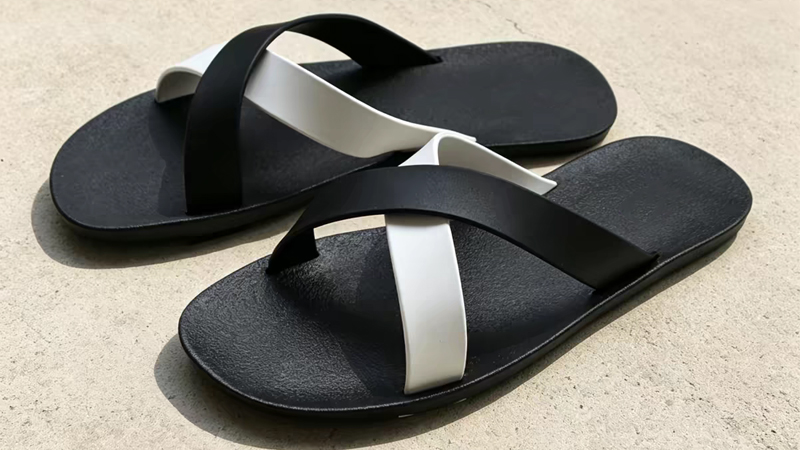
Anti-slip performance is one of the main reasons buyers consider rubber soles.
However, an important point is:
Material alone does not determine slip resistance.
The final anti-slip performance depends on:
- outsole material
- tread pattern
- rubber compound
- hardness
- contact area
- testing conditions
For wholesale buyers, choosing the right sole structure requires understanding both the material and the outsole design.
EVA Anti-Slip Performance
EVA can provide acceptable grip for many everyday slipper applications.
For standard indoor use, a well-designed EVA outsole pattern can offer sufficient traction.
However, compared with rubber, EVA usually has limitations in more demanding environments.
Potential challenges include:
- wet bathroom floors
- soapy surfaces
- oily environments
- smooth tiles
For applications where users frequently walk on wet surfaces, buyers often consider adding rubber contact areas or choosing a rubber outsole structure.
Rubber Anti-Slip Performance
Rubber generally provides better friction against the ground.
This makes it popular for:
- bathroom slippers
- pool slippers
- outdoor slides
- hotel slippers
- workplace footwear
Rubber can improve traction because it offers:
- stronger ground contact
- better friction characteristics
- improved performance in certain wet conditions
However, even rubber is not automatically slip-proof.
A poor outsole design can still create slipping problems.
Why Outsole Design Matters
Two slippers made from the same material can have very different grip performance.
Important outsole design factors include:
Tread Pattern
A properly designed tread pattern can help:
- channel water away
- increase ground contact
- improve walking stability
Material Hardness
Hardness affects how the sole interacts with the ground.
A sole that is too hard may reduce surface adaptation.
A sole that is too soft may wear faster.
Usage Environment
A slipper designed for:
- dry indoor floors
has different requirements from one designed for:
- wet bathroom floors
- oily kitchens
- outdoor surfaces
For projects where bathroom safety is the priority, buyers can also compare our guide on PVC vs Rubber Bathroom Slippers: Which Has Better Anti-Slip Performance.
Anti-Slip Comparison Table
| Factor | EVA Sole | Rubber Sole |
|---|---|---|
| Dry indoor floor | Good | Excellent |
| Wet floor | Depends on design | Usually better |
| Bathroom use | Needs good tread design | Stronger option |
| Outdoor surface | Moderate | Excellent |
| Long-term grip | Moderate | Better |
Why Most Slippers Use EVA + Rubber Combination Sole
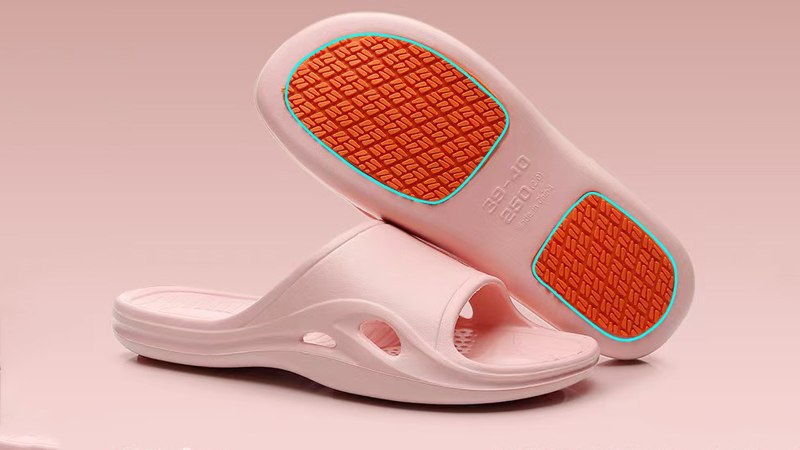
When buyers compare EVA and rubber, the answer is often not choosing one material over the other.
Many commercial slipper designs combine both materials.
The reason is simple:
EVA and rubber solve different problems.
EVA provides:
- comfort
- lightweight feel
- cushioning
Rubber provides:
- durability
- traction
- wear resistance
By combining them, manufacturers can create a more balanced slipper that meets both user expectations and commercial requirements.
Typical EVA + Rubber Sole Structure
A common EVA and rubber combination structure includes:
- Upper material
- EVA footbed or midsole
- Rubber outsole or rubber anti-slip patches
Each layer has a specific function:
| Component | Main Function |
|---|---|
| Upper | Appearance and foot support |
| EVA layer | Cushioning and comfort |
| Rubber layer | Ground contact and durability |
Why EVA + Rubber Is Popular in OEM Production
For many wholesale and private label projects, EVA + rubber provides a better balance between performance and cost.
Keeps the Lightweight Advantage
Compared with full rubber slippers, EVA + rubber designs remain much lighter.
This improves:
- wearing comfort
- packing efficiency
- shipping weight
- customer acceptance
For cross-border footwear projects, product weight can also directly affect logistics cost.
Improves Wear Resistance
Rubber is placed where it creates the most value:
- heel contact area
- forefoot area
- high-friction zones
This improves outsole lifespan without making the entire slipper unnecessarily heavy.
Controls Production Cost
A full rubber sole usually increases:
- material cost
- product weight
- production complexity
Using rubber only in important contact areas helps buyers achieve better cost-performance.
This is especially useful for products targeting the mid-range market.
Better Product Positioning
For private label and brand-focused buyers, EVA + rubber structures create a stronger product story:
- lightweight comfort
- improved durability
- better grip
- higher perceived quality
This structure is especially suitable for brands that want to upgrade from basic EVA slippers without moving into expensive footwear categories.
For a deeper explanation of this design approach, see our guide to EVA and Rubber Combination Sole Structure Explained.
OEM Considerations for EVA and Rubber Sole Projects
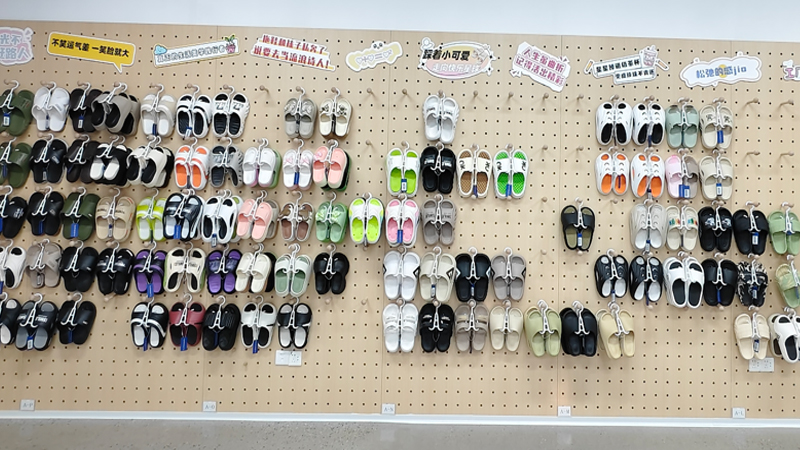
For wholesale buyers, choosing EVA or rubber is not only a material decision.
It also affects:
- production process
- product cost
- quality control
- mold design
- shipping weight
- long-term customer satisfaction
A successful slipper project is not simply about selecting the “best” material.
It is about selecting the right sole structure for the target market.
EVA Sole OEM Considerations
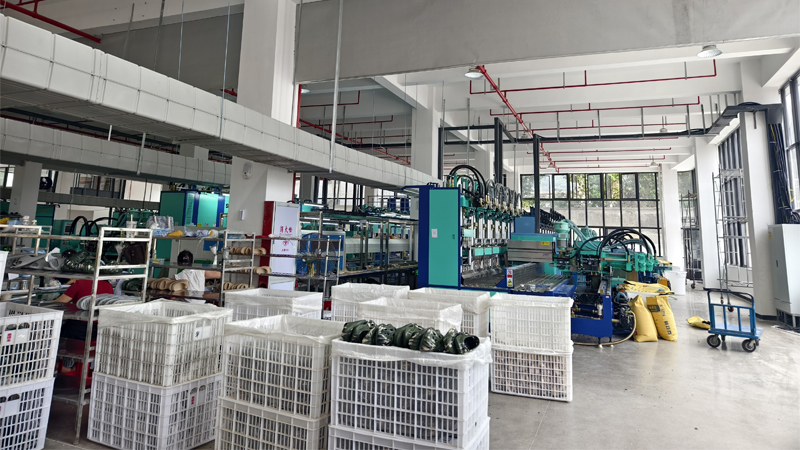
EVA is widely used in OEM slipper production because it is suitable for efficient molding and large-scale manufacturing.
Common advantages for OEM buyers include:
- easy color customization
- lightweight shipping
- flexible product design
- suitable for one-piece molded structures
- efficient production for large orders
However, buyers should pay attention to several technical factors.
EVA Density and Hardness Selection
One of the most important factors in EVA slipper production is finding the right balance between softness and durability.
A very soft EVA structure may provide a comfortable first impression, but it may also have:
- weaker support
- faster compression
- shorter lifespan under heavy use
A harder EVA structure can improve:
- support
- shape retention
- durability
but may reduce softness.
For most wholesale slipper projects, a balanced EVA formulation is usually more practical than choosing the softest possible material.
Rubber Sole OEM Considerations
Rubber improves outsole performance, but adding rubber also introduces additional production requirements.
Important factors include:
- rubber thickness
- bonding process
- outsole design
- quality inspection
For OEM buyers, rubber is not only a material choice. It also changes the manufacturing process and quality-control requirements.
Rubber Thickness Selection
The correct rubber thickness depends on product positioning.
Common approaches include:
| Rubber Structure | Typical Application | Main Advantage |
|---|---|---|
| Thin rubber patch | Lightweight slippers | Low weight and cost |
| Medium rubber patch | Daily outdoor or bathroom slippers | Balance between durability and comfort |
| Thick rubber outsole | Outdoor or premium slippers | Maximum wear resistance |
For EVA slippers with rubber anti-slip patches, manufacturers usually avoid making the rubber layer too thick because the goal is to improve durability without losing EVA’s lightweight advantage.
EVA + Rubber Bonding Quality: A Key OEM Risk
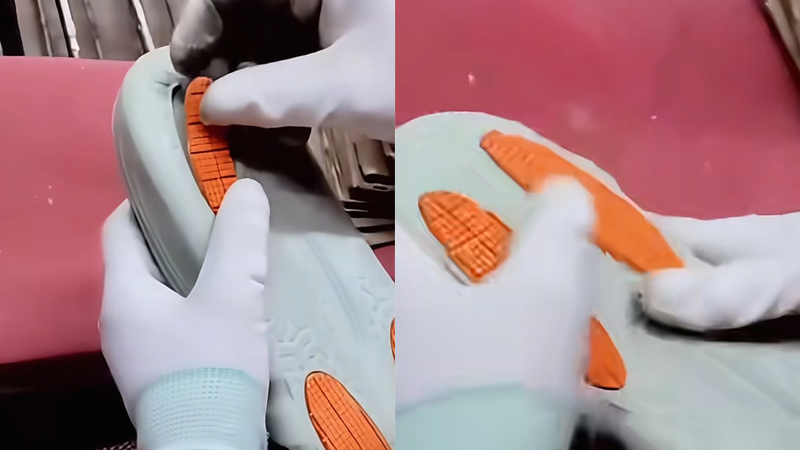
For EVA + rubber combination slippers, bonding quality is one of the most important quality-control points.
The challenge is that EVA and rubber have different material characteristics.
EVA has:
- low surface energy
- soft foam structure
- elastic compression behavior
These characteristics make it more difficult for adhesives to create a strong long-term bond.
If the bonding process is not controlled properly, problems may appear after production, such as:
- rubber patch separation
- edge lifting
- outsole peeling
How Factories Improve EVA and Rubber Bonding
A professional production process usually includes several steps.
1. Surface Preparation
The EVA surface needs treatment to improve adhesion.
This may include:
- surface roughening
- cleaning
- primer or treatment application
The purpose is to help the adhesive create a stronger connection.
2. Rubber Surface Treatment
The rubber side also needs proper preparation before bonding.
Without suitable treatment, the adhesive may not create enough bonding strength.
3. Adhesive Application and Pressing
After applying suitable adhesive:
- EVA and rubber are positioned together
- pressure is applied
- the product is fixed during bonding
Proper pressing helps reduce:
- gaps
- weak bonding areas
- future peeling problems
4. Quality Inspection
A reliable QC process should include:
- visual inspection
- bending test
- adhesion checking
- random destructive testing when necessary
For OEM buyers, this is why supplier capability matters as much as the material itself.
Common OEM Questions Buyers Should Ask
Before placing a bulk order, buyers should confirm:
About Material
- Is the slipper full EVA, full rubber, or EVA + rubber?
- What EVA density and hardness are used?
- What type of rubber is used?
About Structure
- Is the rubber outsole full coverage or partial patch?
- Which areas use rubber?
- What is the rubber thickness?
About Quality
- How is EVA and rubber bonding controlled?
- Is there an adhesion test?
- What QC process is used before shipment?
About Cost
- How much additional cost does rubber add?
- Does rubber increase shipping weight significantly?
- Is the performance improvement worth the extra cost?
Common Buyer Mistakes When Choosing EVA or Rubber Sole
Choosing the wrong sole structure can create unnecessary cost or customer complaints.
Below are some common mistakes wholesale buyers should avoid.
Mistake 1: Choosing the Softest EVA Without Considering Durability
Many buyers believe:
Softer always means more comfortable.
However, extremely soft EVA may create problems such as:
- insufficient support
- faster compression
- reduced product lifespan
The best EVA slipper is usually not the softest one.
It is the one with the right balance between:
- cushioning
- support
- durability
Mistake 2: Assuming Rubber Automatically Means Better Anti-Slip Performance
Rubber generally provides better grip potential, but material alone does not guarantee safety.
Anti-slip performance also depends on:
- tread pattern
- rubber compound
- hardness
- surface condition
A poorly designed rubber outsole may still perform poorly on certain wet surfaces.
Mistake 3: Ignoring the Bonding Process
For EVA + rubber slippers, buyers often focus on:
- rubber material
- thickness
- appearance
but overlook the most important production issue:
Will the rubber stay attached after months of use?
A good supplier should have a clear bonding process and quality inspection system.
Mistake 4: Comparing Only Unit Price
A cheaper slipper is not always the cheaper solution.
A lower-cost sole may create:
- higher return rates
- more customer complaints
- weaker reviews
- lower repeat purchases
For private label and brand-focused buyers, the better question is:
Which sole structure provides the best total value for my market?
Which Sole Should Wholesale Buyers Choose?
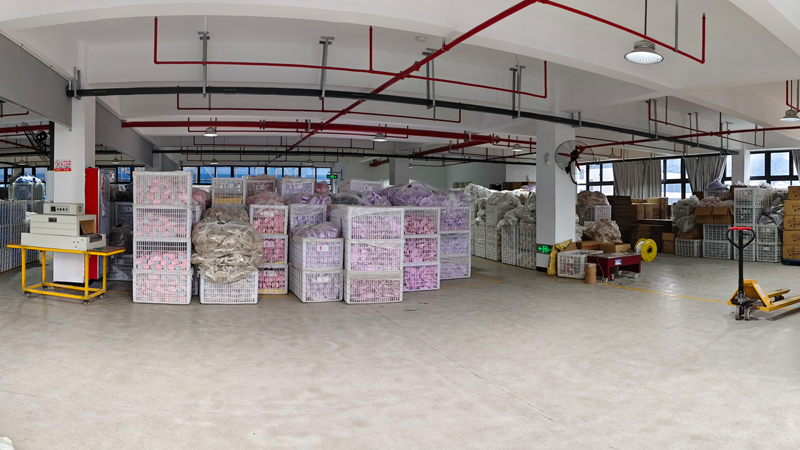
There is no single “best” sole material for every slipper project.
The right choice depends on:
- target customers
- product positioning
- usage environment
- price level
- expected product lifespan
Instead of asking:
“Is EVA better than rubber?”
Wholesale buyers should ask:
“Which sole structure fits my product strategy?”
Different markets require different performance priorities.
A hotel slipper project, an outdoor slide project, and a budget marketplace slipper project may all need completely different sole solutions.
Choose EVA Sole When Comfort and Lightweight Are the Priority
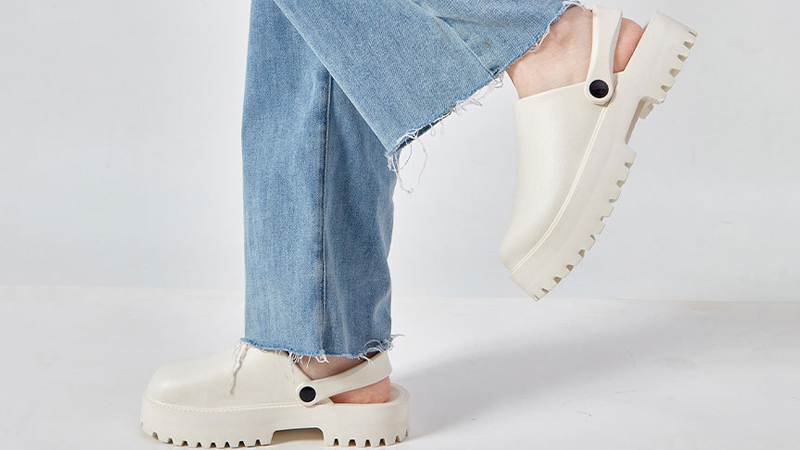
EVA is usually the better choice when the product needs:
- lightweight feeling
- soft cushioning
- affordable production
- easy color customization
- comfortable daily wear
Typical applications include:
Indoor Home Slippers
For daily home use, comfort is usually more important than maximum outsole durability.
EVA provides:
- soft underfoot feeling
- low weight
- comfortable barefoot experience
This makes EVA a common choice for home slippers and casual indoor footwear.
Casual Slides
For lifestyle and casual footwear, buyers often prioritize:
- appearance
- comfort
- easy wearing
EVA works well because it allows lightweight designs with flexible structures.
Budget-Friendly Wholesale Programs
For high-volume projects where cost control is important, EVA is often a practical solution.
It provides:
- efficient production
- competitive pricing
- acceptable durability for normal use
Choose Rubber Sole When Durability and Grip Are More Important
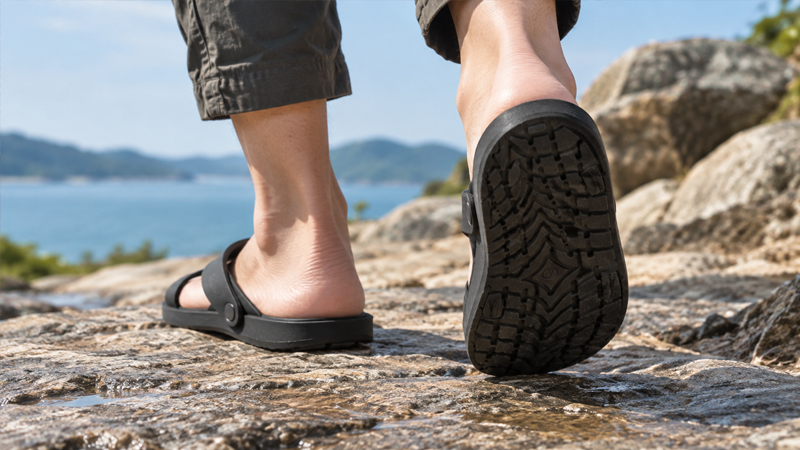
Rubber is usually the better choice when the product needs:
- stronger wear resistance
- better ground contact
- longer outsole lifespan
- improved performance in demanding environments
Typical applications include:
Outdoor Slippers
Outdoor surfaces create more friction and require stronger outsole protection.
Rubber helps improve:
- abrasion resistance
- walking stability
- durability
Bathroom and Wet-Floor Slippers
For wet environments, outsole grip becomes more important.
Rubber can provide better traction potential, especially when combined with suitable tread design.
For buyers specifically focused on bathroom slipper safety, see our guide:
PVC vs Rubber Bathroom Slippers: Which Has Better Anti-Slip Performance.
Premium Durability-Focused Products
Some brands prefer rubber soles because customers associate rubber with:
- stronger quality
- longer lifespan
- better performance
This can support higher product positioning.
Choose EVA + Rubber Combination Sole When You Need Both Comfort and Performance
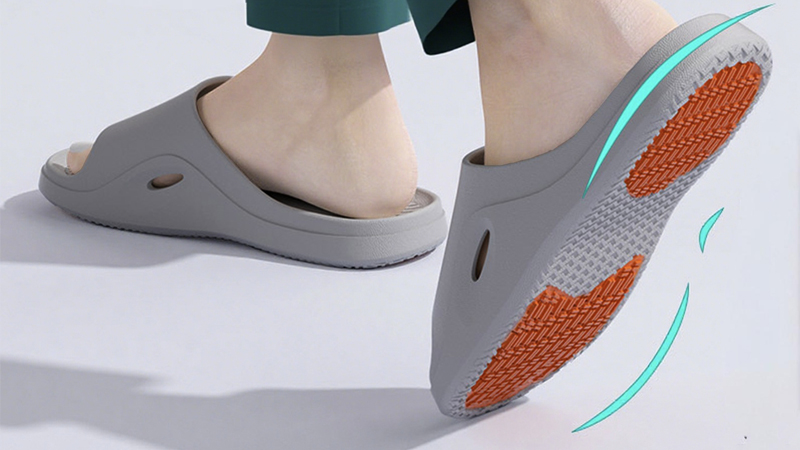
For many OEM buyers, the best solution is not choosing only EVA or only rubber.
A combination structure often provides the best balance.
EVA + rubber soles are suitable when buyers want:
- EVA comfort
- rubber durability
- better grip
- controlled product weight
- stronger market positioning
This structure is especially suitable for:
- private label slippers
- premium casual footwear
- hotel and hospitality slippers
- outdoor lifestyle products
Scenario Guide: EVA vs Rubber Sole Selection
| Wholesale Scenario | Recommended Sole Structure | Reason |
|---|---|---|
| Indoor home slippers | EVA | Lightweight and comfortable |
| Casual lifestyle slides | EVA | Soft and flexible |
| Budget marketplace slippers | EVA | Better cost control |
| Hotel guest slippers | EVA or EVA + rubber | Depends on comfort and durability target |
| Bathroom slippers | EVA + rubber or rubber | Better grip potential |
| Poolside slippers | EVA + rubber | Balance between comfort and traction |
| Outdoor slides | EVA + rubber or rubber | Better wear resistance |
| Premium private label slippers | EVA + rubber | Better overall performance |
Conclusion: Which Sole Structure Is Best for Wholesale Buyers?
EVA and rubber soles are designed for different product needs rather than competing for a single “best” position.
EVA is usually preferred for:
- lightweight comfort
- soft cushioning
- cost-efficient production
Rubber is usually selected for:
- durability
- abrasion resistance
- stronger traction
For many OEM slipper projects, EVA + rubber combination soles provide a practical balance between comfort, durability, and market value.
The right sole structure depends on the target market, usage environment, and product positioning.
For a complete overview of slipper materials, visit our complete guide to slipper materials.
For more details, see:
- What Is EVA Material in Slippers? Properties, Manufacturing & OEM Guide
- Rubber Sole Slippers: Durability & Anti-Slip Benefits
EVA vs Rubber Sole FAQ
Is EVA better than rubber sole for slippers?
It depends on the product goal.
EVA is usually better for lightweight comfort and daily indoor use, while rubber is better for durability and traction.
Which sole is more comfortable, EVA or rubber?
EVA is usually more comfortable because it is lighter, softer, and provides better cushioning.
Rubber provides stronger ground contact but is usually heavier.
Which sole lasts longer, EVA or rubber?
Rubber usually lasts longer because it has better abrasion resistance.
However, EVA can still provide excellent durability for indoor and casual slippers.
Why do many slippers use EVA and rubber together?
Because EVA and rubber provide different advantages.
EVA improves comfort and lightweight performance, while rubber improves durability and grip.
What is the best sole material for wholesale slippers?
There is no universal best material.
EVA is suitable for comfort-focused slippers, while rubber is better for durability-focused products.
For many OEM projects, EVA + rubber combination soles provide a balanced solution.