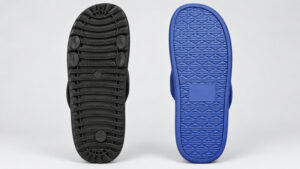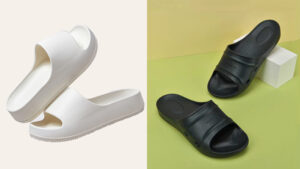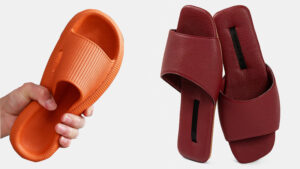
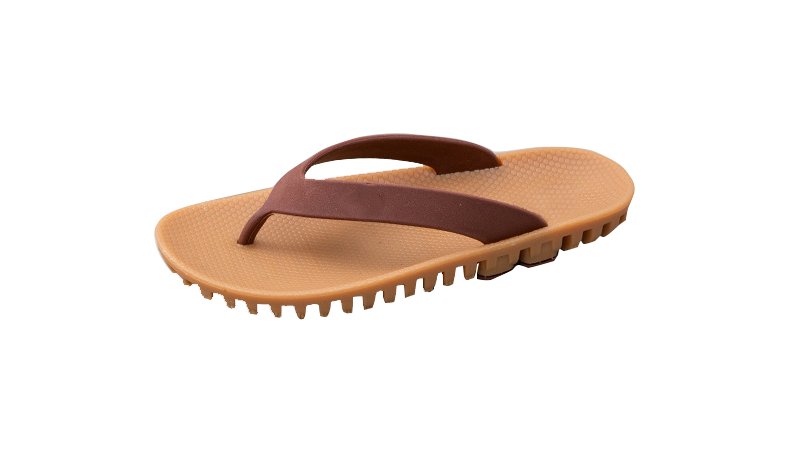
When buyers move beyond lightweight comfort and start focusing on safety, grip, and long-term wear, rubber sole slippers usually enter the discussion.
Not because rubber is the lightest option. It is not.
But in real OEM and wholesale work, rubber remains one of the most important outsole materials because it offers stronger anti-slip performance, better abrasion resistance, and longer service life than many common slipper materials.
Featured Snippet
Rubber sole slippers are slippers that use natural rubber, synthetic rubber, or rubber-based outsole structures to improve grip, abrasion resistance, and durability. They are widely used in bathroom slippers, hotel slippers, outdoor slippers, industrial footwear, and other OEM projects where anti-slip safety and long wear matter more than ultra-light weight.
For buyers, rubber is not just a material choice. It is often a performance decision.
Compared with EVA, PVC, and PU, rubber usually becomes more relevant when the project requires stronger wet-floor grip, better wear resistance, and more reliable long-term outsole performance. For a broader material overview, see our complete guide to slipper materials. If you want the lighter comfort route first, read What Is EVA Material in Slippers? Properties, Manufacturing & OEM Guide. If you want the lower-cost waterproof route, read What Is PVC Material in Slippers? Advantages, Disadvantages & OEM Guide. If you want the more premium indoor lifestyle route, read PU Slippers: Premium Material Guide for OEM Buyers.
What Are Rubber Sole Slippers
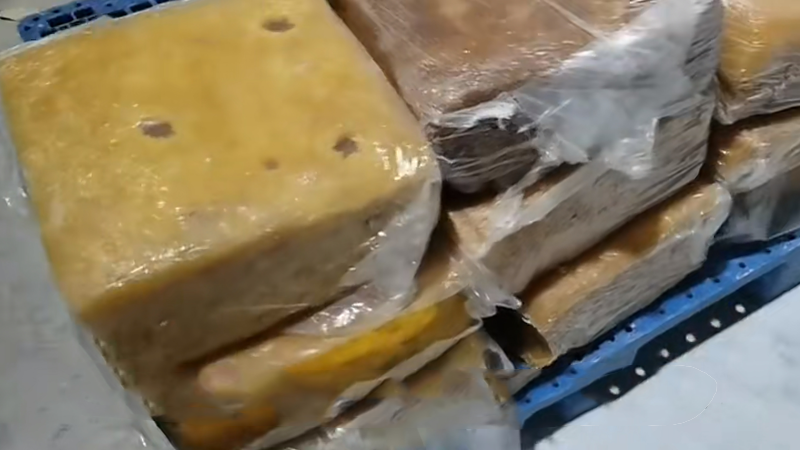
Rubber sole slippers are slippers that use natural rubber, synthetic rubber, or rubber-based outsole structures to improve grip, durability, and wear resistance.
In slippers, rubber is often used in several different ways:
- full rubber soles
- rubber outsoles
- rubber patch outsoles
- EVA and rubber combination soles
- specialized anti-slip rubber bottom structures
This is important because “rubber slippers” do not always mean the entire slipper is made from rubber.
In many OEM projects, rubber is used mainly where performance matters most: the bottom contact layer. That allows buyers to improve anti-slip performance and durability without necessarily making the whole slipper heavier or more expensive than necessary.
From a buyer’s point of view, rubber often plays a more functional role than PU, and a more performance-driven role than EVA or PVC. It is especially common in:
- bathroom slippers
- outdoor slippers
- hotel slippers
- industrial staff slippers
- elderly anti-slip slippers
- high-durability household slippers
Quick Definition Table
| Item | Rubber Sole Slippers |
|---|---|
| Main material role | Outsole, sole, or anti-slip bottom layer |
| Common forms | Natural rubber, synthetic rubber, rubber blends |
| Main benefits | Grip, durability, abrasion resistance, water resistance |
| Common uses | Bathroom, hotel, outdoor, industrial, safety-oriented slippers |
| OEM advantage | Better anti-slip safety and longer product life |
Key Properties of Rubber in Slipper Manufacturing
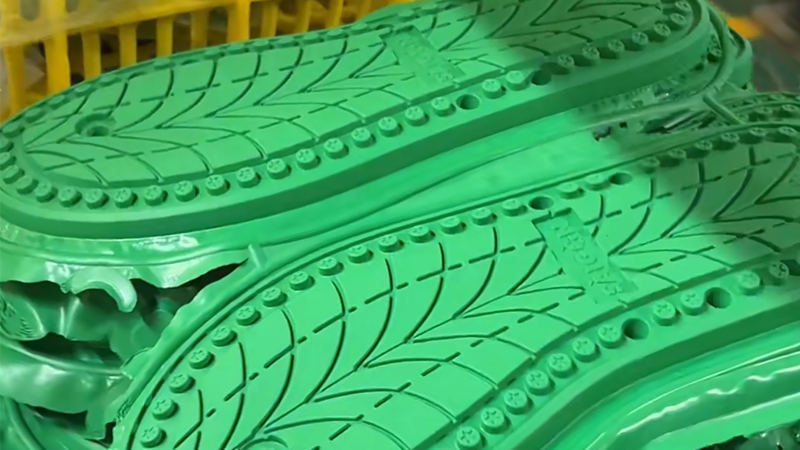
Rubber remains one of the most valuable slipper outsole materials because it solves several performance problems better than most alternatives.
1. Excellent Grip
This is usually the first reason buyers consider rubber.
Rubber has a naturally higher friction coefficient than many slipper materials, especially on wet or smooth floors. That makes it useful in:
- bathrooms
- shower rooms
- kitchens
- poolside environments
- hotel washroom areas
- elderly safety slippers
2. High Abrasion Resistance
Rubber stands out because it can tolerate repeated wear much better than many light foam materials.
Compared with softer slipper options, rubber usually:
- wears down more slowly
- holds tread patterns longer
- performs better under rougher ground contact
- supports longer product life
This is one reason many buyers choose rubber for projects where replacement frequency matters.
3. Strong Elasticity and Rebound
Good rubber does not only grip well. It also offers:
- flexibility
- resilience
- impact absorption
- stable underfoot support
Some high-quality natural rubber compounds can deliver a softer, more resilient step than buyers initially expect.
4. Full Water Resistance
Rubber is fully water-resistant and remains stable in many wet-use conditions.
It performs well in:
- bathrooms
- wet household areas
- poolside use
- beach use
- light outdoor conditions
5. Better Harsh-Use Stability
Rubber is often chosen because it handles more demanding use better than many softer or cheaper materials. Depending on the formula, it can also offer:
- resistance to mild chemical exposure
- resistance to sea water
- better tear resistance
- stronger edge durability
6. Long Service Life
For buyers, this is one of the most practical advantages.
A slipper that lasts longer can reduce:
- complaint rates
- repurchase pressure
- replacement costs
- dissatisfaction in hotel or high-turnover programs
Rubber Property Overview
| Property | Typical Rubber Performance | Why It Matters for Slippers |
|---|---|---|
| Grip | Very high | Better wet-floor safety |
| Abrasion resistance | Very high | Longer outsole life |
| Elasticity | High | Better underfoot resilience |
| Water resistance | High | Suitable for wet environments |
| Durability | Very high | Good for repeat daily wear |
| Weight | Medium to high | More stable, but heavier |
Rubber Weight, Grip and Material Feel
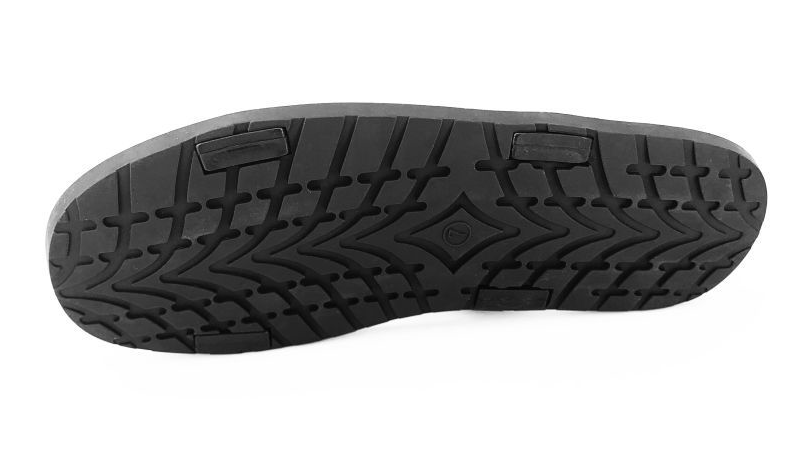
Rubber is often discussed not only because of how long it lasts, but because of how different it feels underfoot compared with other slipper materials.
Rubber Usually Feels Heavier
Compared with EVA and many PU-based indoor slippers, rubber usually feels:
- heavier
- more grounded
- more substantial
- less “floating” underfoot
That extra weight is not always a disadvantage. In safety-focused slippers, it can actually help create a more secure walking feel.
Rubber Usually Feels More Stable
Rubber often gives a firmer and more planted feeling on the ground. This is especially useful in:
- slippery indoor environments
- outdoor household use
- heavy-use daily slippers
- elderly anti-slip products
Rubber Usually Feels Less “Cloud-Like” Than EVA
EVA often wins on lightweight softness. Rubber usually wins on:
- grip
- outsole toughness
- long-term structural reliability
That is why these two materials often serve different purposes. If you want the lighter and softer side of that comparison first, read What Is EVA Material in Slippers? Properties, Manufacturing & OEM Guide.
Grip and Weight Are Often a Trade-Off
In slipper development, buyers often face a simple trade-off:
- lighter weight and soft cushioning
- better grip and longer-lasting outsole performance
Rubber usually belongs more strongly to the second category.
Feel Comparison Table
| Feature | Rubber | EVA | PVC | PU |
|---|---|---|---|---|
| Weight | Medium to high | Very light | Medium | Light to medium |
| Grip | Very high | Low to medium | Medium | Medium |
| Underfoot feel | Grounded, stable | Soft, airy | Harder, more plastic-like | More refined, smoother |
| Abrasion resistance | Very high | Lower | Medium | Medium to good |
| Main comfort story | Stable functional comfort | Lightweight cushioned comfort | Budget waterproof practicality | Premium indoor comfort |
For buyers, this means rubber usually fits best when performance and safety matter more than ultra-light comfort. For the direct sourcing comparison, this article will later connect naturally to EVA vs Rubber Sole: Which Is Better for Comfort and Durability.
How Rubber Sole Slippers Are Manufactured
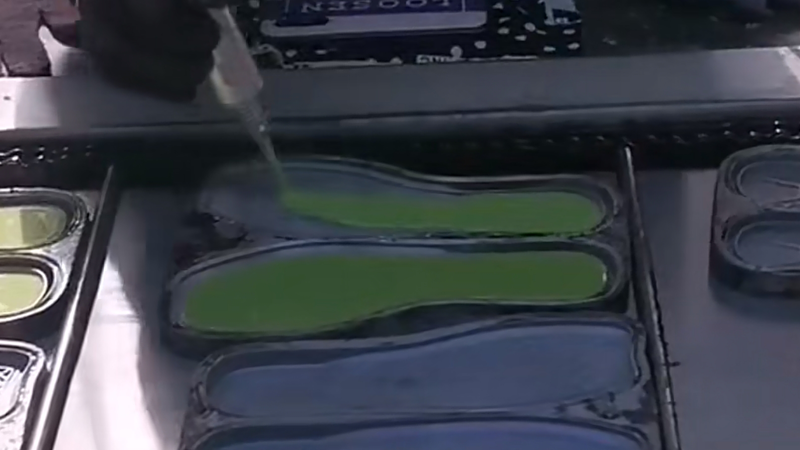
Rubber sole slippers can be made through several manufacturing routes, but one concept matters more than any other:
vulcanization.
Vulcanization is the key step that transforms soft, workable rubber into a durable, elastic, and wear-resistant outsole material.
Basic Rubber Sole Production Flow
- Product design and outsole mold development
- Raw material preparation
- Rubber mixing and compounding
- Molding and shaping
- Vulcanization under heat and pressure
- Demolding, trimming, and finishing
- Upper bonding or integrated assembly
- Final inspection
Why Vulcanization Matters
In simple terms, vulcanization changes rubber from a soft, plastic-like raw compound into a tougher and more elastic finished material.
You can think of it like this:
- raw rubber is like a soft dough
- vulcanization is the heat-and-reaction stage
- finished rubber becomes more like a strong, elastic baked structure
This process is one of the main reasons rubber outsoles can offer:
- better abrasion resistance
- stronger grip
- better aging resistance
- longer service life
- more stable outsole performance
Common Manufacturing Routes
Compression Molding
Compression molding is widely used for rubber outsoles.
Basic logic:
- a pre-measured rubber compound is placed into an open mold
- the mold closes under heat and pressure
- the rubber fills the cavity
- vulcanization happens during the same process
Advantages:
- good for high-hardness rubber compounds
- lower mold cost than some injection systems
- suitable for small-to-medium production
- workable for detailed outsole tread designs
Typical limitations:
- slower than highly automated injection routes
- more trimming may be needed
- consistency depends more on operator control
Injection Molding
Injection molding uses a more closed and automated system.
Advantages:
- faster production
- higher automation
- better repeat consistency
- suitable for high-volume output
Typical limitations:
- higher equipment and mold cost
- stronger dependence on material flow behavior
Basic Process Comparison
| Process | Best For | Main Advantage | Typical Limitation |
|---|---|---|---|
| Compression molding | Rubber outsoles, smaller runs, harder compounds | Lower tooling cost and good material flexibility | Slower and more manual |
| Injection molding | High-volume production | Faster and more automated | Higher setup cost |
| Vulcanized integrated sole structures | Performance-driven outsole work | Strong durability and grip | Requires more process control |
Why Many Projects Use Rubber Only on the Bottom
Not every slipper needs a full rubber body.
Many OEM projects use:
- EVA midsole + rubber outsole
- foam upper structure + rubber contact patch
- lightweight body + anti-slip rubber bottom
This helps buyers balance:
- grip
- weight
- cost
- comfort
- durability
That logic will later connect naturally to EVA and Rubber Combination Sole Structure Explained.
Why Rubber Is Popular in Anti-Slip and Heavy-Duty Slipper Projects
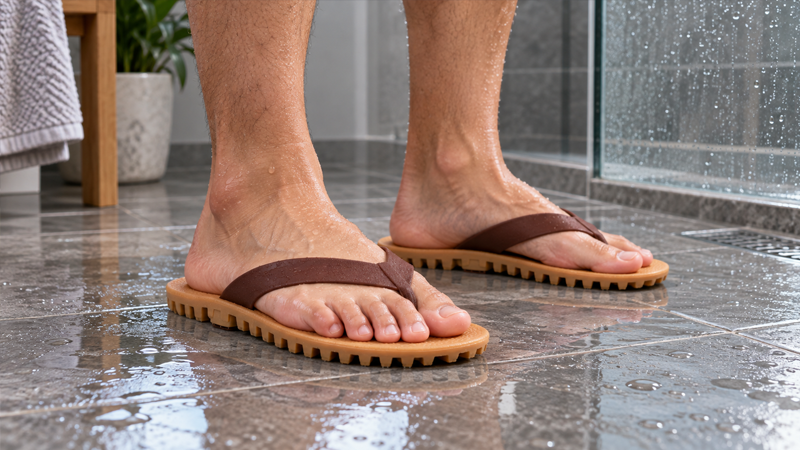
Rubber is not always the cheapest solution. It is often not the lightest either.
So why do buyers still choose it?
Because for certain projects, rubber solves the right problem.
1. Bathroom Safety Matters
For bathroom slippers, grip is often more important than lightweight comfort.
Rubber works well because it can reduce slipping risk on:
- wet tile
- polished floors
- water-covered surfaces
- some oily indoor environments
2. Durability Matters in High-Turnover Use
Hotels, guest facilities, and some commercial projects care about more than first-touch softness.
They also care about:
- how long the slipper lasts
- how well the sole pattern holds
- how often replacement is needed
- whether the sole stays safe after repeated use
3. Outdoor and Transitional Use Needs Better Outsoles
For buyers serving:
- poolside users
- beach and resort use
- outdoor household use
- balcony and yard slippers
rubber usually offers better outsole performance than softer indoor-only materials.
4. Functional Safety Projects Need Stronger Outsoles
Rubber becomes especially relevant when the buyer is developing:
- elderly anti-slip slippers
- children’s safety slippers
- industrial staff slippers
- kitchen and wet-work slippers
- labor protection slippers
5. Buyers May Accept Higher Cost for Lower Risk
In some projects, buyers are willing to pay more because failure is more expensive than material cost.
This is especially true when:
- slipping can create liability
- fast outsole wear creates complaints
- high replacement rates damage profitability
- safety is part of the product positioning
Common Rubber Project Fits
| Project Type | Why Rubber Works |
|---|---|
| Bathroom slippers | Better wet-floor grip |
| Hotel / guest slippers | Better long-term outsole wear |
| Outdoor household slippers | Better abrasion resistance |
| Industrial or kitchen slippers | Better grip and harsh-use reliability |
| Elderly safety slippers | Better traction and stability |
| Poolside or beach slippers | Better water and wear performance |
Rubber is not the most style-driven answer to every product brief, but for safety-led and durability-led projects, it remains one of the strongest material choices available.
Limitations of Rubber Material
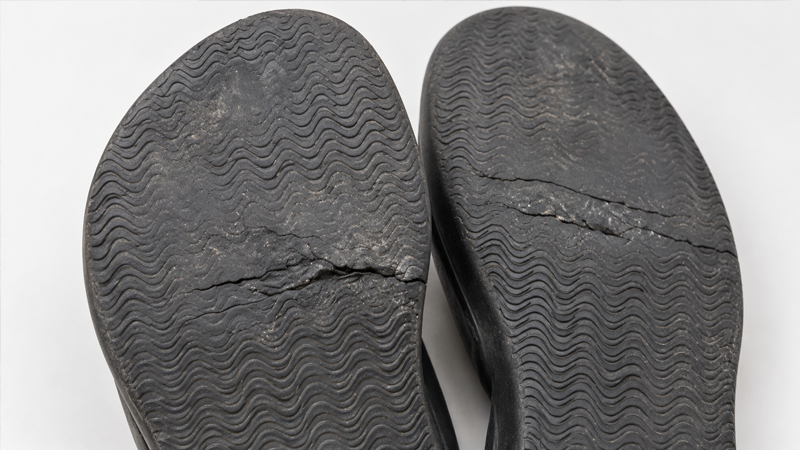
Rubber has clear strengths, but buyers also need to understand its limitations.
1. Rubber Is Usually Heavier
This is one of the most obvious trade-offs.
Compared with EVA and many PU slippers, rubber usually adds more weight. That can create complaints such as:
- foot fatigue during long wear
- feeling less lightweight
- reduced appeal for travel or casual ultra-light categories
2. Odor Can Be a Complaint
Rubber slippers often generate complaints about smell.
Possible sources include:
- vulcanization odor
- lower-grade recycled compounds
- weak material purification
- poor post-production airing
Natural rubber may have a mild rubber smell. Lower-grade compounds can produce a much stronger and more unpleasant odor.
3. UV and Oxidation Can Affect Appearance
Rubber can show:
- yellowing
- surface aging
- hardening
- cracking under prolonged UV exposure
This is especially visible in lighter-colored or lower-grade products.
4. Some Synthetic Rubbers Perform Worse in Cold Conditions
Certain synthetic rubber formulations may become:
- harder
- more brittle
- less elastic
- less slip-resistant
in low-temperature environments.
5. Cost Is Higher Than EVA and PVC
Rubber usually carries a higher material and production cost than many entry-level alternatives.
That does not make it a bad choice. But it does mean buyers need a clear reason for choosing it.
6. Staining and Appearance Issues Can Happen
Lighter-colored rubber slippers may be more likely to show:
- color transfer
- dirt absorption
- visual staining
- appearance decline over time
7. Weak OEM Execution Can Create Structural Complaints
In lower-budget production, buyers may also see:
- bonding failure
- outsole separation
- inconsistent sizing
- uneven tread depth
- weak batch consistency
Rubber Complaint Snapshot
| Common Complaint | Typical Cause | Possible Direction |
|---|---|---|
| Strong smell | Vulcanization odor or low-grade recycled material | Better material quality and airing |
| Heavy feel | Higher density and full rubber structure | Use hybrid sole design where needed |
| Yellowing and aging | UV exposure and oxidation | Better formulation and storage positioning |
| Cold-weather hardening | Weak low-temperature formula | Adjust rubber compound for climate |
| Staining | Light-color rubber and pigment transfer | Better color planning and usage guidance |
| Bonding failure | Weak glue or poor assembly control | Improve assembly QC |
| Size inconsistency | Poor mold control or weak factory standards | Tighten sizing standard and final inspection |
These limitations do not mean rubber should be avoided. They mean rubber should be chosen for the right type of project.
When Should OEM Buyers Choose Rubber Soles
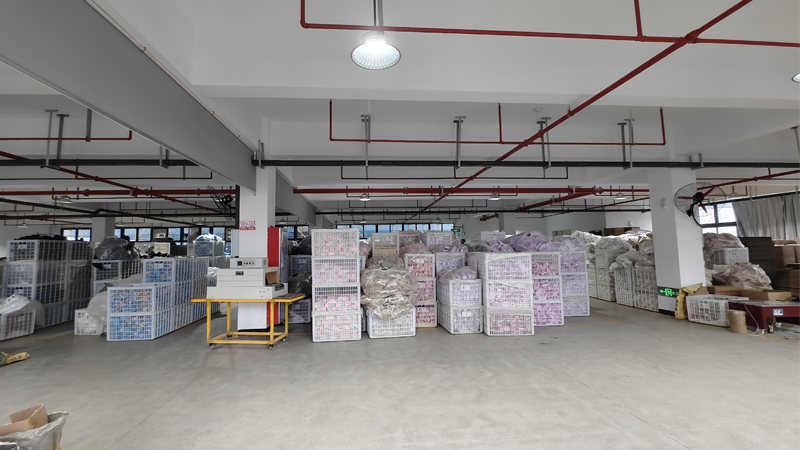
The better question is not “Is rubber good?”
The better question is:
When does rubber justify its extra cost and weight?
Rubber Is a Good Choice When
- anti-slip safety is a core requirement
- the slipper will be used on wet floors
- long outsole life matters
- abrasion resistance is important
- the project serves hotel, industrial, kitchen, outdoor, or safety-oriented use
- the buyer wants stronger functional performance than EVA, PVC, or PU can easily provide
Rubber Is Less Ideal When
- the project is highly price-sensitive
- ultra-light comfort is the main selling point
- the product is mainly fashion-driven rather than performance-driven
- the buyer wants very low shipping weight
- the market prefers soft, cloud-like, foam-style slippers
OEM Decision Guide
| Buyer Scenario | Rubber Suitability | Notes |
|---|---|---|
| Bathroom safety line | High | Strong fit for wet-floor grip |
| Hotel high-turnover project | High | Better outsole life |
| Industrial / kitchen use | High | Better slip resistance and durability |
| Elderly anti-slip slippers | High | Strong traction value |
| Lightweight travel slippers | Low to medium | EVA may fit better |
| Ultra-budget household slippers | Low to medium | PVC or EVA may fit cost better |
| Premium indoor lifestyle line | Medium | PU may fit appearance better |
| Outdoor casual or resort slippers | High | Strong outsole logic |
If the project is more lightweight-and-comfort driven, compare with What Is EVA Material in Slippers? Properties, Manufacturing & OEM Guide. If the project is more budget-and-waterproof driven, compare with What Is PVC Material in Slippers? Advantages, Disadvantages & OEM Guide. If the project is more premium-and-indoor-image driven, compare with PU Slippers: Premium Material Guide for OEM Buyers. If the project uses a softer upper but still needs a more reliable outsole, Fabric & Plush Slippers: Comfort & Winter Applications can also help explain that structure logic from the upper-material side.
Real-World Rubber Sole Applications
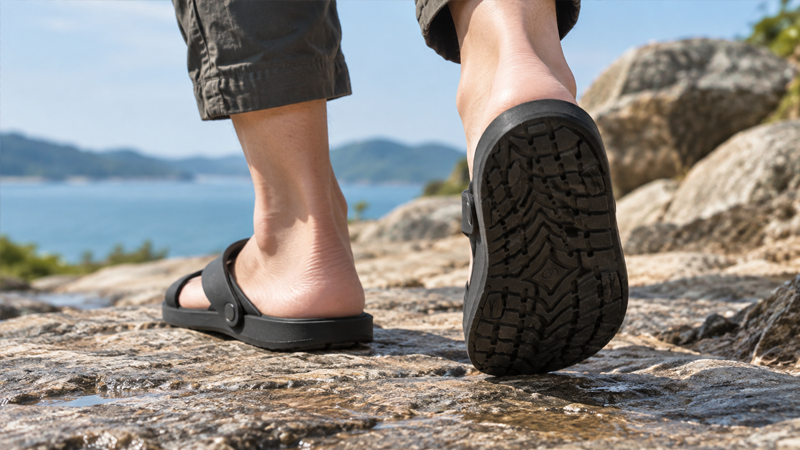
Rubber sole slippers stay relevant because they work well across several real OEM scenes.
Bathroom and Shower Slippers
Rubber is often the first serious material buyers evaluate when bathroom safety is a priority. In these products, outsole grip matters more than lightweight marketing language.
Hotel and Hospitality Projects
In hospitality programs, rubber soles can support:
- better product life
- lower outsole wear complaints
- more dependable wet-area performance
- safer use in tiled indoor environments
Outdoor and Poolside Use
For slippers used in:
- resorts
- beaches
- pools
- balconies
- outdoor household areas
rubber often performs better than softer indoor-only materials.
Industrial and Kitchen Footwear
Certain rubber compounds, especially more functional ones such as NBR-oriented systems, can better support:
- oily surfaces
- wet floors
- harsher work environments
- staff safety positioning
Elderly and Children’s Safety Slippers
Rubber is also highly relevant in projects where slip prevention matters more than low weight. That makes it useful in:
- elderly safety slippers
- anti-slip indoor family slippers
- children’s wet-area slippers
Cross-Border and Functional Retail Projects
For cross-border sellers, rubber slippers can work well when the positioning is:
- anti-slip
- heavy-duty
- bathroom safety
- outdoor utility
- long-wear value
Rubber vs Other Slipper Materials
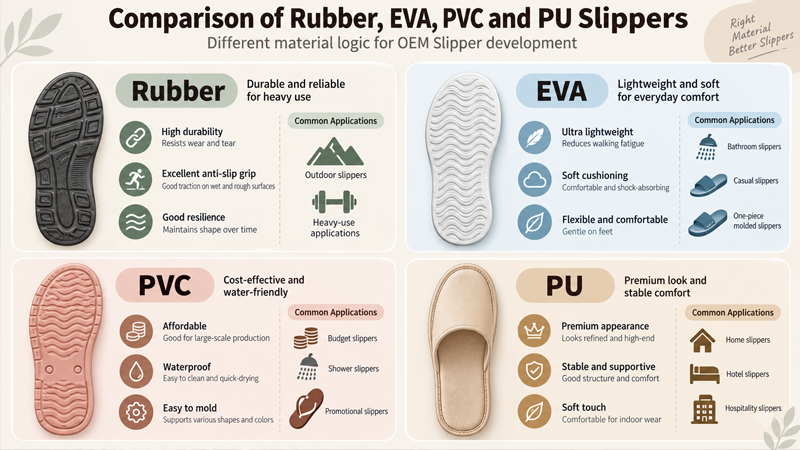
Rubber is usually evaluated alongside EVA, PVC, and PU.
Rubber vs EVA
Rubber usually offers:
- better grip
- better abrasion resistance
- stronger outsole life
- better wet-floor performance
EVA usually offers:
- lighter weight
- softer foam feel
- lower cost
- stronger “cloud comfort” story
For the material-side explanation, continue with What Is EVA Material in Slippers? Properties, Manufacturing & OEM Guide. For the direct sourcing comparison, this topic will later connect naturally to EVA vs Rubber Sole: Which Is Better for Comfort and Durability.
Rubber vs PVC
Rubber usually wins on:
- grip
- elasticity
- wear life
- lower risk of the hard plastic-like feel associated with low-grade PVC
PVC usually wins on:
- lower cost
- lower production complexity for budget molded styles
- stronger entry-level waterproof pricing
If the main question is bathroom safety, continue with PVC vs Rubber Bathroom Slippers: Which Has Better Anti-Slip Performance. If you want the lower-cost material-side logic first, read What Is PVC Material in Slippers? Advantages, Disadvantages & OEM Guide.
Rubber vs PU
Rubber usually wins on:
- functional grip
- outsole durability
- wet-floor safety
- outdoor or heavy-duty performance
PU usually wins on:
- visual refinement
- premium indoor appearance
- lighter lifestyle feel
- hospitality and indoor aesthetic positioning
If the project is more appearance-driven than performance-driven, continue with PU Slippers: Premium Material Guide for OEM Buyers.
Quick Comparison Table
| Material | Main Strength | Main Limitation |
|---|---|---|
| Rubber | Grip and durability | Heavier and costlier |
| EVA | Lightweight cushioned comfort | Lower outsole durability |
| PVC | Low cost and waterproof use | Harder, lower premium feel |
| PU | Premium indoor appearance | Less performance-driven outsole logic |
For the full overview, return to our complete guide to slipper materials.
Conclusion
Rubber sole slippers matter because they solve a very specific kind of product problem.
They are not the lightest option, and they are not usually the cheapest. But when a project depends on anti-slip safety, outsole durability, wet-floor confidence, and longer wear life, rubber remains one of the most practical materials to evaluate.
That does not mean every slipper should use a full rubber sole. In many OEM projects, the smarter solution is a hybrid structure that uses rubber only where performance matters most.
But when the goal is safety, grip, and real outsole reliability, rubber is still one of the hardest materials to replace.
For broader material planning, return to our complete guide to slipper materials. For adjacent material comparisons, continue with What Is EVA Material in Slippers? Properties, Manufacturing & OEM Guide, What Is PVC Material in Slippers? Advantages, Disadvantages & OEM Guide, PU Slippers: Premium Material Guide for OEM Buyers, and Fabric & Plush Slippers: Comfort & Winter Applications.
Rubber Sole Slippers FAQ
Are rubber sole slippers good
Yes. Rubber sole slippers are often one of the best options when grip, durability, and wet-floor safety matter more than ultra-light weight or the lowest possible cost.
Are rubber slippers anti-slip
Usually yes, especially compared with many common slipper materials. Their anti-slip performance depends on the rubber formula, outsole tread design, surface condition, and wear level.
Are rubber slippers better than EVA
Rubber is usually better for grip, abrasion resistance, and long-term outsole wear. EVA is usually better for lightweight comfort, softness, and lower cost. The better choice depends on whether your project is driven more by performance or by lightweight comfort.
Are rubber slippers good for bathrooms
Yes. Rubber is one of the most practical materials for bathroom slippers because it combines water resistance with stronger wet-floor grip than many alternatives.
Why are rubber slippers more expensive
Rubber slippers are usually more expensive because the material and manufacturing process are more performance-driven. Buyers are often paying for better outsole grip, longer wear life, and stronger durability.
What are the disadvantages of rubber slippers
Common disadvantages include heavier weight, rubber odor in some products, UV aging, possible low-temperature hardening in some synthetic formulas, and higher cost compared with EVA or PVC.
What is the difference between vulcanized rubber and regular rubber soles
Vulcanized rubber has gone through a heat-and-chemical cross-linking process that improves durability, elasticity, grip stability, and aging resistance. That is one reason vulcanized rubber soles are often preferred in more demanding outsole applications.