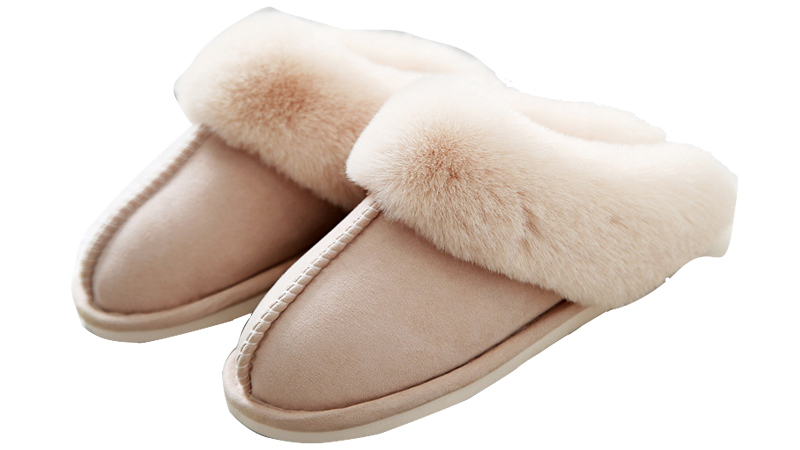
When buyers move away from waterproof bathroom slippers and start focusing on softness, warmth, and indoor comfort, fabric and plush slippers usually enter the discussion.
Not because they are the most durable option. They usually are not.
But in real OEM and wholesale work, fabric and plush slippers remain important because they solve a different kind of product need. They create warmth, softness, and a more comfortable indoor wearing experience, especially in winter homewear, guest room, gift, and seasonal retail projects.
Featured Snippet
Fabric and plush slippers are slippers made with textile uppers, soft linings, or plush surface materials designed to improve warmth, softness, and indoor comfort. They are commonly used in winter slippers, homewear slippers, hotel guest slippers, and other OEM projects where comfort, insulation, and lifestyle positioning matter more than waterproofing or outsole durability.
For buyers, fabric and plush are not just “soft materials.” They are often a positioning choice for indoor comfort and seasonal use.
Compared with EVA, PVC, PU, and rubber-focused slippers, fabric and plush slippers usually play a stronger role in projects that need warmth, cozy touch, softer visual appeal, and winter homewear positioning. For a broader material overview, see our complete guide to slipper materials. If you want the lighter comfort route first, read What Is EVA Material in Slippers? Properties, Manufacturing & OEM Guide. If you want the lower-cost waterproof route, read What Is PVC Material in Slippers? Advantages, Disadvantages & OEM Guide. If you want the more premium indoor lifestyle route, read PU Slippers: Premium Material Guide for OEM Buyers. If you want the more performance-driven outsole route, read Rubber Sole Slippers: Durability & Anti-Slip Benefits.
What Are Fabric and Plush Slippers
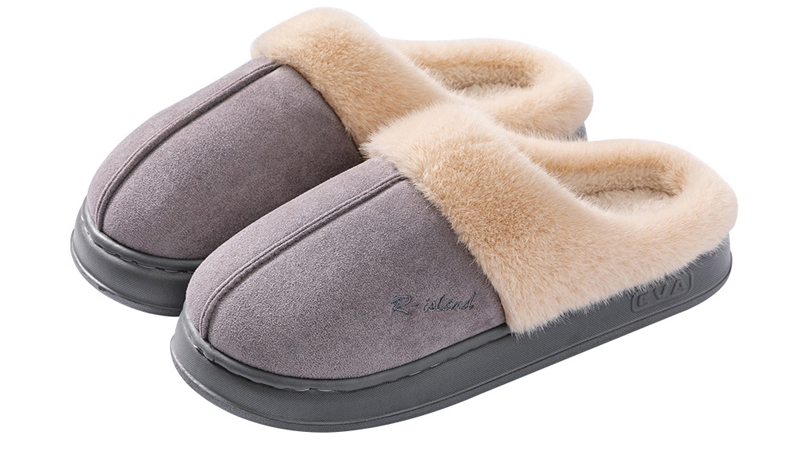
Fabric and plush slippers are both textile-based indoor slipper categories, but they are not exactly the same.
Fabric slippers usually refer to slippers made with woven or textile uppers such as:
- cotton
- terry cloth
- linen
- suede cloth
- canvas
- corduroy
- wool fabric
These materials are often chosen because they feel lighter, more breathable, and more comfortable for indoor casual use.
Plush slippers usually refer to slippers made with fluffy or raised-pile materials such as:
- long plush
- coral fleece
- polar fleece
- faux fur
- faux shearling
- sherpa fleece
- velvet
- real wool or shearling
These materials are often chosen because they trap warm air, feel softer against the skin, and create a stronger winter comfort experience.
In real products, the two categories often overlap.
A winter slipper may use:
- a suede-style fabric upper
- a faux shearling lining
- a memory foam filling
- an EVA, TPR, or rubber outsole
That is why buyers should not think about fabric and plush slippers as single-material products. In many OEM projects, they are multi-layer indoor comfort systems rather than one-material molded slippers.
Quick Definition Table
| Item | Fabric & Plush Slippers |
|---|---|
| Main material role | Upper, lining, surface comfort layer |
| Common fabric materials | Cotton, linen, terry cloth, suede cloth, wool |
| Common plush materials | Coral fleece, polar fleece, faux fur, faux shearling, shearling |
| Main benefits | Warmth, softness, indoor comfort, seasonal homewear value |
| Common uses | Winter slippers, indoor slippers, hotel guest slippers, gift slippers |
| OEM advantage | Good for seasonal retail, homewear, hospitality, and comfort-led projects |
Key Properties of Fabric and Plush Materials in Slipper Manufacturing
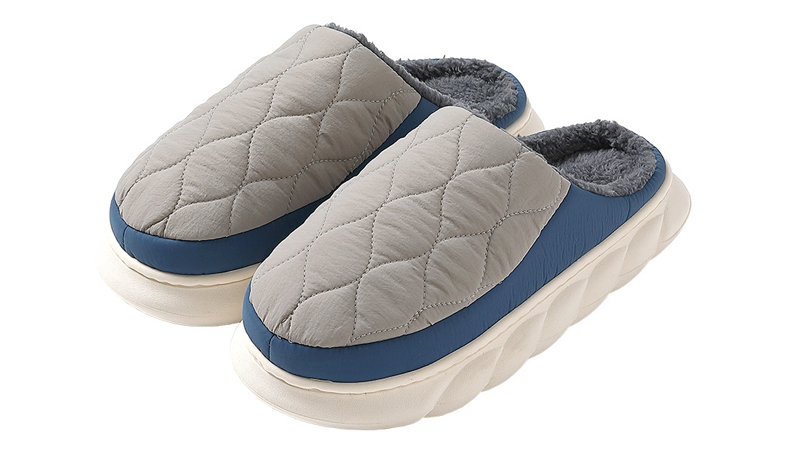
Fabric and plush slippers stay relevant in slipper manufacturing because they solve comfort-focused needs that molded plastic or foam slippers do not always solve well.
1. Warmth
This is usually the first reason buyers choose plush or winter fabric slippers.
Plush materials help create warmth by trapping still air between the fibers. That air layer reduces heat loss and keeps the foot more comfortable in colder indoor environments.
This is why plush linings are so common in:
- winter home slippers
- closed-toe indoor slippers
- guest room slippers for colder seasons
- elderly indoor warmth slippers
- gift-oriented winter slippers
2. Soft Touch and Cozy Feel
Fabric and plush slippers are often chosen because they feel softer and more inviting than molded slippers.
Good plush materials can create:
- a warmer first touch
- less cold contact against the skin
- a softer wrapped feeling around the foot
- a stronger “cozy home” emotional value
That feeling matters in seasonal retail and homewear projects.
3. Breathability and Moisture Handling
Not all soft indoor slippers perform the same way.
Natural fabric materials such as cotton, linen, and wool usually offer better breathability and moisture handling than low-grade synthetic plush. That is why fabric slippers often feel drier and more breathable, while plush slippers usually feel warmer and softer.
This also explains why some buyers choose:
- cotton or linen for mild climates
- wool or shearling for colder climates
- faux shearling or fleece for cost-controlled winter warmth
4. Layered Comfort Structure
In winter slippers, comfort usually does not come from one material alone. It comes from the combination of:
- upper material
- filling layer
- lining layer
- outsole insulation
A slipper with an average upper but a strong lining and filling system may feel warmer than a slipper with a premium-looking upper but poor internal structure.
5. Lifestyle and Visual Flexibility
Fabric and plush materials also support more style variation than many molded slipper materials.
They can be developed in:
- soft neutral homewear styles
- cute plush gift styles
- hotel-friendly guest room styles
- minimalist cozy indoor collections
- premium shearling-inspired winter lines
Fabric & Plush Property Overview
| Property | Typical Fabric Performance | Typical Plush Performance | Why It Matters for Slippers |
|---|---|---|---|
| Warmth | Low to medium | Medium to very high | Winter comfort positioning |
| Breathability | Medium to high | Low to medium | Foot climate and odor control |
| Touch feeling | Dry, soft, lighter | Warm, fluffy, wrapped | Different comfort stories |
| Moisture handling | Better in natural fibers | Depends on material quality | Daily indoor wear experience |
| Seasonal fit | Spring, autumn, mild winter | Autumn and winter | Product planning by season |
| Style flexibility | High | High | Homewear and gift development |
For buyers comparing seasonal indoor materials, this is also where fabric and plush start to separate clearly from more wipe-clean synthetic options such as PU slippers.
Warmth, Softness and Indoor Comfort Feel
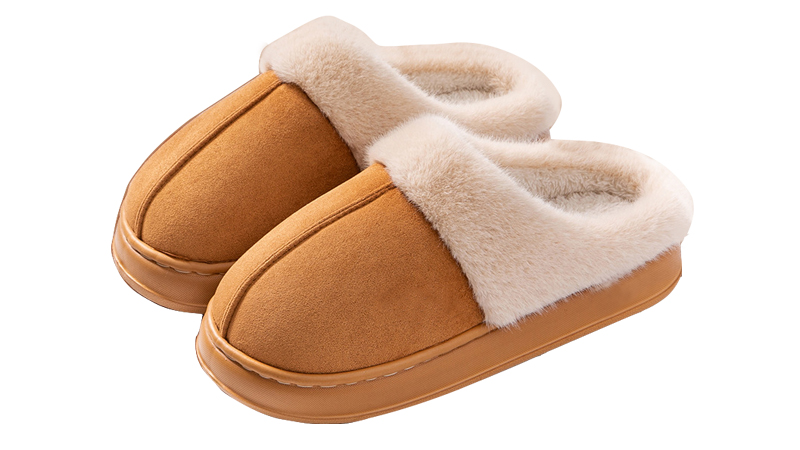
Fabric and plush slippers are often discussed not only because of how they look, but because of how they feel in real indoor use.
Fabric Slippers Usually Feel Lighter and Drier
Fabric slippers often feel:
- lighter on the foot
- more breathable
- less bulky
- drier during indoor wear
That is why cotton, terry, linen, and lighter textile-based slippers are often used in:
- warmer indoor climates
- hotel slippers
- guest room slippers
- spring and autumn homewear lines
Plush Slippers Usually Feel Warmer and More Wrapped
Plush slippers often feel:
- softer on first touch
- warmer immediately after wearing
- more padded and cozy
- better suited to cold floors and winter home use
This is especially true when the slipper uses:
- faux shearling lining
- coral fleece
- polar fleece
- long plush
- real wool or shearling
Winter Comfort Comes From a System, Not One Surface
For winter slippers, true comfort usually depends on four layers working together:
- Outer upper for structure and style
- Filling layer for thickness and softness
- Lining layer for direct warmth and touch
- Outsole for insulation from cold floors
A soft-looking slipper with weak filling may flatten quickly. A warm lining with a thin cold outsole may still feel disappointing on tile floors. That is why serious buyers should judge indoor winter slippers as structures, not just surfaces.
Plush Comfort Is Not the Same as EVA Comfort
EVA comfort is usually:
- lighter
- springier
- foam-based
- more casual and utility-oriented
Plush comfort is usually:
- warmer
- softer to the touch
- more wrapped
- more indoor and winter-oriented
Feel Comparison Table
| Feature | Fabric Slippers | Plush Slippers | EVA Slippers | PU Slippers |
|---|---|---|---|---|
| Surface feel | Dry, soft, breathable | Fluffy, warm, wrapped | Smooth, foam-like | Refined, leather-like |
| Warmth | Low to medium | Medium to very high | Low | Low to medium |
| Breathability | Higher | Lower to medium | Medium | Lower |
| Indoor comfort story | Light indoor comfort | Cozy winter comfort | Lightweight functional comfort | Premium indoor comfort |
| Seasonal fit | Mild weather to all-season indoor | Autumn and winter | All-season casual | Indoor lifestyle use |
For buyers, this means fabric and plush slippers should not be judged by the same comfort standard as EVA, PVC, or rubber slippers. They belong to a more indoor, seasonal, and emotional comfort category. If you want the lighter foam-based side of that comparison first, read What Is EVA Material in Slippers? Properties, Manufacturing & OEM Guide.
How Fabric & Plush Slippers Are Manufactured
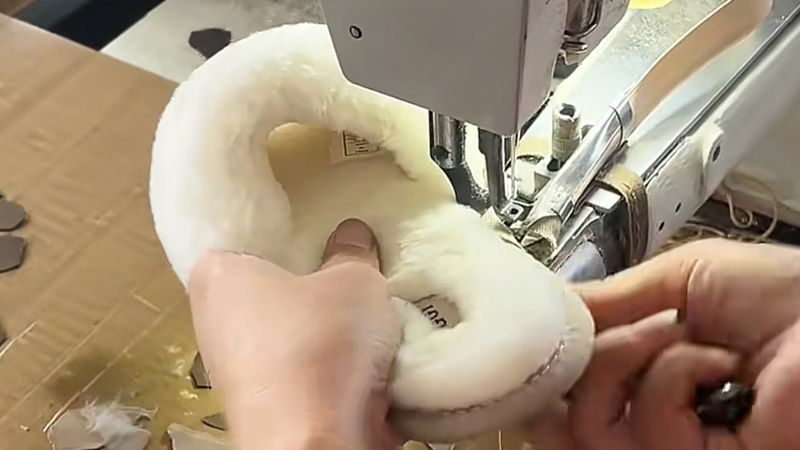
Fabric and plush slippers are usually not made like EVA or PVC molded slippers.
They are usually built, not molded.
That means their production depends much more on:
- material cutting
- stitching
- filling
- lining construction
- outsole attachment
- finishing quality
Plush Slippers Manufacturing Process
A typical plush slipper production flow often includes:
- design and pattern development
- material selection
- cutting upper, lining, and filling parts
- stitching the layered upper structure
- adding filling or memory foam components
- attaching the outsole
- final shaping, inspection, and packaging
In plush slippers, details such as pile direction, seam finishing, filling stability, and lining attachment all affect final comfort and appearance.
Fabric Slippers Construction
Fabric slippers usually follow a lighter layered structure. A typical construction may include:
- outer fabric upper
- inner lining
- support or reinforcement layer
- insole or filling pad
- outsole
Because fabric slippers are not one-piece molded products, the quality of cutting, stitching, edge finishing, and outsole bonding matters a lot.
Common Outsole Choices for Fabric & Plush Slippers
These slippers often use outsoles such as:
- TPR
- EVA
- rubber
- fabric-coated soft indoor bottoms
- anti-slip textured indoor sole materials
The outsole choice changes the product positioning significantly.
For example:
- fabric upper + light EVA outsole = lighter homewear slipper
- plush upper + TPR outsole = winter indoor comfort slipper
- fabric upper + rubber outsole = more durable indoor-outdoor transitional slipper
Upper + Lining + Outsole Combination Logic
In real OEM work, buyers often choose combinations such as:
- faux shearling upper + faux shearling lining + EVA outsole
- suede cloth upper + plush lining + TPR outsole
- cotton upper + terry lining + light indoor outsole
- woven upper + warm fleece lining + rubber bottom
These combinations matter because fabric and plush slippers are rarely sold on material alone. They are sold on the whole wearing experience.
If the outsole becomes a bigger part of the decision, buyers often compare these constructions with Rubber Sole Slippers: Durability & Anti-Slip Benefits or lighter EVA slippers.
Why Fabric & Plush Slippers Are Popular in Winter and Indoor Projects
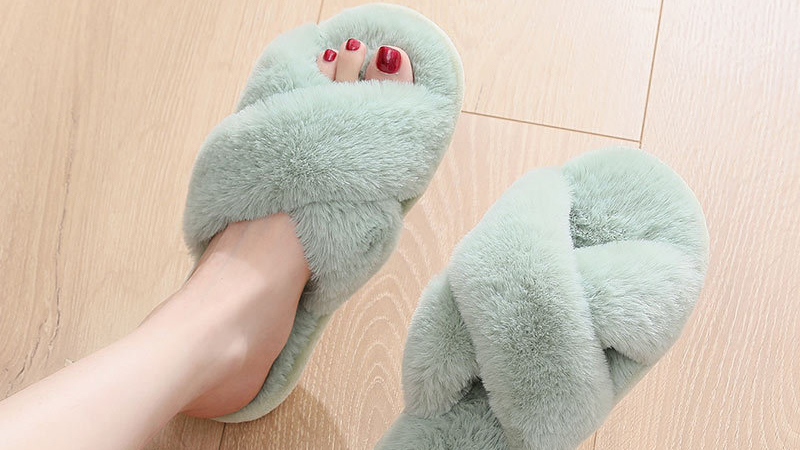
Fabric and plush slippers remain popular because they fit certain indoor and seasonal product goals extremely well.
1. They Match Winter Homewear Demand
When buyers develop winter slipper projects, they are usually not trying to compete with bathroom slides.
They are trying to deliver:
- warmth
- softness
- quiet indoor comfort
- more seasonal emotional value
- stronger gift appeal
2. They Create a Cozy Lifestyle Image
Fabric and plush slippers are often chosen because they help build a specific atmosphere:
- warm home
- winter comfort
- seasonal softness
- care and relaxation
- indoor lifestyle aesthetics
This matters in homewear brands, gift channels, and premium seasonal retail.
3. They Work Well in Hospitality and Guest Room Use
Not all hotels need PVC or EVA bathroom slippers.
In colder seasons, some hospitality buyers want guest slippers that feel:
- softer
- warmer
- quieter
- more welcoming
That is where fabric and plush structures can make more sense.
4. They Offer Strong Seasonal Retail Value
Fabric and plush slippers fit well in:
- autumn and winter promotions
- holiday gift programs
- home comfort campaigns
- women’s cozy lifestyle collections
- children’s winter indoor lines
5. They Support Product Differentiation
Compared with many low-cost molded slippers, fabric and plush slippers offer more room for:
- color combinations
- printed patterns
- embroidery
- cute shapes
- higher emotional appeal
- stronger visual merchandising
Common Fabric & Plush Project Fits
| Project Type | Why Fabric & Plush Works |
|---|---|
| Winter home slippers | Better warmth and comfort story |
| Seasonal gift slippers | Softer visual and emotional value |
| Hotel guest room slippers | More welcoming indoor feel |
| Cozy lifestyle retail | Better homewear positioning |
| Elderly indoor warmth slippers | Better thermal comfort |
| Children’s winter slippers | Soft-touch and seasonal appeal |
Fabric and plush are not the right answer for every brief, but they are often one of the strongest choices when winter comfort matters more than pure utility.
Limitations of Fabric and Plush Materials
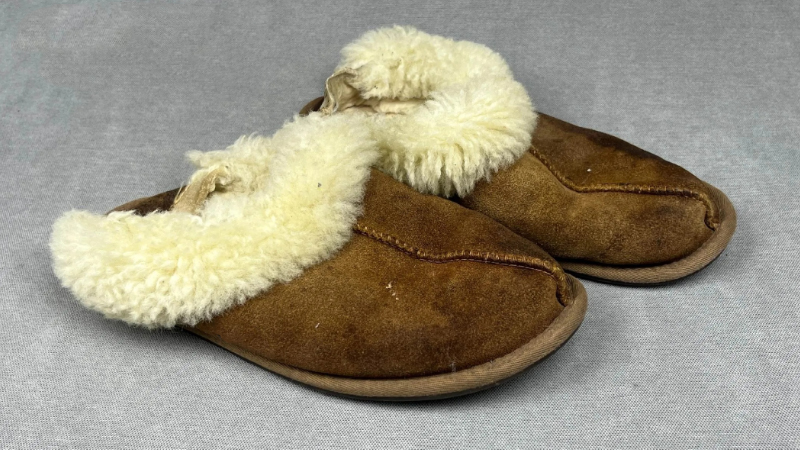
Fabric and plush slippers have many strengths, but buyers should not treat them as perfect materials.
1. Filling and Cushioning Can Flatten
This is one of the most common complaints.
Lower-grade filling materials such as cheap sponge or cotton can compress quickly. After repeated wear, buyers may see complaints such as:
- “the slippers went flat”
- “the inside lost its softness”
- “the footbed feels thin now”
Better memory foam or stronger wool-based filling systems usually perform better.
2. Plush Linings Can Lose Loft
Plush slippers often depend on a fluffy look and feel. Over time, lower-grade materials may show:
- flattened lining
- reduced warmth
- weaker visual fullness
- less luxurious feel
3. Odor Can Develop in Closed Indoor Use
Because many plush slippers trap warmth, they can also trap moisture if the materials are not breathable enough.
This may lead to:
- foot odor
- trapped humidity
- bacterial growth
- unpleasant after-use smell
This is especially common in lower-grade synthetic plush materials with weak moisture handling.
4. Shedding and Pilling Can Be a Problem
Low-density faux fur or poorly finished plush materials may show:
- shedding
- lint loss
- pilling
- messy appearance after washing or repeated use
This can damage perceived product quality very quickly.
5. Cleaning Is More Difficult Than EVA or PVC
Unlike molded EVA or PVC slippers, fabric and plush slippers usually require more careful cleaning.
Potential issues include:
- slow drying
- shape distortion
- filling movement
- shrinkage
- outsole bonding problems after soaking
- plush texture damage from hot washing
6. Water Resistance Is Usually Limited
Most fabric and plush slippers are not designed for wet-use performance. Even if the outsole is water-resistant, the upper and lining usually are not ideal for:
- bathrooms
- shower use
- heavy water exposure
- repeated wet-dry cycles
This is one reason buyers developing bathroom-focused products often move back toward PVC slippers or rubber sole slippers instead.
7. Some Low-End Versions Have Weak Outsole Performance
Soft indoor slippers sometimes use very basic outsoles that may show:
- fast wear
- weak grip
- bottom flattening
- poor support after extended use
Complaint Snapshot
| Common Complaint | Typical Cause | Possible Direction |
|---|---|---|
| Filling goes flat | Low-grade sponge or cotton filling | Upgrade filling and footbed structure |
| Plush loses loft | Weak lining density | Use higher-density plush or better blends |
| Odor builds up | Poor breathability and trapped moisture | Improve lining selection and drying guidance |
| Shedding or pilling | Low-grade faux fur or weak finish | Upgrade fiber density and finishing quality |
| Hard to wash | Multi-layer textile construction | Offer clearer care guidance or machine-washable designs |
| Shape deformation | Hot washing or poor structure stability | Improve construction and washing instructions |
| Weak outsole life | Soft low-grade bottom materials | Upgrade outsole material or tread structure |
These limitations do not mean fabric and plush slippers should be avoided. They mean buyers should choose them for the right kind of indoor project.
When Should OEM Buyers Choose Fabric & Plush Slippers
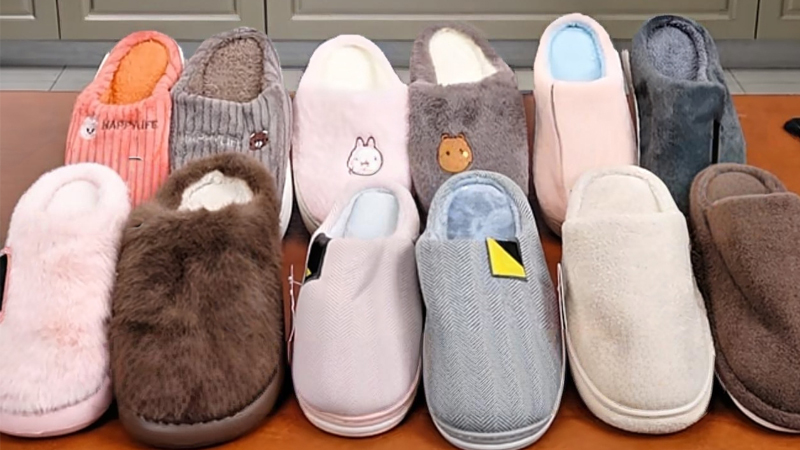
The better question is not “Are fabric and plush slippers comfortable?”
The better question is:
When do they make the most commercial sense?
Fabric & Plush Slippers Are a Good Choice When
- indoor comfort is the main priority
- winter warmth matters
- the project is for homewear or gift retail
- seasonal softness and visual warmth matter
- the buyer wants a quieter and cozier indoor product story
- hospitality projects need a softer cold-season guest experience
They Are Less Ideal When
- waterproof performance is critical
- the slipper must handle heavy abrasion
- wet-floor anti-slip is the first priority
- easy washing and fast drying matter more than softness
- the project targets shower or bathroom utility use
OEM Decision Guide
| Buyer Scenario | Fabric & Plush Suitability | Notes |
|---|---|---|
| Winter homewear collection | High | Strong fit for warmth and softness |
| Seasonal gift program | High | Strong emotional and visual appeal |
| Hotel cold-season guest slippers | High | Better guest comfort feel |
| Bathroom slipper project | Low | EVA, PVC, or rubber may fit better |
| Outdoor household slipper | Low to medium | Needs stronger outsole logic |
| Cozy women’s indoor retail line | High | Strong lifestyle positioning |
| Elderly warmth-focused indoor slipper | Medium to high | Good if outsole safety is also considered |
| Warm-climate lightweight indoor slipper | Medium | Fabric may fit better than plush |
If the project is more lightweight-and-casual driven, compare with What Is EVA Material in Slippers? Properties, Manufacturing & OEM Guide. If the project is more premium-and-refined indoors, compare with PU Slippers: Premium Material Guide for OEM Buyers. If the project needs stronger outsole grip, compare with Rubber Sole Slippers: Durability & Anti-Slip Benefits.
Real-World Fabric & Plush Slipper Applications
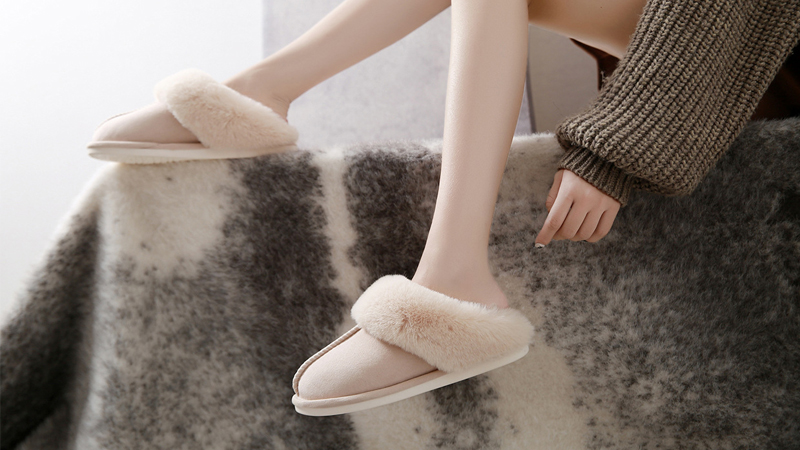
Fabric and plush slippers stay relevant because they work well across several real indoor and seasonal OEM scenes.
Winter Home Slippers
This is the most obvious application.
These slippers are designed for:
- warmth
- soft touch
- quiet home use
- indoor floor insulation
- all-day home comfort in colder weather
Hotel and Guest Room Slippers
In colder seasons or upgraded guest programs, fabric and plush slippers can offer a more welcoming indoor experience than simple molded utility slippers.
They are especially suitable for:
- boutique hotels
- mountain or cold-climate stays
- premium guest rooms
- seasonal hospitality sets
Seasonal Gift Retail
Soft slippers are often sold not only as footwear, but as gift products.
That makes plush and fabric slippers highly relevant in:
- holiday promotions
- women’s gift collections
- children’s winter gift sets
- home comfort campaigns
Cozy Lifestyle and Homewear Brands
For lifestyle brands, these slippers can become part of a larger indoor comfort story that includes:
- loungewear
- home textiles
- winter comfort accessories
- quiet luxury home products
Elderly and Family Indoor Use
Fabric and plush slippers can also work well for:
- elderly indoor warmth
- family winter home use
- soft-touch children’s indoor slippers
as long as the outsole design still provides enough safety for the target user.
Fabric & Plush vs Other Slipper Materials
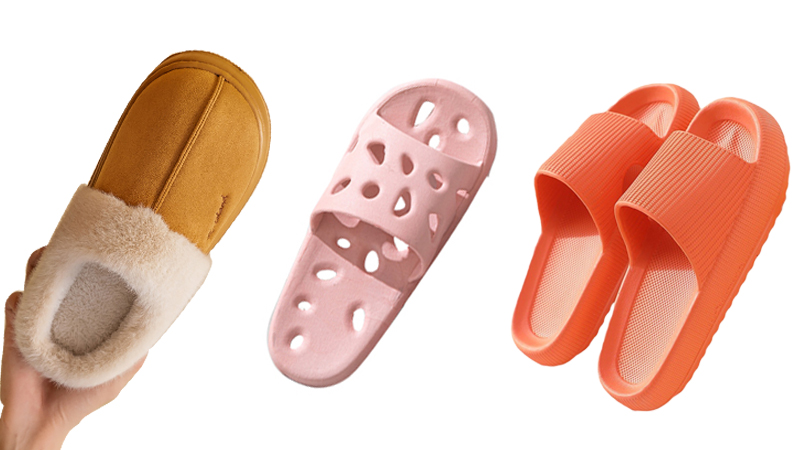
Fabric and plush slippers are usually evaluated alongside EVA, PU, and rubber-based structures.
Plush Slippers vs EVA Slippers
Plush slippers usually offer:
- more warmth
- softer touch
- stronger winter indoor positioning
- more emotional comfort value
EVA slippers usually offer:
- lighter weight
- better water resistance
- easier cleaning
- more convenience for bathrooms and casual utility use
For the lighter, more functional comfort route, continue with What Is EVA Material in Slippers? Properties, Manufacturing & OEM Guide.
Fabric Slippers vs PU Slippers
Fabric slippers usually win on:
- breathability
- softer textile touch
- more natural homewear feel
- easier casual indoor styling
PU slippers usually win on:
- stronger visual structure
- easier wipe-clean maintenance
- better premium synthetic finish
- stronger indoor lifestyle polish
For the more refined premium-indoor route, continue with PU Slippers: Premium Material Guide for OEM Buyers.
Rubber Sole vs Fabric Upper
This comparison is not really material against material in the same layer. It is a structural trade-off.
A rubber sole helps with:
- grip
- durability
- wet-floor safety
- outsole life
A fabric upper helps with:
- softness
- breathability
- indoor comfort
- visual warmth
That is why many winter indoor slippers combine both ideas: soft upper comfort with stronger bottom performance.
For the outsole-driven side of that logic, continue with Rubber Sole Slippers: Durability & Anti-Slip Benefits.
Winter Slippers Material Comparison
For winter indoor projects, buyers often compare:
- shearling or wool for premium natural warmth
- faux shearling for affordable plush warmth
- fleece or coral fleece for light cozy softness
- cotton for breathability but lower warmth
- suede-style fabric for refined indoor appearance
- rubber, TPR, or EVA for outsole insulation and floor separation
Quick Comparison Table
| Material | Main Strength | Main Limitation |
|---|---|---|
| Fabric | Breathability and lighter indoor comfort | Less warmth and lower water resistance |
| Plush | Warmth and soft winter comfort | Harder cleaning and possible flattening |
| EVA | Lightweight and water-resistant convenience | Lower warmth and less cozy feel |
| PU | Premium indoor appearance | Lower breathability |
| Rubber | Grip and outsole durability | Heavier and less comfort-led on the upper side |
For the full overview, return to our complete guide to slipper materials.
Conclusion
Fabric and plush slippers matter because they solve a different kind of product need from EVA, PVC, PU, or rubber-focused slippers.
They are not built for shower rooms, heavy outdoor wear, or maximum outsole durability. They are built for warmth, softness, seasonal comfort, and indoor homewear appeal.
That does not mean every winter slipper should use plush materials, and it does not mean every fabric slipper should be treated as a premium product. But when the goal is cozy indoor comfort, winter retail value, and a softer homewear experience, fabric and plush slippers remain some of the most useful materials to evaluate.
For broader material planning, return to our complete guide to slipper materials. For adjacent material comparisons, continue with What Is EVA Material in Slippers? Properties, Manufacturing & OEM Guide, PU Slippers: Premium Material Guide for OEM Buyers, Rubber Sole Slippers: Durability & Anti-Slip Benefits, and What Is PVC Material in Slippers? Advantages, Disadvantages & OEM Guide.
Fabric & Plush Slippers FAQ
Are plush slippers warm
Yes. Plush slippers are usually designed to trap warm air around the foot, which makes them one of the most common choices for winter indoor comfort.
Are fabric slippers good for indoor use
Yes. Fabric slippers are often a good choice for indoor use because they usually feel softer, lighter, and more breathable than many molded slipper materials.
Are plush slippers better than EVA slippers
They are better for warmth and cozy winter comfort, but not usually better for water resistance, easy cleaning, or bathroom utility use. The better choice depends on the project goal.
What is the best lining for winter slippers
That depends on the market position. Real wool or shearling is often the premium choice, while faux shearling, coral fleece, and polar fleece are common for more affordable winter warmth.
Why do plush slippers go flat
Plush slippers often go flat because low-grade filling or lining materials compress under repeated daily wear. Better memory foam, wool, or stronger internal structure can reduce this problem.
Are fabric slippers breathable
Usually yes, especially when they use natural fibers such as cotton or linen. In general, fabric slippers are more breathable than plush slippers and many synthetic closed-surface materials.
What outsole is best for winter indoor slippers
That depends on the use case. EVA, TPR, and rubber are all common. EVA is lighter, TPR is common in indoor comfort slippers, and rubber works better when stronger grip or durability is needed.