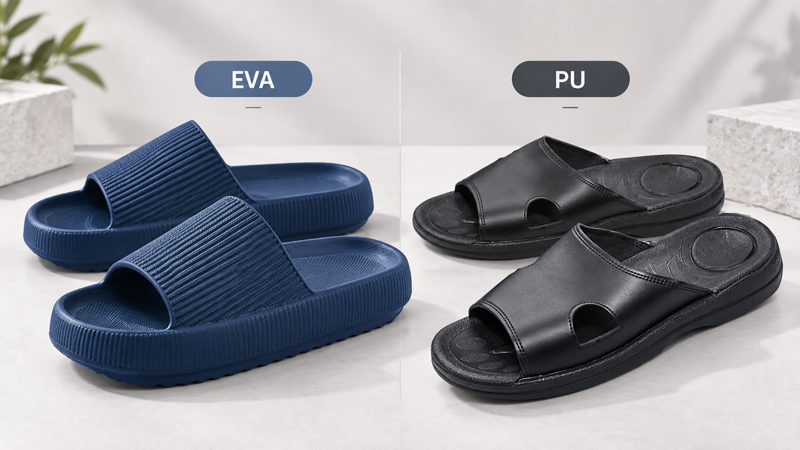
When buyers compare slipper materials for different market positions, PU and EVA are two common options that often come into consideration.
Not because one material is always better.
But because they solve different product needs.
EVA is widely used because it is lightweight, comfortable, easy to mold, and cost-efficient for large-volume slipper production.
PU is often chosen because it provides a more premium appearance, leather-like texture, and stronger brand positioning for fashion-oriented slipper designs.
Featured Snippet
PU and EVA slippers serve different purposes in footwear manufacturing. EVA is valued for lightweight comfort, cushioning, and cost efficiency, while PU is preferred for premium appearance, leather-like texture, and brand-focused designs. In many OEM slipper projects, PU leather uppers are combined with EVA outsoles to balance appearance, comfort, and production cost.
For wholesale buyers, PU vs EVA is not simply a material comparison. It is a decision related to product positioning, target customers, and expected market value.
While EVA focuses on comfort and efficiency, PU helps create a more premium product appearance. Understanding the difference is important when developing private label and OEM slipper collections.
For a broader comparison of common slipper materials, see our complete guide to slipper materials.
What Does PU Mean in Slippers?
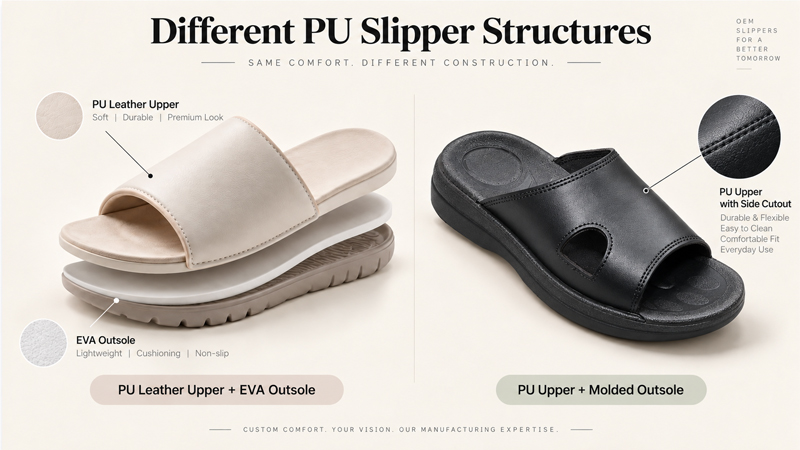
When buyers search for PU slippers, it is important to understand that “PU” can refer to different product structures.
In slipper manufacturing, PU is mainly used in two ways:
- PU leather upper + EVA outsole
- Full PU one-piece slippers
These two structures have different production methods, price levels, and market applications.
For more information about PU applications and OEM considerations, see our guide to PU Slippers: Premium Material Guide for OEM Buyers.
PU Leather Upper + EVA Outsole
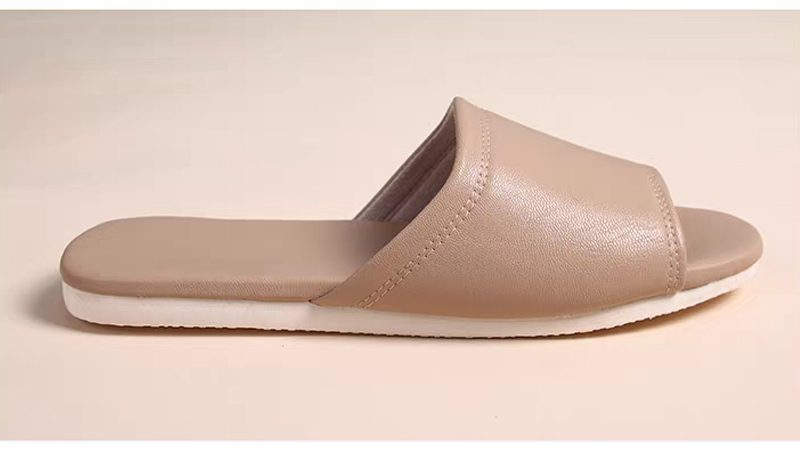
The most common PU slipper structure in the market is:
PU leather upper + EVA outsole
This structure combines the advantages of two materials:
| Component | Main Function |
|---|---|
| PU leather upper | Premium appearance, texture, and product differentiation |
| EVA outsole | Lightweight comfort, cushioning, and cost efficiency |
The PU upper creates a more premium visual appearance, while the EVA outsole keeps the slipper lightweight and comfortable for daily wear.
This structure is widely used in:
- home slippers
- cotton slippers
- casual sandals
- fashion-oriented slipper collections
For more details about EVA properties and manufacturing, see our guide to What Is EVA Material in Slippers? Properties, Manufacturing & OEM Guide.
Full PU One-Piece Slippers
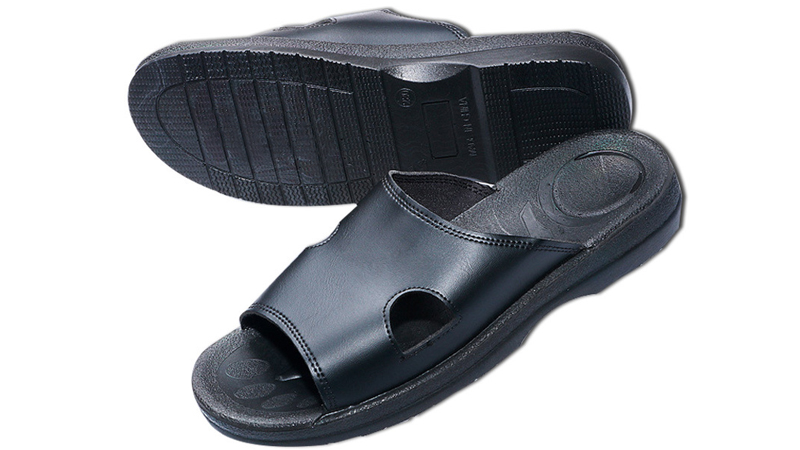
Full PU slippers use foamed PU material for the entire slipper structure.
Compared with PU leather upper + EVA outsole designs, full PU slippers have:
- integrated upper and sole structure
- no separate outsole bonding
- stronger overall structure
They are commonly used for:
- bathroom slippers
- outdoor slippers
- products requiring higher durability
However, full PU slippers usually have:
- higher material cost
- heavier weight
- higher requirements for material quality
Therefore, buyers should choose the structure based on the target market rather than simply choosing “PU” as a material name.
PU vs EVA Slippers: Quick Comparison
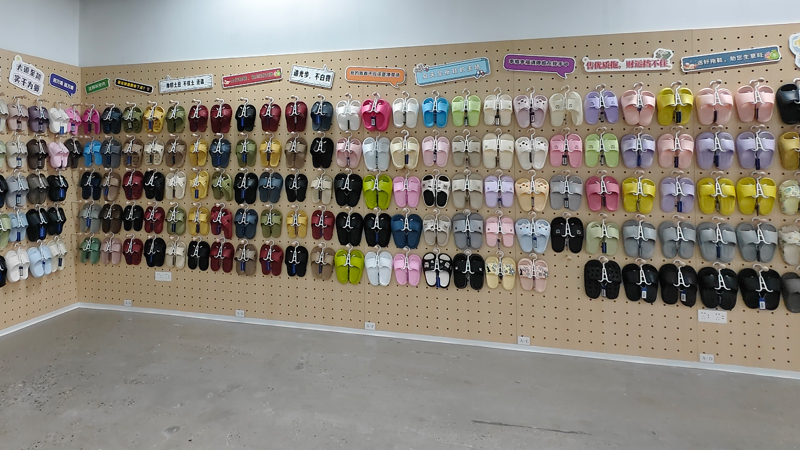
Before comparing each material in detail, the table below provides a quick overview of the main differences between PU and EVA slippers.
| Factor | PU Slippers | EVA Slippers |
|---|---|---|
| Main advantage | Premium appearance and brand value | Lightweight comfort and cost efficiency |
| Weight | Usually heavier | Lightweight |
| Comfort | Good structure and support | Softer cushioning and flexibility |
| Appearance | Leather-like, premium look | Simple, casual appearance |
| Waterproof performance | Depends on PU type and surface treatment | Excellent |
| Durability | Good with proper material quality | Good for lightweight daily use |
| Production cost | Higher | Lower |
| Best application | Fashion, premium, private label products | Casual, indoor, high-volume products |
In simple terms:
- Choose EVA when comfort, lightweight feel, and production efficiency are the priority.
- Choose PU when appearance, product positioning, and brand value are more important.
However, many successful slipper products combine different materials instead of choosing only one.
For example:
PU leather upper + EVA outsole
is one of the most common structures in commercial slipper production because it combines premium appearance with lightweight comfort.
For a broader comparison of common slipper materials, see our complete guide to slipper materials.
EVA Slippers Explained: Lightweight Comfort and Cost Efficiency
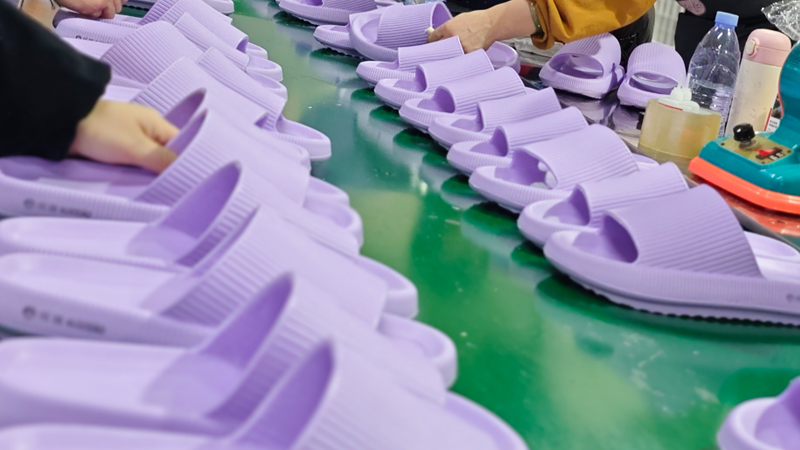
EVA is one of the most widely used materials in slipper manufacturing.
Its popularity comes from a practical balance between:
- comfort
- lightweight performance
- production efficiency
- cost control
For wholesale buyers, EVA is often the preferred choice when the product needs to be practical, affordable, and suitable for large-volume production.
For a complete explanation of EVA properties, manufacturing, and OEM applications, see our guide to What Is EVA Material in Slippers? Properties, Manufacturing & OEM Guide.
Advantages of EVA Slippers
EVA provides several advantages that make it suitable for commercial slipper projects.
Lightweight Structure
One of EVA’s biggest advantages is its low weight.
Compared with many traditional sole materials, EVA slippers are easier to wear for long periods.
This makes EVA suitable for:
- indoor slippers
- casual slides
- travel slippers
- beach slippers
For customers, lightweight products usually create a more comfortable wearing experience.
For sellers, lower product weight can also help reduce:
- shipping cost
- storage pressure
- handling difficulty
Soft Cushioning and Flexibility
EVA has a foam structure that provides natural cushioning.
Compared with harder materials, EVA slippers usually feel:
- softer
- more flexible
- more comfortable for barefoot use
This is why EVA is widely used in products where comfort is the main selling point.
Efficient OEM Production
From an OEM perspective, EVA offers advantages in manufacturing.
It is suitable for:
- injection molding
- one-piece slipper designs
- large-volume production
- easy color customization
This allows brands and wholesalers to develop products efficiently.
Cost Efficiency
For mass-market slipper projects, cost is always an important consideration.
EVA helps buyers achieve:
- competitive pricing
- easier inventory management
- wider market coverage
This makes EVA especially suitable for:
- marketplace products
- promotional slippers
- hotel slippers
- large retail programs
Limitations of EVA Slippers
Although EVA is highly practical, it also has some limitations.
Compared with PU, EVA usually has:
- simpler appearance
- lower perceived premium value
- fewer fashion design possibilities
For brands that compete mainly through visual appearance and product presentation, EVA alone may not create enough differentiation.
EVA is also generally less suitable when customers expect:
- leather-like texture
- luxury feeling
- fashion-oriented styling
PU Slippers Explained: Premium Appearance and Brand Value
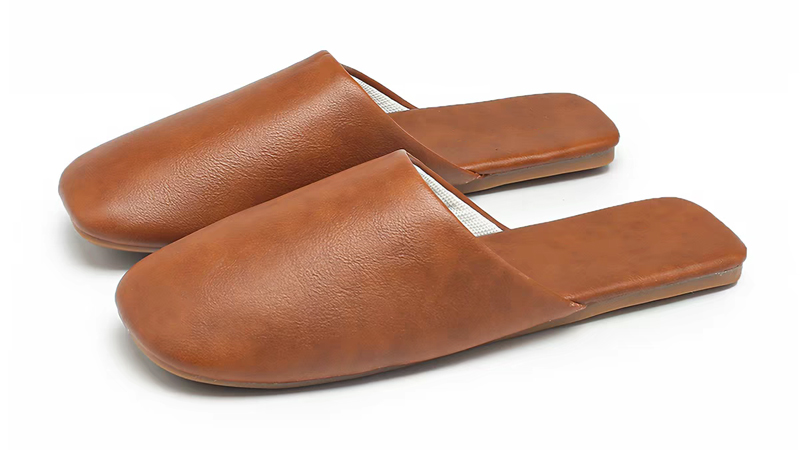
PU is often selected when appearance and product positioning are more important than simply reducing cost.
Unlike EVA, which is mainly valued for comfort and practicality, PU is often associated with:
- premium appearance
- fashion design
- better shelf presentation
- brand differentiation
For more details about PU applications in slipper manufacturing, see our guide to PU Slippers: Premium Material Guide for OEM Buyers.
Advantages of PU Slippers
Premium Appearance
The biggest advantage of PU is visual appeal.
PU leather can provide:
- smooth surface texture
- leather-like appearance
- more sophisticated product presentation
This makes PU suitable for brands that want slippers to look more premium.
Better Brand Positioning
For private label and retail brands, appearance often influences purchasing decisions.
Compared with basic EVA slippers, PU slippers can help create:
- higher perceived value
- stronger product differentiation
- more premium market positioning
This is especially useful for:
- fashion brands
- boutique retailers
- lifestyle product lines
More Design Possibilities
PU materials offer more flexibility in appearance design.
They can support:
- different textures
- stitched details
- decorative elements
- fashion-oriented designs
This allows brands to create products that look less like standard commodity slippers.
Limitations of PU Slippers
Despite its advantages, PU also has some limitations.
Compared with EVA, PU products usually involve:
- higher material cost
- higher production requirements
- heavier product weight
PU quality is also more dependent on material formulation.
Lower-quality PU may experience issues such as:
- surface cracking
- aging
- reduced performance after long-term moisture exposure
Therefore, supplier quality control is important when developing PU slipper projects.
Comfort Comparison: PU vs EVA
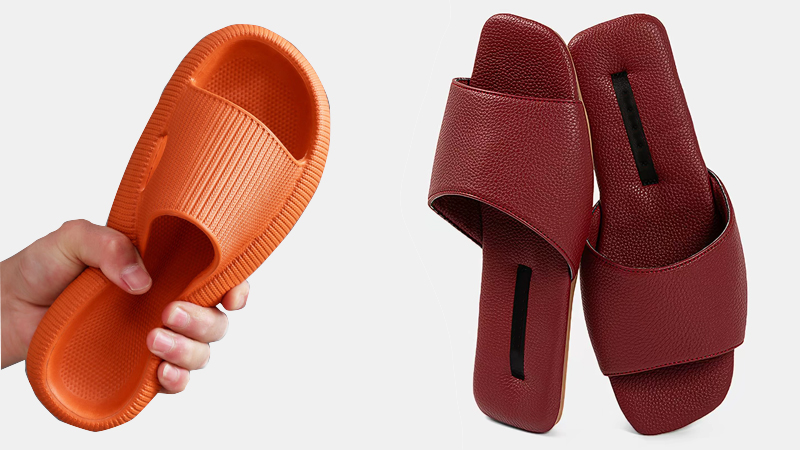
When comparing comfort, EVA usually has an advantage because of its lightweight and cushioning characteristics.
However, comfort is not only about softness.
Different customers may prefer different wearing experiences.
EVA Comfort Advantages
EVA slippers are usually preferred for:
- soft underfoot feeling
- lightweight wearing experience
- flexible movement
- barefoot comfort
For daily indoor use, EVA is often one of the most comfortable choices.
PU Comfort Characteristics
PU slippers usually provide a different type of comfort.
Instead of soft cushioning, PU often provides:
- more structured support
- better shape retention
- premium material feeling
For some consumers, this firmer and more structured feeling creates a higher-quality impression.
Comfort Comparison Table
| Comfort Factor | PU Slippers | EVA Slippers |
|---|---|---|
| Lightweight feeling | Moderate | Excellent |
| Soft cushioning | Good | Excellent |
| Flexibility | Good | Excellent |
| Structure and support | Better | Good |
| Barefoot comfort | Good | Excellent |
| Premium wearing feeling | Excellent | Moderate |
For wholesale buyers, the better choice depends on the target customer:
- If the product focuses on daily comfort and practicality, EVA is usually the better option.
- If the product focuses on premium appearance and brand positioning, PU may provide more value.
- If both appearance and comfort are important, PU upper + EVA outsole structures are often the most balanced solution.
Durability and Maintenance Comparison
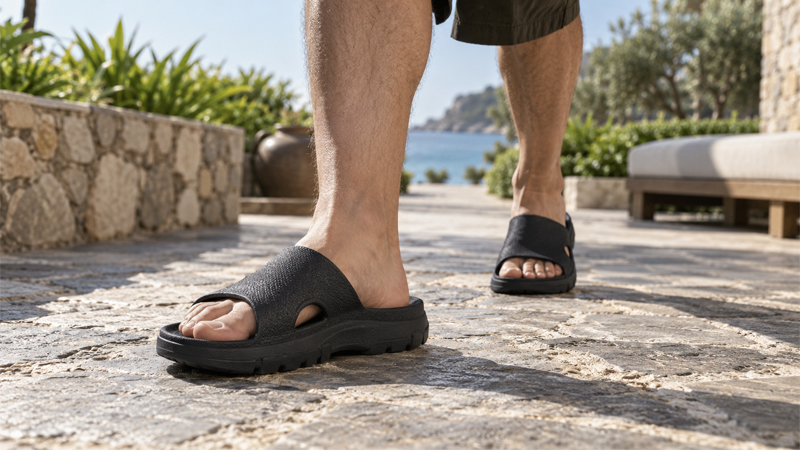
When comparing PU and EVA slippers, durability is not simply about which material lasts longer.
The actual lifespan depends on:
- material quality
- product structure
- usage environment
- storage conditions
- production quality
PU and EVA have different durability advantages.
EVA usually performs well in lightweight daily-use products, while PU can provide stronger surface appearance retention and a more premium product structure when properly manufactured.
EVA Slipper Durability
EVA slippers are widely used because they provide a good balance between comfort and durability.
For normal daily use, EVA can offer:
- good flexibility
- comfortable cushioning
- resistance to water
- stable performance in indoor environments
However, because EVA is a foam material, extremely soft formulations may experience:
- compression over time
- reduced support
- faster wear under heavy use
This is why EVA density and hardness selection are important in OEM production.
A properly designed EVA slipper can provide excellent durability for:
- home slippers
- hotel slippers
- casual slides
- lightweight summer footwear
PU Slipper Durability
PU slippers have different durability characteristics.
High-quality PU materials can provide:
- better surface appearance retention
- stronger structure
- improved resistance to daily bending
However, PU performance depends heavily on material quality and storage conditions.
Potential issues with lower-quality PU include:
- surface cracking
- aging
- hydrolysis after long-term exposure to moisture
For this reason, buyers should pay attention not only to the material name but also to:
- PU quality
- supplier experience
- production process
- storage recommendations
Durability Comparison Table
| Factor | PU Slippers | EVA Slippers |
|---|---|---|
| Daily indoor use | Excellent | Excellent |
| Flexibility | Good | Excellent |
| Surface appearance retention | Excellent | Moderate |
| Water resistance | Depends on PU type | Excellent |
| Heavy outdoor use | Good | Moderate |
| Lightweight durability | Good | Excellent |
| Maintenance requirements | Higher | Lower |
Appearance and Brand Positioning: PU vs EVA
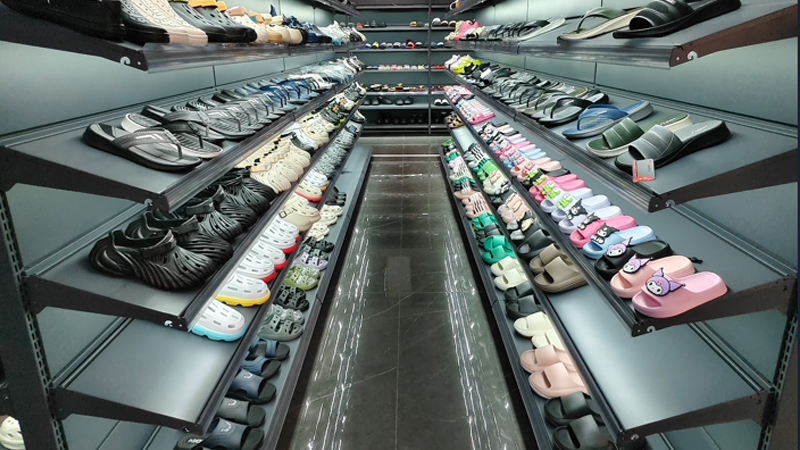
For many brands and retailers, slipper selection is not only about performance.
Appearance and perceived value can directly influence:
- retail price
- customer expectations
- brand positioning
- product differentiation
This is where PU has a clear advantage.
Why Brands Choose PU Slippers
PU materials can create a more premium visual experience.
Compared with basic EVA slippers, PU products can provide:
- leather-like appearance
- smoother texture
- more sophisticated design possibilities
- stronger shelf appeal
This makes PU suitable for brands that want slippers to look more like fashion footwear rather than simple functional products.
PU for Private Label and Fashion Collections
For private label buyers, appearance is often an important selling point.
PU slippers are commonly used for:
- boutique footwear collections
- lifestyle brands
- premium home footwear
- fashion-oriented products
The material allows brands to create more differentiated designs through:
- surface textures
- decorative details
- different colors and finishes
EVA Product Positioning
EVA has a different market advantage.
Rather than premium appearance, EVA focuses on:
- comfort
- simplicity
- practicality
- value
EVA slippers are often successful in markets where customers prioritize:
- lightweight wearing
- easy cleaning
- affordability
- daily convenience
Typical applications include:
- household slippers
- beach slippers
- casual slides
- mass-market footwear
Brand Positioning Comparison
| Factor | PU Slippers | EVA Slippers |
|---|---|---|
| Visual appeal | Premium | Functional |
| Brand value | Higher | Moderate |
| Fashion design | Excellent | Limited to moderate |
| Mass-market suitability | Good | Excellent |
| Retail presentation | Strong | Simple |
| Price positioning | Mid to premium | Budget to mid-range |
Cost Comparison for Wholesale Buyers
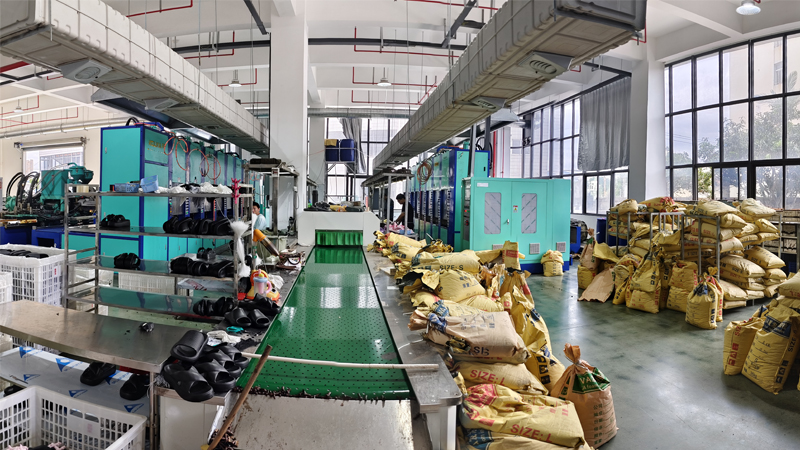
For wholesale buyers, cost is one of the most important factors when selecting slipper materials.
However, the lowest unit price is not always the best choice.
The right material depends on:
- target selling price
- customer expectations
- market positioning
- expected profit margin
EVA Cost Advantages
EVA is widely used in high-volume slipper production because of its production efficiency.
Advantages include:
- lower material cost
- efficient molding process
- easier color customization
- suitable for large quantities
This makes EVA a popular choice for:
- marketplace sellers
- retail chains
- promotional products
- large-volume wholesale orders
PU Cost Considerations
PU slippers usually have a higher production cost because of:
- material cost
- additional processing requirements
- more complex design possibilities
However, the higher cost can be justified when the product can achieve:
- higher retail pricing
- stronger brand positioning
- better product differentiation
For many brands, PU is not chosen because it is cheaper.
It is chosen because it creates more perceived value.
Cost Comparison Table
| Factor | PU Slippers | EVA Slippers |
|---|---|---|
| Material cost | Higher | Lower |
| Production efficiency | Moderate | Excellent |
| Large-volume production | Good | Excellent |
| Premium pricing potential | Higher | Moderate |
| Cost control | Moderate | Excellent |
| Best market position | Premium and branded products | Mass-market and practical products |
OEM Considerations When Choosing PU or EVA Slippers
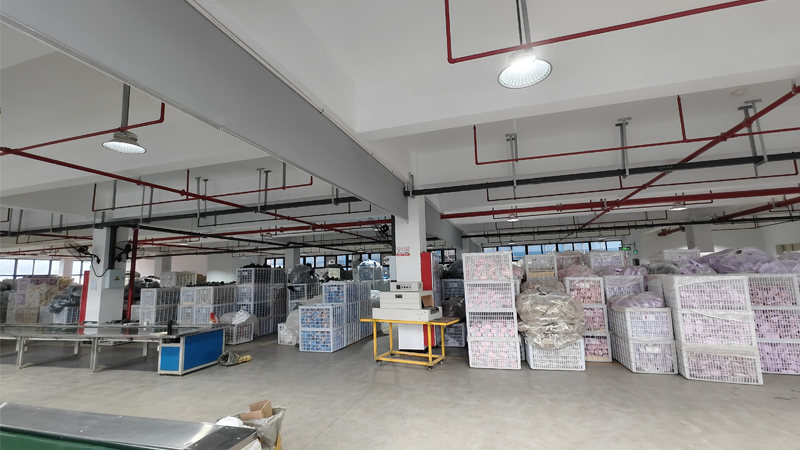
For OEM buyers, choosing between PU and EVA should start with the product strategy, not only the material price.
A successful slipper project needs to consider:
- target customers
- selling channel
- product positioning
- production structure
- quality requirements
Product Positioning
The first question buyers should ask is:
What kind of product do I want to create?
Choose EVA when the goal is:
- comfortable daily slippers
- affordable products
- large-volume sales
- lightweight footwear
Choose PU when the goal is:
- premium appearance
- fashion positioning
- stronger brand identity
- higher perceived value
Material Structure Selection
The material structure is often more important than the material name itself.
Common options include:
| Structure | Suitable For |
|---|---|
| PU leather upper + EVA outsole | Premium appearance with comfort and cost balance |
| Full EVA slipper | Lightweight and cost-efficient products |
| Full PU slipper | More durable and premium-positioned products |
For many commercial slipper projects, the combination of PU and EVA provides the best balance.
Quality Control Considerations
OEM buyers should confirm:
For EVA:
- density and hardness
- compression performance
- color consistency
- molding quality
For PU:
- surface quality
- material durability
- resistance to cracking
- storage requirements
A reliable supplier should help buyers choose the correct material based on the final application.
Combining PU Appearance with EVA Comfort
Many successful slipper products do not choose between PU and EVA.
Instead, they combine both advantages.
A common example is:
PU leather upper + EVA outsole
This structure provides:
- premium appearance from PU
- lightweight comfort from EVA
- efficient production
- competitive pricing
For buyers interested in combination sole structures, see our guide to EVA and Rubber Combination Sole Structure Explained.
For cost-focused material comparisons, see our guide to EVA vs PVC Slippers: Which Is Better for Wholesale.
Common PU Slipper Concerns
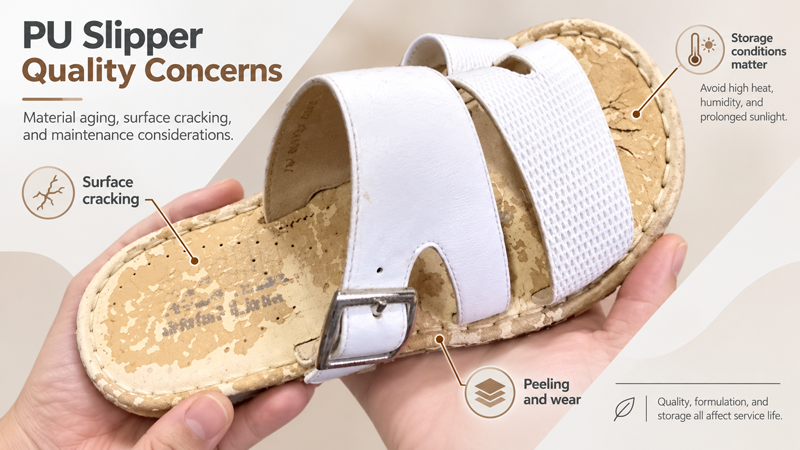
Although PU slippers offer better appearance and premium positioning, some buyers are concerned about long-term performance.
Common questions include:
- Will PU slippers crack?
- Can PU materials be affected by moisture?
- How should PU slippers be stored?
Understanding these concerns helps wholesale buyers choose suitable materials and avoid unnecessary quality problems.
Does PU Crack?
High-quality PU materials can provide good flexibility and daily-use durability.
However, PU performance depends heavily on:
- material quality
- production process
- storage environment
- usage conditions
Lower-quality PU materials may develop problems such as:
- surface cracking
- peeling
- loss of flexibility
Long-term exposure to:
- strong sunlight
- high temperature
- poor storage conditions
may accelerate material aging.
For OEM buyers, choosing a reliable supplier and suitable PU quality is more important than simply choosing a lower-cost option.
Can PU Slippers Hydrolyze?
Hydrolysis is one of the common concerns associated with certain PU materials.
Hydrolysis refers to the breakdown of polyurethane caused by long-term exposure to moisture and humidity.
Potential factors include:
- high humidity storage
- long-term water exposure
- poor material formulation
To reduce these risks, buyers should consider:
- selecting suitable PU materials
- maintaining proper storage conditions
- avoiding long-term moisture exposure
For products used in wet environments, material selection should match the application.
How to Maintain PU Slippers
Proper storage and maintenance can help extend the lifespan of PU slippers.
Recommended practices include:
- keep products dry after use
- avoid long-term soaking
- store in a ventilated environment
- avoid prolonged direct sunlight exposure
For retailers and distributors, proper warehouse storage is also important to maintain product quality before sale.
Which Material Should Wholesale Buyers Choose?
There is no universal “best” material between PU and EVA.
The better choice depends on:
- target customers
- selling channel
- product positioning
- expected price range
Instead of asking:
“Is PU better than EVA?”
Wholesale buyers should ask:
“Which material creates the right value for my market?”
Choose EVA When Comfort and Efficiency Matter Most
EVA is usually the better choice when buyers need:
- lightweight products
- comfortable daily wear
- efficient production
- competitive pricing
Typical applications include:
- home slippers
- casual slides
- beach slippers
- hotel slippers
- large-volume retail products
EVA is especially suitable for markets where customers prioritize function and comfort.
Choose PU When Appearance and Brand Value Matter More
PU is usually the better choice when buyers need:
- premium appearance
- stronger product differentiation
- fashion-oriented designs
- higher perceived value
Typical applications include:
- private label collections
- boutique footwear
- premium home slippers
- lifestyle brands
PU works well when the product needs to compete through design and presentation rather than only price.
Choose PU + EVA Combination When You Need Both
For many commercial slipper projects, the best solution is not choosing only PU or EVA.
Instead:
PU leather upper + EVA outsole
provides a balanced structure.
It combines:
- PU appearance
- EVA comfort
- controlled production cost
- suitable retail positioning
This is one of the most common structures for brands that want to upgrade from basic EVA slippers while keeping production efficiency.
Scenario Guide: PU vs EVA Slippers Selection
| Wholesale Scenario | Recommended Material Structure | Reason |
|---|---|---|
| Budget marketplace slippers | EVA | Lower cost and efficient production |
| Indoor home slippers | EVA or PU + EVA | Comfort and practicality |
| Hotel slippers | EVA | Lightweight and cost-efficient |
| Fashion slippers | PU | Better appearance and design flexibility |
| Premium private label products | PU or PU + EVA | Stronger brand positioning |
| Large retail programs | EVA | Better cost control |
| Boutique lifestyle brands | PU | Higher perceived value |
Conclusion: Which Material Offers Better Value?
PU and EVA slippers are designed for different market needs rather than competing for a single “best” material.
EVA is usually preferred for:
- lightweight comfort
- efficient production
- cost control
- large-volume wholesale projects
PU is usually selected for:
- premium appearance
- stronger brand positioning
- fashion-oriented designs
For many OEM slipper projects, the best solution is not choosing only one material.
A PU leather upper combined with an EVA outsole can provide a balance between:
- premium appearance
- comfortable wearing experience
- competitive production cost
The right choice depends on the target market, product positioning, and customer expectations.
For a complete overview of slipper materials, see our complete guide to slipper materials.
For more information about premium PU applications, see our guide to PU Slippers: Premium Material Guide for OEM Buyers.
PU vs EVA Slippers FAQ
Are PU slippers better than EVA slippers?
It depends on the product goal.
PU is better for premium appearance and brand positioning, while EVA is better for lightweight comfort, cost efficiency, and large-volume production.
Are PU slippers waterproof?
PU performance depends on the specific material structure.
PU leather surfaces can provide some water resistance, but not all PU slippers are completely waterproof.
For wet environments, buyers should confirm the material structure and application requirements.
Which is more comfortable, PU or EVA slippers?
EVA is usually more comfortable for daily wear because it is lighter, softer, and provides better cushioning.
PU provides a more structured and premium wearing experience.
Why do many PU slippers use EVA soles?
Because PU and EVA have complementary advantages.
PU provides:
- premium appearance
- leather-like texture
EVA provides:
- lightweight comfort
- cushioning
- cost efficiency
Together, they create a balanced slipper structure.
Should I choose PU or EVA for my slipper brand?
The answer depends on your market positioning.
Choose EVA for:
- comfort-focused products
- affordable collections
- large-volume sales
Choose PU for:
- premium designs
- fashion collections
- stronger brand differentiation
Many successful slipper projects combine PU appearance with EVA comfort.