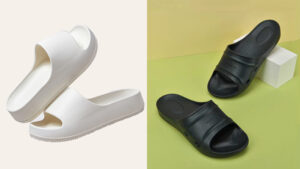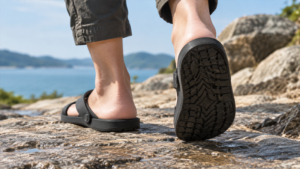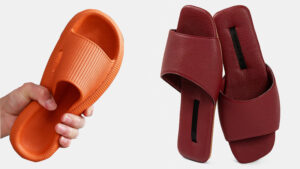
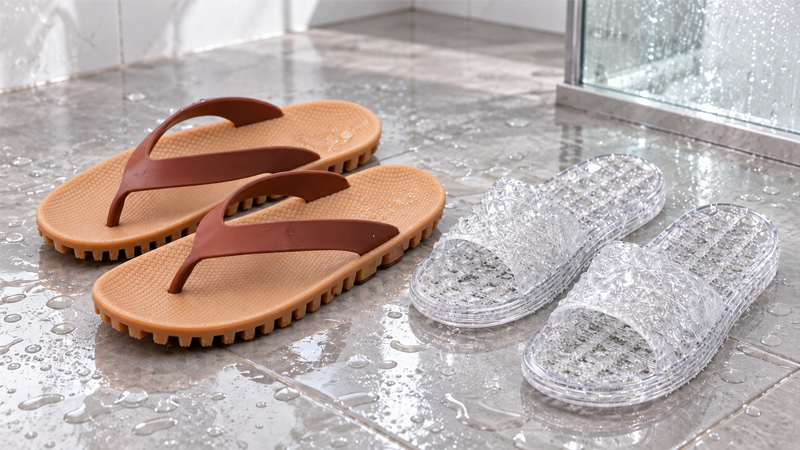
When buyers compare bathroom slippers for wholesale projects, PVC and rubber are two of the most common material choices.
Not because one material is always better.
But because they are designed for different market needs.
PVC bathroom slippers are widely used because they are waterproof, affordable, easy to produce, and suitable for large-volume orders.
Rubber bathroom slippers are usually selected when buyers need stronger grip, better durability, and more reliable performance on wet floors.
However, choosing between PVC and rubber is not only a material decision.
It is also related to:
- target market
- usage environment
- product positioning
- cost expectations
For example, hotels and budget bathroom slipper projects often prioritize cost efficiency and waterproof performance, while premium home, swimming pool, and safety-focused markets usually pay more attention to anti-slip performance and durability.
For a broader comparison of common slipper materials, see our complete guide to slipper materials.
Featured Snippet
PVC bathroom slippers are commonly chosen for their low cost, waterproof performance, and efficient mass production, while rubber bathroom slippers provide better grip, durability, and wet-floor performance. For wholesale buyers, PVC is suitable for budget and high-volume projects, while rubber is preferred for premium and anti-slip focused applications.
PVC vs Rubber Bathroom Slippers: Quick Comparison
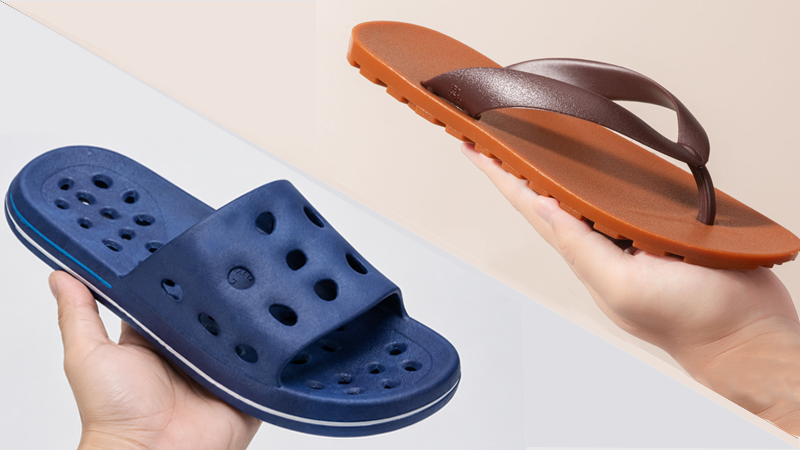
Before comparing each material in detail, the table below shows the main differences between PVC and rubber bathroom slippers from a wholesale buyer’s perspective.
| Factor | PVC Bathroom Slippers | Rubber Bathroom Slippers |
|---|---|---|
| Main advantage | Low cost and waterproof performance | Grip and durability |
| Weight | Lightweight | Heavier |
| Comfort | Moderate | Better cushioning and rebound |
| Anti-slip performance | Depends heavily on tread design | Usually stronger |
| Durability | Good for daily basic use | Excellent for long-term use |
| Production cost | Lower | Higher |
| OEM flexibility | High | Moderate |
| Best application | Hotels, budget bathroom slippers, large-volume projects | Premium bathroom slippers, pools, wet environments |
In simple terms:
- Choose PVC when waterproof performance, cost control, and production efficiency are the priority.
- Choose rubber when anti-slip performance, durability, and long-term use are more important.
- Choose PVC or rubber based on the actual market demand rather than simply choosing the cheaper material.
For buyers comparing PVC with other slipper materials, see our guide to What Is PVC Material in Slippers? Advantages, Disadvantages & OEM Guide.
What Are PVC Bathroom Slippers?
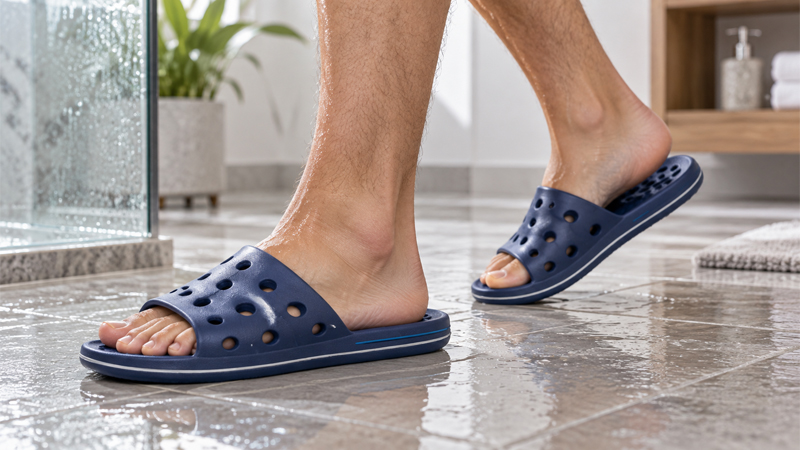
PVC is one of the most common materials used in bathroom slipper manufacturing.
The main reason is simple:
PVC offers a practical balance between:
- waterproof performance
- low production cost
- easy molding
- large-scale manufacturing efficiency
For many mass-market bathroom slipper projects, PVC remains one of the most practical choices.
For more details about PVC material properties and OEM applications, see our guide to What Is PVC Material in Slippers? Advantages, Disadvantages & OEM Guide.
Full PVC Injection Molded Bathroom Slippers
The most common PVC bathroom slipper structure is:
Full PVC one-piece injection molded slippers
In this structure:
- upper and sole are formed together
- no glue bonding is required
- the slipper is completely waterproof
This manufacturing method provides several advantages:
- stable production quality
- high production efficiency
- lower manufacturing cost
- reduced risk of sole separation
Because of these advantages, full PVC slippers are widely used for:
- hotel bathroom slippers
- household bathroom slippers
- budget retail products
- large-volume wholesale orders
PVC + EVA Combination Bathroom Slippers
Besides full PVC structures, some bathroom slippers combine PVC with EVA.
A common structure is:
- PVC upper
- EVA cushioning layer
- PVC or other outsole layer
This design aims to combine:
- PVC waterproof advantages
- EVA comfort and cushioning
Compared with full PVC slippers, PVC + EVA structures usually provide a softer wearing experience.
However, they also involve:
- higher production cost
- more complex manufacturing
- additional bonding processes
Therefore, they are usually positioned above basic PVC bathroom slippers.
Advantages of PVC Bathroom Slippers
Waterproof Performance
PVC is naturally resistant to water.
For bathroom applications, this is one of its biggest advantages.
PVC slippers:
- do not absorb water easily
- dry quickly
- are easy to clean
- perform well in frequently wet environments
This makes them suitable for:
- bathrooms
- hotels
- public shower areas
- household daily use
Low Cost Production
One of the main reasons PVC remains popular is production efficiency.
PVC injection molding allows manufacturers to produce large quantities with:
- stable quality
- fast production cycles
- competitive pricing
This makes PVC suitable for buyers who need:
- affordable products
- large-volume orders
- cost-controlled retail programs
Easy Cleaning and Maintenance
PVC surfaces are usually smooth and non-absorbent.
Daily maintenance is simple:
- rinse with water
- remove surface dirt
- dry naturally
Compared with fabric or other absorbent materials, PVC is much easier to maintain in wet environments.
Flexible Design Options
PVC can be produced in many colors and appearances.
Depending on the formulation, manufacturers can create:
- solid colors
- transparent styles
- crystal PVC designs
- colorful bathroom slipper collections
This gives buyers more options for:
- retail presentation
- seasonal collections
- OEM color customization
Limitations of PVC Bathroom Slippers
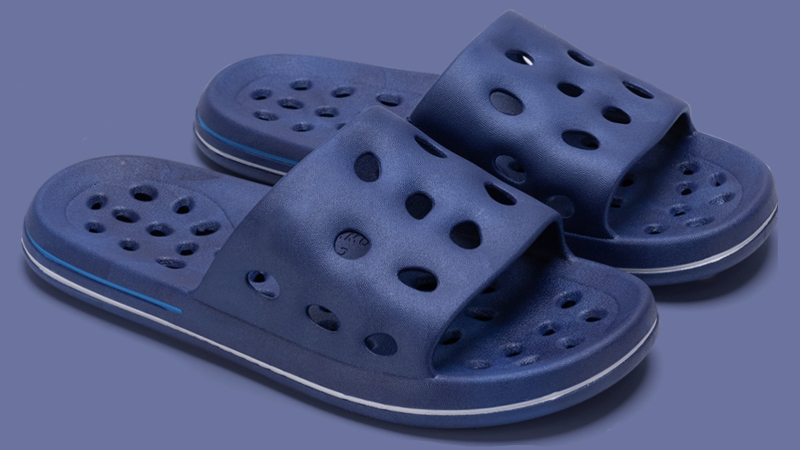
Although PVC is practical and cost-efficient, it also has some limitations compared with higher-performance materials.
Firmer Foot Feel
PVC is a relatively rigid material compared with EVA or rubber.
As a result, PVC slippers usually provide:
- less cushioning
- less flexibility
- a firmer underfoot feeling
For short-term bathroom use, this is usually acceptable.
However, for consumers who wear slippers for long periods every day, softer materials may provide better comfort.
Lower Comfort for Long-Term Wear
Because PVC does not have the same elasticity as EVA or rubber, it generally provides less shock absorption.
This means PVC slippers may feel:
- harder
- less supportive
- less comfortable during extended walking
For premium home slipper projects where comfort is a key selling point, buyers often consider EVA or rubber-based structures instead.
Anti-Slip Performance Depends More on Design
PVC itself does not provide the same natural grip as rubber.
Its anti-slip performance depends heavily on:
- outsole pattern design
- tread depth
- drainage channels
- surface contact area
A well-designed PVC outsole can provide acceptable bathroom performance, but it usually cannot match high-quality rubber in demanding wet environments.
What Are Rubber Bathroom Slippers?
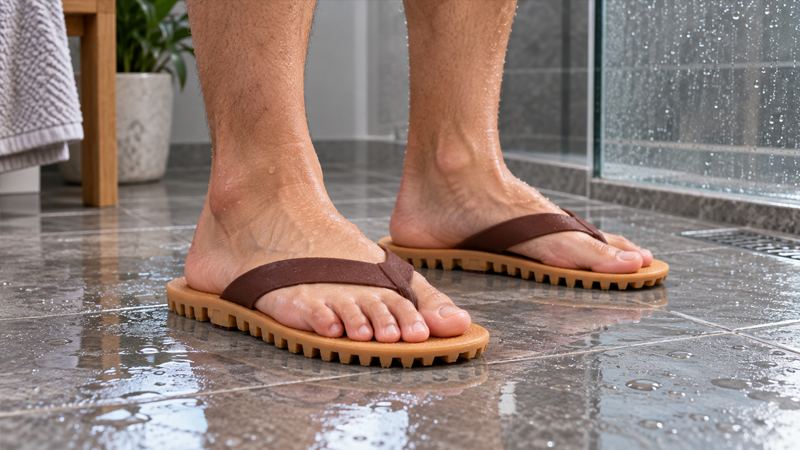
Rubber bathroom slippers are usually chosen when performance requirements are higher.
Compared with PVC, rubber provides stronger elasticity and better surface grip.
This makes rubber especially suitable for:
- wet bathrooms
- swimming pools
- public shower areas
- premium household slippers
For more information about rubber sole applications, see our guide to Rubber Sole Slippers: Durability & Anti-Slip Benefits.
Rubber + EVA Combination Structure
One of the most common rubber bathroom slipper structures is:
Rubber outsole + EVA footbed + rubber strap
This structure combines the advantages of different materials.
| Component | Main Function |
|---|---|
| Rubber outsole | Grip, abrasion resistance, wet-floor performance |
| EVA footbed | Lightweight cushioning and comfort |
| Rubber strap | Flexibility and durability |
This structure is popular because it balances:
- anti-slip performance
- wearing comfort
- product durability
For many mid-range and premium bathroom slipper projects, rubber + EVA structures provide a better overall experience than single-material designs.
For a deeper explanation of how EVA and rubber work together in sole design, see our guide to EVA and Rubber Combination Sole: Benefits, Structure & OEM Guide.
Full Rubber Bathroom Slippers
Another option is:
Full rubber one-piece slippers
In this structure, the upper and sole are made from rubber material.
Advantages include:
- strong overall durability
- excellent resistance to frequent use
- stable performance in wet environments
Full rubber slippers are commonly used for:
- public bathrooms
- swimming pools
- professional wet areas
However, compared with lighter materials, full rubber slippers usually have:
- higher weight
- higher production cost
- longer production cycles
Advantages of Rubber Bathroom Slippers
Strong Anti-Slip Performance
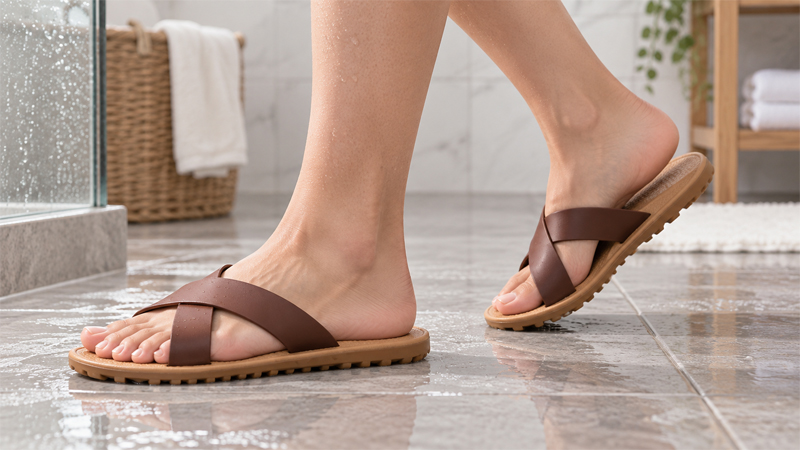
The biggest advantage of rubber is its grip.
Rubber has natural elasticity, allowing the outsole to better adapt to small surface irregularities.
This helps improve:
- floor contact
- traction
- stability on wet surfaces
For bathrooms with:
- water accumulation
- wet tiles
- soap residue
rubber generally provides more reliable performance than standard PVC.
Better Durability and Wear Resistance
Rubber is highly valued for long-term use.
Compared with PVC, rubber usually provides:
- better abrasion resistance
- stronger flexibility retention
- longer outsole lifespan
This makes rubber suitable for buyers who prioritize fewer replacements and lower long-term maintenance costs.
Better Performance in Wet Environments
Bathrooms are challenging environments because surfaces are often:
- wet
- smooth
- covered with soap or cleaning products
Rubber performs better in these situations because it maintains elasticity and grip.
This is why rubber slippers are often selected for:
- hotels with higher service standards
- swimming pools
- premium bathroom products
- safety-focused applications
Limitations of Rubber Bathroom Slippers
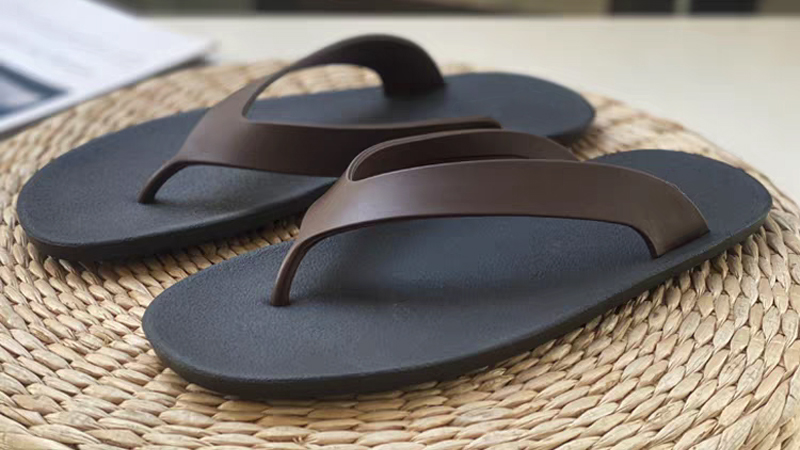
Despite its performance advantages, rubber also has several trade-offs.
Higher Cost
Rubber materials and production processes generally cost more than PVC.
Reasons include:
- higher raw material cost
- more complex processing
- longer production cycles
Therefore, rubber slippers usually target higher price segments.
Heavier Weight
Rubber has a higher density compared with PVC and EVA.
This means rubber slippers may feel:
- heavier during wear
- less suitable for customers who prioritize lightweight products
For cross-border sellers, weight can also influence:
- shipping cost
- logistics efficiency
If you want a broader comparison between rubber and EVA in terms of comfort, weight, and durability, see our guide to EVA vs Rubber Sole: Which Is Better for Comfort and Durability.
More Complex Production
Compared with PVC injection molding, rubber production usually requires more complex processes.
Depending on the structure, production may involve:
- vulcanization
- additional bonding
- longer molding cycles
This can affect:
- production lead time
- MOQ requirements
- customization cost
For buyers, the choice between PVC and rubber depends on whether the project prioritizes cost efficiency or higher performance.
Anti-Slip Performance Comparison: PVC vs Rubber
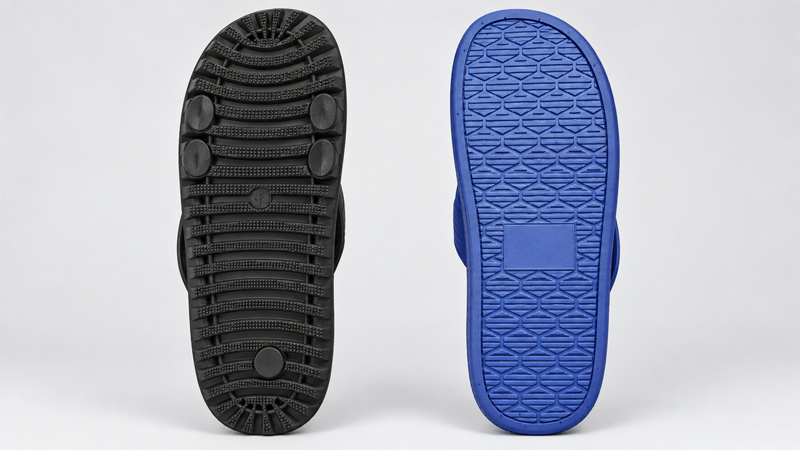
For bathroom slipper buyers, anti-slip performance is usually one of the most important factors.
Bathrooms create challenging conditions because floors are often:
- wet
- smooth
- covered with soap or shower products
Under these conditions, the difference between PVC and rubber becomes more obvious.
PVC Anti-Slip Performance
PVC bathroom slippers can provide acceptable anti-slip performance when the outsole is designed properly.
The main factors affecting PVC slipper grip include:
- tread pattern
- drainage channels
- outsole hardness
- contact area with the floor
For basic bathroom use, PVC slippers with proper anti-slip patterns can meet everyday needs.
However, on more demanding surfaces such as:
- wet ceramic tiles
- soap-covered floors
- constantly wet shower areas
PVC generally provides less stable grip compared with rubber.
The reason is that PVC has lower elasticity and cannot adapt to surface irregularities as effectively as rubber.
Rubber Anti-Slip Performance
Rubber has a natural advantage in wet environments because of its elasticity and grip.
When walking on wet floors, rubber can:
- maintain better surface contact
- improve traction
- reduce slipping risk
This makes rubber especially suitable for:
- bathrooms with frequent water exposure
- swimming pools
- public shower areas
- premium anti-slip slipper projects
For buyers whose customers prioritize safety, rubber usually provides stronger selling value.
Wet Floor Performance Comparison
| Application Scenario | PVC Bathroom Slippers | Rubber Bathroom Slippers |
|---|---|---|
| Dry bathroom floor | Good | Excellent |
| Wet ceramic tiles | Depends on tread design | Excellent |
| Soap or shower product residue | Moderate | Better |
| Long-term wet environment | Moderate | Excellent |
| High safety requirement | Limited | Recommended |
Does Better Anti-Slip Always Mean Better Choice?
Not necessarily.
For example:
A hotel purchasing thousands of bathroom slippers may prioritize:
- cost
- replacement frequency
- production efficiency
In this case, PVC may still be the better commercial choice.
A premium home brand or swimming pool supplier may prioritize:
- safety
- durability
- customer experience
In this case, rubber may justify the higher cost.
The right material depends on the actual market application.
Durability and Maintenance Comparison
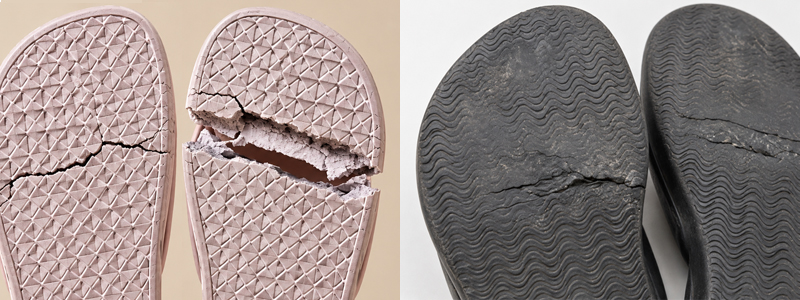
Besides anti-slip performance, durability is another important factor for wholesale buyers.
The expected lifespan of bathroom slippers depends on:
- material quality
- product structure
- usage frequency
- environment
PVC Durability
PVC bathroom slippers provide good durability for their price range.
Their advantages include:
- waterproof structure
- resistance to daily bathroom use
- easy cleaning
- stable mass production quality
Because many PVC slippers use one-piece injection molding, they have no glued connection between upper and sole.
This reduces the risk of:
- sole separation
- water entering between layers
- structural failure
However, compared with rubber, PVC usually has:
- lower abrasion resistance
- less flexibility retention
- faster performance decline in demanding environments
Rubber Durability
Rubber is generally stronger when long-term performance is the priority.
Advantages include:
- excellent wear resistance
- better elasticity retention
- stronger resistance to repeated use
For commercial environments such as:
- hotels
- swimming pools
- public bathrooms
rubber slippers can reduce replacement frequency.
Although the initial purchase cost is higher, the longer service life can provide better overall value.
Durability Comparison Table
| Factor | PVC Bathroom Slippers | Rubber Bathroom Slippers |
|---|---|---|
| Daily household use | Good | Excellent |
| Wear resistance | Moderate | Excellent |
| Long-term wet use | Good | Excellent |
| Maintenance | Very easy | Easy |
| Expected lifespan | Medium | Longer |
Cost Comparison for Wholesale Buyers
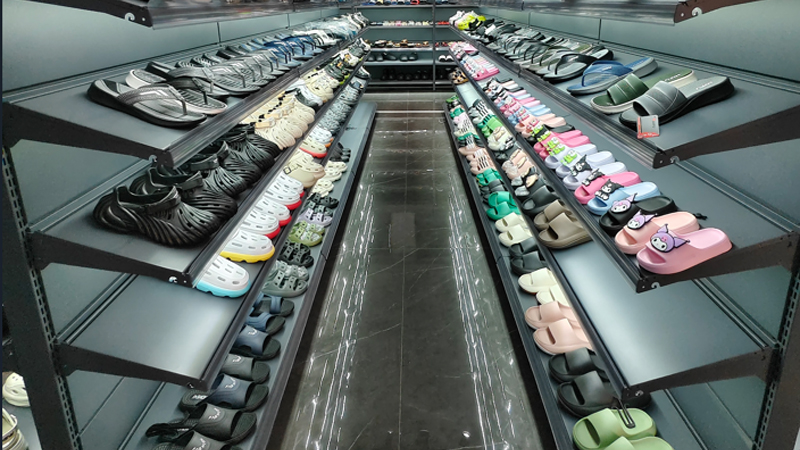
For wholesale buyers, cost is often one of the first considerations.
However, the lowest purchase price does not always create the lowest overall cost.
The best choice depends on:
- selling price
- target customers
- replacement frequency
- market positioning
PVC Cost Advantages
PVC remains popular in large-volume bathroom slipper projects because of production efficiency.
Advantages include:
- lower material cost
- faster injection molding
- lower tooling investment
- easier large-scale production
PVC is especially suitable for:
- hotels
- budget retailers
- promotional products
- high-volume wholesale orders
For buyers who need competitive pricing, PVC is often the most practical solution.
Rubber Cost Considerations
Rubber slippers usually have a higher purchase cost.
The reasons include:
- higher material cost
- more complex manufacturing
- longer production cycles
However, the higher price can be justified when the product offers:
- better safety performance
- longer lifespan
- premium positioning
For brands selling through quality-focused channels, rubber can create stronger product value.
Cost Comparison Table
| Factor | PVC Bathroom Slippers | Rubber Bathroom Slippers |
|---|---|---|
| Material cost | Lower | Higher |
| Production efficiency | Excellent | Moderate |
| Tooling cost | Lower | Higher |
| Large-volume suitability | Excellent | Good |
| Premium pricing potential | Limited | Higher |
| Best value position | Cost-focused markets | Performance-focused markets |
For wholesale buyers, PVC usually wins on initial cost efficiency, while rubber often wins on long-term performance value.
OEM Considerations for Bathroom Slipper Projects
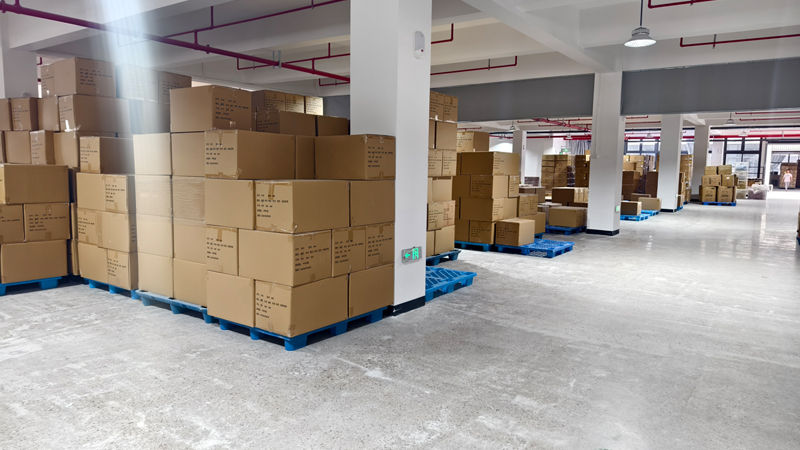
For OEM buyers, choosing PVC or rubber is not only a material decision.
It also affects:
- mold investment
- production efficiency
- customization options
- MOQ requirements
- delivery time
The best material depends on the business model and target market.
Mold and Production Differences
PVC and rubber bathroom slippers have different manufacturing processes.
PVC OEM Projects
PVC is usually easier for OEM development because of:
- mature injection molding technology
- lower mold cost
- faster sampling process
- easier design modification
Many PVC projects can start from existing molds and customize:
- colors
- patterns
- logos
- packaging
This makes PVC suitable for buyers who want:
- lower development risk
- faster market testing
- flexible product updates
Rubber OEM Projects
Rubber slippers usually require more complex production processes.
Compared with PVC, rubber projects may involve:
- higher mold investment
- longer production cycles
- stricter production control
However, the additional investment can create products with:
- better anti-slip performance
- stronger durability
- higher market positioning
For buyers targeting premium markets, the higher development cost may be worthwhile.
MOQ and Customization Differences
PVC usually provides more flexibility for small and medium OEM projects.
Advantages include:
- more existing molds available
- easier color customization
- lower trial order risk
This is suitable for:
- online sellers
- independent brands
- small retail stores
Rubber projects are often more suitable for:
- established brands
- larger distributors
- long-term product programs
because the production investment is usually higher.
Choosing the Right Material for Different Markets
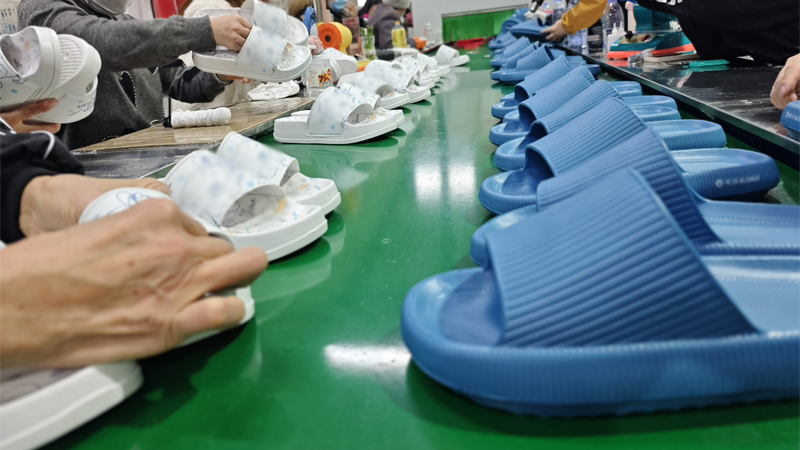
Different customer groups have different priorities.
| Market Application | Recommended Material | Main Reason |
|---|---|---|
| Budget bathroom slippers | PVC | Lower cost and waterproof performance |
| Hotel and hospitality projects | PVC | Efficient replacement and cost control |
| Premium home slippers | Rubber | Better comfort and durability |
| Swimming pool slippers | Rubber | Better wet-floor grip |
| Safety-focused bathroom products | Rubber | Stronger anti-slip performance |
| Large-volume wholesale orders | PVC | Production efficiency |
Which Material Should Wholesale Buyers Choose?
PVC and rubber bathroom slippers both have their own advantages.
The right choice depends on what the product needs to achieve.
Choose PVC When You Need:
- affordable pricing
- waterproof performance
- large-volume production
- easy customization
- fast market testing
PVC is often the better choice for:
- hotels
- budget retail
- mass-market bathroom slippers
Choose Rubber When You Need:
- stronger anti-slip performance
- better durability
- premium product positioning
- long-term customer use
Rubber is usually preferred for:
- swimming pools
- premium bathroom products
- safety-focused markets
Choose Based on Market Position, Not Only Material
For wholesale buyers, the question is not:
“Which material is better?”
The better question is:
“Which material matches my customers’ expectations?”
PVC provides excellent value when cost efficiency is the priority.
Rubber provides stronger performance when safety and durability are the main selling points.
Conclusion: PVC or Rubber Bathroom Slippers?
PVC and rubber bathroom slippers are designed for different market needs.
PVC is usually preferred for:
- waterproof performance
- cost efficiency
- large-volume production
Rubber is usually preferred for:
- stronger grip
- better durability
- premium bathroom applications
For wholesale buyers, there is no universal best material.
The right choice depends on:
- target customers
- usage environment
- selling price
- product positioning
Choosing the correct structure helps create a slipper product that matches both market demand and business goals.
For a complete overview of slipper materials, see our complete guide to slipper materials.
For more details about rubber sole performance, see our guide to Rubber Sole Slippers: Durability & Anti-Slip Benefits.
PVC vs Rubber Bathroom Slippers FAQ
Are rubber bathroom slippers more anti-slip than PVC?
In most wet-floor environments, rubber bathroom slippers generally provide better anti-slip performance.
Rubber has better elasticity and grip, while PVC performance depends more on outsole design and tread pattern.
Are PVC bathroom slippers waterproof?
Yes.
PVC is naturally waterproof and does not easily absorb water, making it widely used for bathroom, hotel, and wet-area slippers.
Which material lasts longer, PVC or rubber?
Rubber usually provides longer service life because of its stronger abrasion resistance and elasticity.
However, PVC can still provide good durability for daily household and hotel use.
Are rubber bathroom slippers worth the higher cost?
For customers who need better grip, durability, and long-term use, rubber slippers can provide higher value despite the higher purchase cost.
For budget-focused projects, PVC may still be the more practical choice.
Which material is better for wholesale bathroom slippers?
There is no single best material.
PVC is usually better for cost-focused and high-volume projects.
Rubber is usually better for premium, durable, and anti-slip focused products.
The best choice depends on your target market and product positioning.