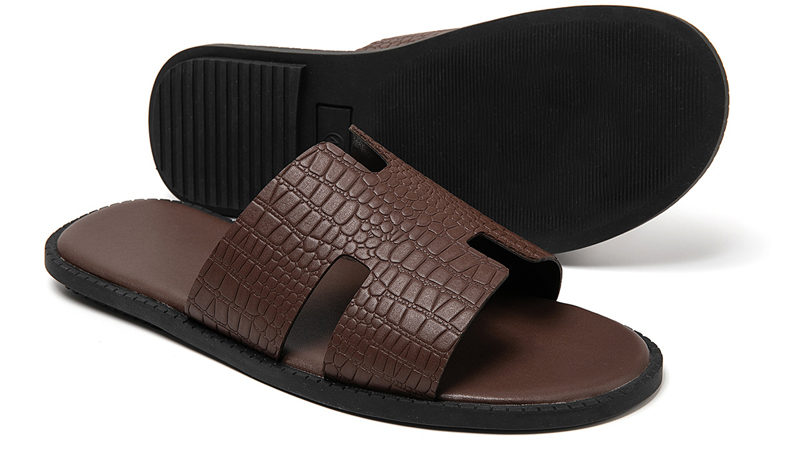
When buyers move beyond basic cost control and start talking about product texture, brand image, and customer experience, PU slippers usually enter the discussion.
Not because PU is the cheapest option. It is not.
But in real OEM and wholesale work, PU is often chosen because it can deliver a more premium look, a more refined surface feel, and a better balance between style, durability, and indoor comfort than many entry-level slipper materials.
Featured Snippet
PU slippers are slippers made with polyurethane-based materials, often including PU leather uppers and PU foam or elastomer sole components. They are valued for their leather-like appearance, soft touch, water resistance, and mid-to-premium positioning, making them a practical choice for indoor slippers, hotel projects, private label programs, and upgraded OEM collections.
For buyers, PU is not just another synthetic material. It is often a positioning choice. Compared with EVA and PVC, PU usually plays a stronger role in projects that need more texture, better visual presentation, and a more premium indoor image.
For a broader material overview, see our complete guide to slipper materials. If you want the lighter comfort route first, read What Is EVA Material in Slippers? Properties, Manufacturing & OEM Guide. If you want the lower-cost waterproof route, read What Is PVC Material in Slippers? Advantages, Disadvantages & OEM Guide.
What Is PU Material in Slippers
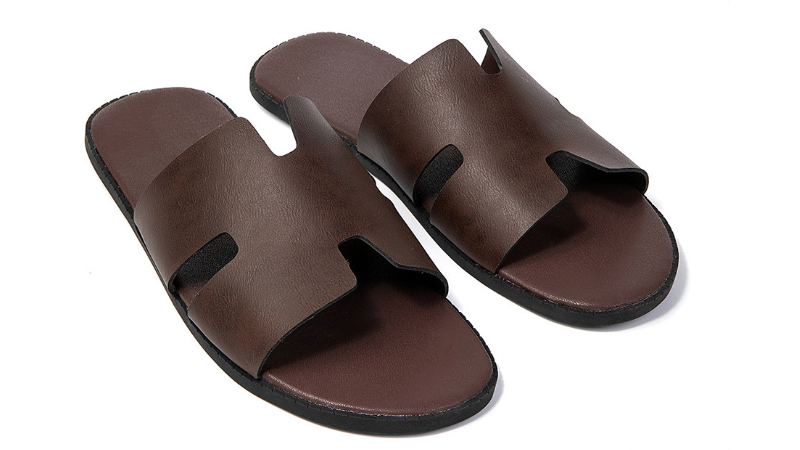
PU stands for Polyurethane, a synthetic polymer used widely in footwear, upholstery, coatings, and other consumer products.
In slippers, PU usually appears in two common forms:
- PU leather uppers, used to create a smooth, leather-like surface
- PU foam or elastomer sole components, used for cushioning, flexibility, and structural support
That combination is one reason PU slippers are so common in:
- premium indoor slippers
- hotel and hospitality programs
- boutique private label lines
- gift and lifestyle slippers
- upgraded homewear collections
- light outdoor casual slippers
From a buyer’s point of view, PU usually sits between budget practicality and premium appearance. It is more refined than PVC in look and feel, and often more structured and upscale-looking than basic EVA slides, especially when the project is aimed at indoor lifestyle use.
Quick Definition Table
| Item | PU in Slippers |
|---|---|
| Full name | Polyurethane |
| Material type | Synthetic polymer |
| Main benefits | Premium look, soft touch, water resistance, design flexibility |
| Common uses | Uppers, insoles, midsoles, outsoles, indoor slippers |
| OEM advantage | Suitable for branded, upgraded, and private label programs |
Key Properties of PU in Slipper Manufacturing
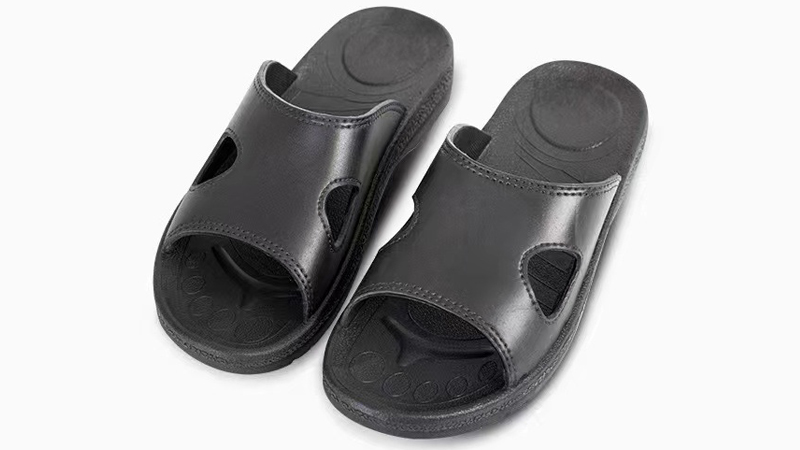
PU stays relevant in slipper manufacturing because it combines style and function in a way many buyers find commercially useful.
1. Leather-Like Surface Appeal
One of PU’s strongest advantages is visual presentation. A good PU upper can create:
- a matte premium finish
- a leather-like texture
- a cleaner and more structured appearance
- stronger perceived value on first look
This matters in projects where shelf impression and brand image carry real weight.
2. Soft and Comfortable Touch
PU slippers usually feel softer and more refined than basic hard plastics. Well-made PU can offer:
- moderate cushioning
- better barefoot touch
- comfortable wrap around the foot
- a quieter, more indoor-friendly feel
3. Good Water and Stain Resistance
PU is generally water-resistant and easy to wipe clean. That makes it useful in:
- indoor home slippers
- hotel guest slippers
- bathroom-adjacent indoor use
- office and lifestyle indoor wear
It is worth noting that PU is usually water-resistant, not fully waterproof in the same way molded PVC bathroom slippers are. Buyers working on more utility-driven waterproof programs often compare PU with PVC material in slippers before making a final sourcing decision.
4. Good Flexibility and Daily Durability
Quality PU can hold up well under repeated daily wear. Buyers often choose it because it can balance:
- structural appearance
- flexibility
- abrasion resistance
- long-term indoor use performance
5. Broad Design Flexibility
PU offers more style flexibility than many basic slipper materials. It can be developed in:
- matte finishes
- glossy finishes
- leather-grain textures
- soft lambskin-like effects
- embossed surfaces
- minimalist solid-color looks
PU Property Overview
| Property | Typical PU Performance | Why It Matters for Slippers |
|---|---|---|
| Surface appearance | High | Supports premium positioning |
| Softness | Medium to high | Better indoor comfort feel |
| Water resistance | Good | Easy-clean indoor use |
| Weight | Light to medium | Comfortable without feeling too flimsy |
| Durability | Good | Useful for repeated indoor wear |
| Breathability | Low to medium | Needs design attention in warmer use |
PU Weight, Cushioning and Material Feel
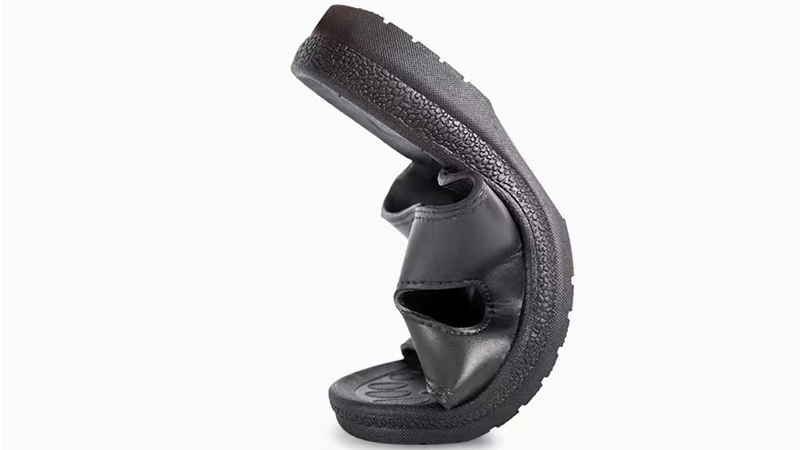
PU is often discussed not only because of how it looks, but because of how it feels compared with other materials.
PU Usually Feels More Refined Than PVC
Compared with PVC, PU generally feels:
- less plastic-like
- softer to the touch
- more premium in appearance
- more suitable for branded indoor products
This is one reason many hotel or boutique buyers choose PU when they want to upgrade from purely budget-driven programs.
PU Usually Feels More Structured Than EVA
Compared with EVA, PU often feels:
- more shaped
- more visually substantial
- less foam-like
- more lifestyle-oriented than purely comfort-oriented
EVA is often lighter and softer underfoot, but PU can look more elevated in retail and hospitality settings.
Cushioning Can Range From Basic to Very Good
PU slippers are not all the same. Cushioning depends on:
- sole construction
- foam density
- whether the sole uses solid PU or PU foam
- whether there is added support or comfort layering
Feel Comparison Table
| Feature | PU | EVA | PVC |
|---|---|---|---|
| Surface feel | Smooth, refined, leather-like | Foam-like, soft | Plastic-like, cooler |
| Weight | Light to medium | Very light | Medium to heavy |
| Cushioning | Medium to good | Good to high | Basic to moderate |
| Visual premium feel | High | Medium | Low to medium |
| Comfort story | Refined indoor comfort | Lightweight cushioned comfort | Budget waterproof practicality |
For buyers, this means PU fits better when appearance and indoor positioning matter more, while EVA fits better when lightweight softness leads the brief, and PVC fits better when price and waterproof performance dominate. If you want the direct comparison between PU and EVA later, this topic will connect naturally to PU vs EVA Slippers: Which Material Offers Better Value.
How PU Slippers Are Manufactured
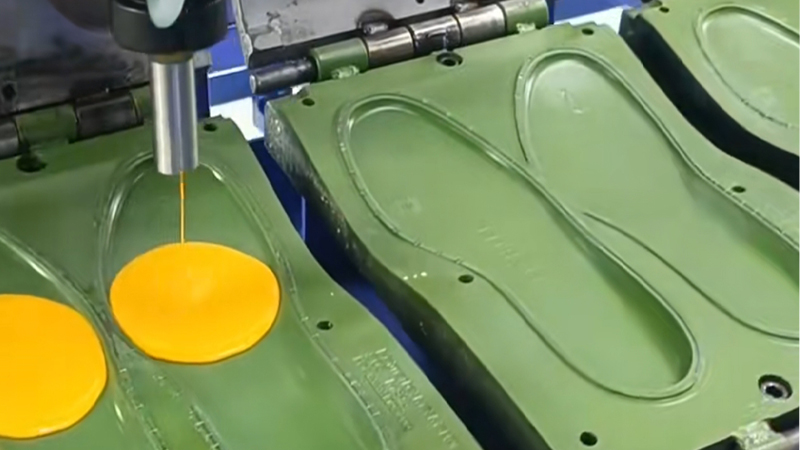
PU slippers can be produced in several ways depending on design and target market, but one of the most common routes is Direct Injection Molding (DIP).
Basic PU Slipper Production Flow
- Prepare the PU upper material
- Cut, stitch, or bond upper components
- Mold or inject the PU sole structure
- Bond upper and sole, or form direct-injected construction
- Add logo, insole, or packaging details
- Inspect finish, symmetry, and comfort performance
Common PU Manufacturing Logic
Direct Injection Molding
This is common when the factory wants:
- one-piece sole formation
- efficient bonding
- stable mass production
- repeatable indoor slipper programs
PU Upper + Bonded Sole Construction
This route is common in more lifestyle-oriented styles where the appearance of the upper matters strongly.
Advantages:
- more refined visual design
- more texture variation
- easier branding at the upper level
- wider fashion flexibility
Basic Process Comparison
| Process | Best For | Main Advantage | Typical Limitation |
|---|---|---|---|
| Direct injection molding | Structured PU sole production | Efficient and stable | Less open-ended for some fashion structures |
| Cut-and-stitch upper + bonded sole | Premium indoor styles | Better upper design flexibility | More assembly steps |
| Micro-foamed PU structures | Lightweight premium indoor programs | Better comfort-weight balance | Higher material and process control needs |
In practical sourcing, these process differences matter because they affect product appearance, comfort, and how well the slipper fits premium indoor positioning.
Why Brands Choose PU Slippers
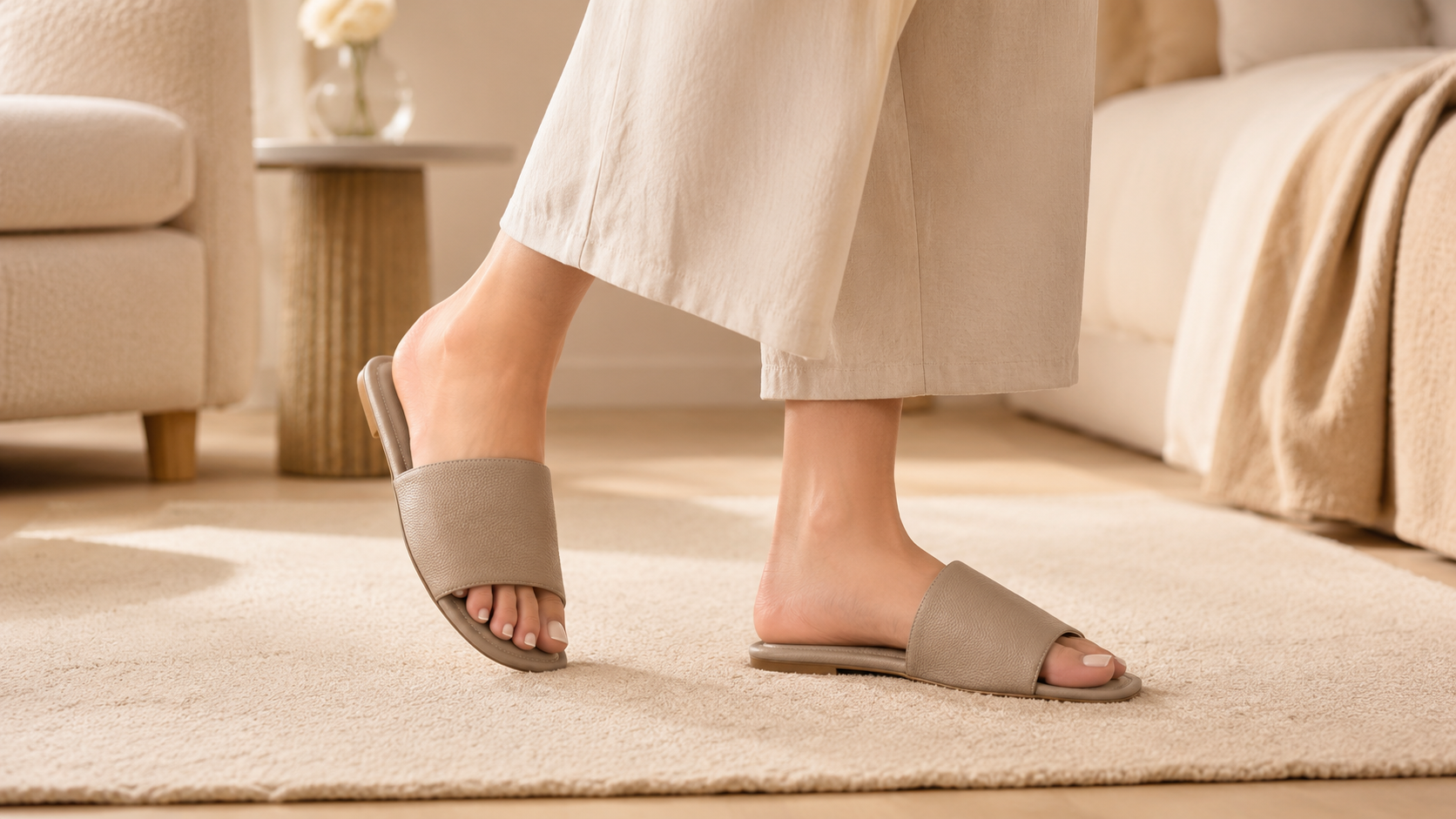
PU becomes attractive when a project is no longer competing only on low price.
1. Better Premium Perception
PU helps buyers create a product that looks more expensive than basic foam or plastic slippers. This matters in:
- boutique retail
- premium homewear
- hotel guest upgrades
- gift and lifestyle channels
2. Stronger Indoor Lifestyle Fit
PU works especially well in categories such as:
- indoor home slippers
- office-home slippers
- upgraded guest slippers
- quiet indoor lifestyle lines
- minimalist modern collections
For softer and more seasonal indoor comfort projects, some buyers also evaluate Fabric & Plush Slippers: Comfort & Winter Applications instead.
3. Good Branding Potential
PU supports branding through:
- embossed logos
- printed logos
- matte finish identity
- color consistency
- packaging upgrade stories
4. Mid-to-Premium Market Positioning
PU is not usually the lowest-cost answer, but it supports stronger perceived value. That is why it is common in:
- premium indoor market lines
- hotel and hospitality programs
- mid-range private label collections
- design-conscious OEM projects
Common PU Project Fits
| Project Type | Why PU Works |
|---|---|
| Premium indoor slippers | Better texture and presentation |
| Hotel guest slippers | Cleaner premium image |
| Boutique private label | More branding flexibility |
| Lifestyle gift slippers | Strong perceived value |
| Light outdoor casual slippers | Balanced style and everyday use |
Latest PU Slipper Trends for 2025–2026
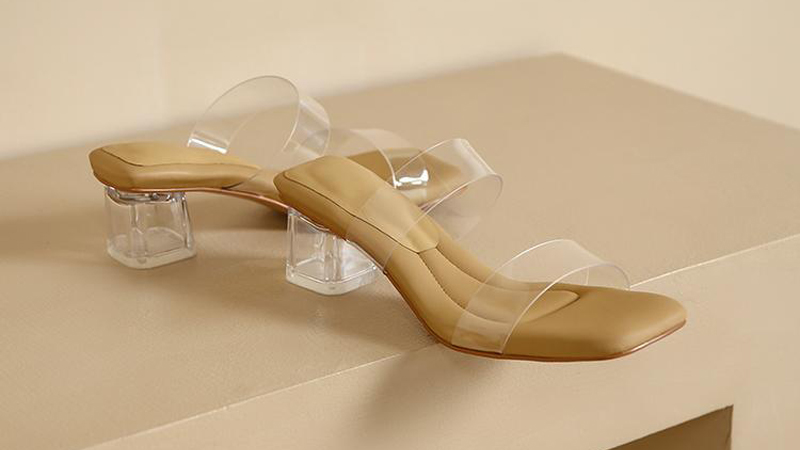
PU slippers are changing. The market is moving away from basic synthetic indoor slippers and toward a more upgraded direction built around health, sustainability, and lifestyle design.
1. Antibacterial PU Is Becoming a Standard Upgrade
Antibacterial PU is increasingly used in:
- home slippers
- hotel slippers
- bathroom slippers
- hospital or care-related indoor use
- slippers for users sensitive to odor and sweat
Common approaches include silver ion, zinc ion, and plant-based antibacterial systems. In upgraded projects, this is moving from an optional feature to a stronger selling point.
2. Recycled and Eco-Focused PU Is Rising
More buyers now ask about:
- GRS-certified recycled PU
- bio-based PU
- lower-carbon PU programs
- biodegradable or more sustainable alternatives
For export and higher-end private label development, sustainability is moving closer to a requirement rather than just a marketing story.
3. PU Slippers Are Becoming More Fashion-Oriented
Newer PU programs increasingly emphasize:
- matte and soft-touch surfaces
- lambskin-like texture
- woven PU details
- minimalist color palettes
- metal logo accents
- mule-inspired shapes
- thicker outside-wear silhouettes
4. Comfort and Function Are Being Combined
The strongest newer PU direction is no longer just looks premium. It is now often:
- antibacterial
- supportive
- quiet underfoot
- lightweight
- suitable for more than one indoor scene
For OEM buyers, this means PU is increasingly part of upgraded programs rather than just basic synthetic indoor shoes.
Limitations of PU Material
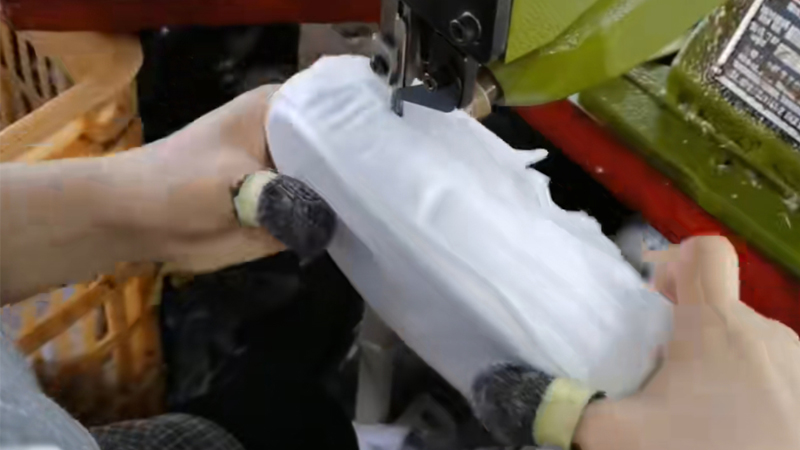
PU has many strengths, but buyers should not treat it as a perfect solution.
1. Breathability Can Be Limited
PU usually has a more closed surface than fabric-based materials. In warm conditions or long wear, users may complain about:
- trapped heat
- sweat buildup
- less ventilation than natural materials
For buyers who prioritize breathability and winter-soft indoor comfort over wipe-clean surfaces, fabric and plush slippers may be more relevant.
2. Lower-Grade PU Can Peel or Crack
This is one of the biggest quality divides in PU sourcing. Poor-grade PU may later show:
- peeling
- cracking
- delamination
- surface aging
- loss of gloss or texture
3. Heat Can Affect Shape Stability
PU is usually not a good choice for extreme heat exposure. Problems may include:
- softening
- slight deformation
- loss of shape after prolonged heat or sun exposure
4. Wet-Floor Grip Depends on Sole Design
Like many slipper materials, PU is not automatically excellent on wet tile just because it is used indoors. Buyers still need to evaluate:
- outsole texture
- tread pattern
- sole hardness
- actual use scene
For projects where grip matters more than premium appearance, buyers often move toward Rubber Sole Slippers: Durability & Anti-Slip Benefits.
5. Low-Cost OEM Can Create Batch Inconsistency
In lower-budget OEM development, buyers may see complaints about:
- color inconsistency
- weak logo execution
- rough construction
- delayed packaging or delivery
- uneven batch feel
PU Complaint Snapshot
| Common Complaint | Typical Cause | Possible Direction |
|---|---|---|
| Peeling or cracking | Low-grade PU or weak hydrolysis resistance | Upgrade material grade |
| Slight odor | Lower-cost additives or fresh production | Better airing and material control |
| Heat deformation | Poor heat stability | Avoid heat-heavy positioning |
| Weak wet-floor grip | Outsole design issue | Improve sole pattern |
| Batch inconsistency | Weak OEM control | Lock material and QC standards |
| Logo blur or wear | Poor decoration process | Confirm logo method at sampling stage |
These limitations do not mean PU should be avoided. They mean PU works best when the buyer is clear about target positioning and quality standard.
When Should OEM Buyers Choose PU
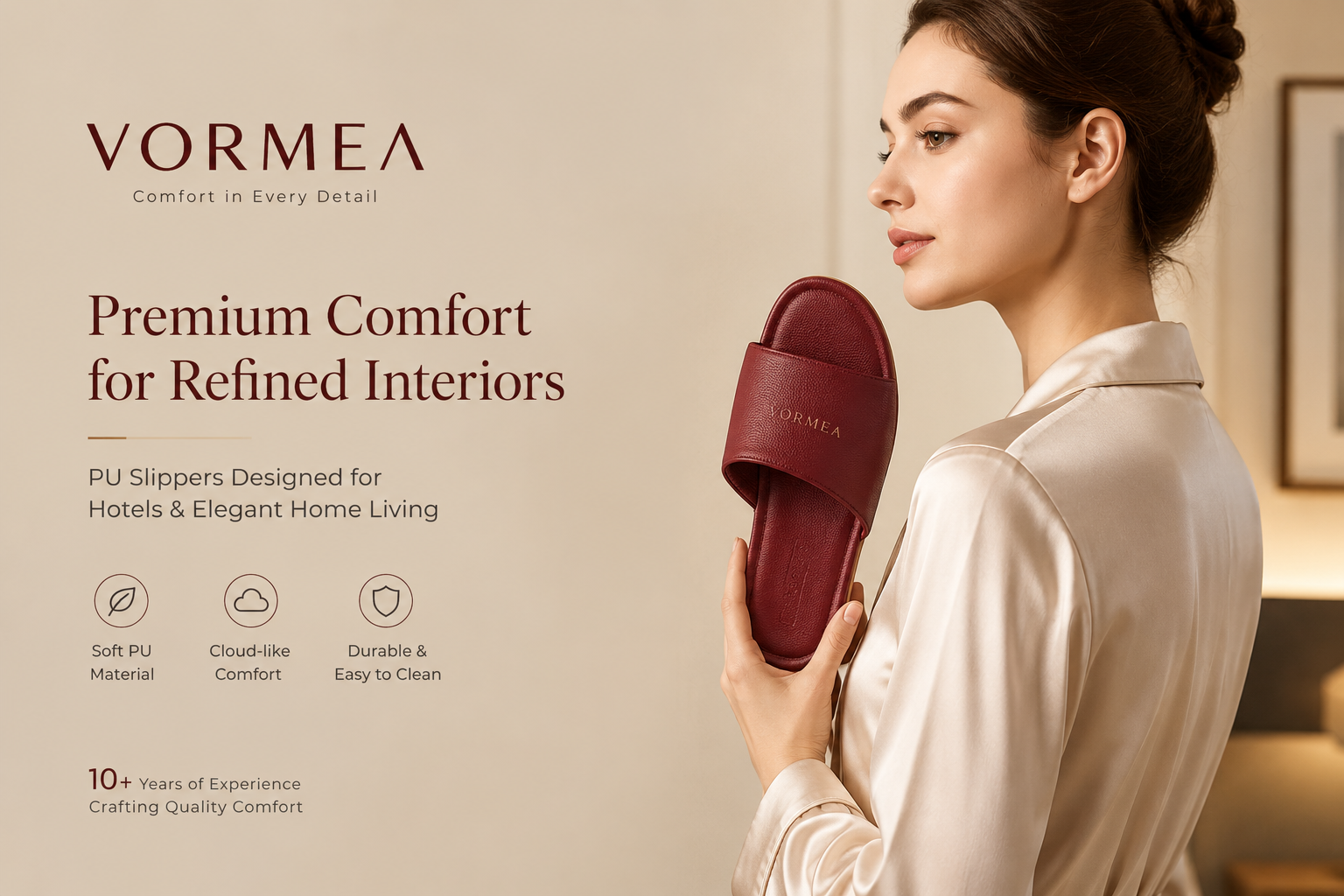
The better question is not “Is PU premium?”
The better question is:
When does PU make the most business sense?
PU Is a Good Choice When
- appearance matters as much as function
- the project targets indoor lifestyle use
- the buyer wants stronger perceived value
- hotel or hospitality presentation matters
- private label branding needs a more refined material story
- the market accepts a mid-range or premium price level
PU Is Less Ideal When
- the project is extremely price-sensitive
- the product needs true low-cost waterproof positioning
- the buyer wants ultra-light foam comfort first
- the use case is rough wet outdoor wear
- the target brief tolerates no risk of peeling or material aging in low-grade execution
OEM Decision Guide
| Buyer Scenario | PU Suitability | Notes |
|---|---|---|
| Premium indoor home line | High | Strong fit for texture and positioning |
| Hotel / resort guest slippers | High | Better premium image than budget materials |
| Budget bathroom slipper line | Low to medium | PVC may fit cost target better |
| Lightweight travel slides | Medium | EVA may be lighter |
| Boutique private label collection | High | Strong branding value |
| Low-price marketplace listing | Medium to low | Depends on target price |
| Wellness / care indoor project | Medium to high | Better with antibacterial and quiet-sole design |
If the project is more comfort-and-weight driven, compare with What Is EVA Material in Slippers? Properties, Manufacturing & OEM Guide. If the project is more budget-and-waterproof driven, compare with What Is PVC Material in Slippers? Advantages, Disadvantages & OEM Guide.
Real-World PU Slipper Applications
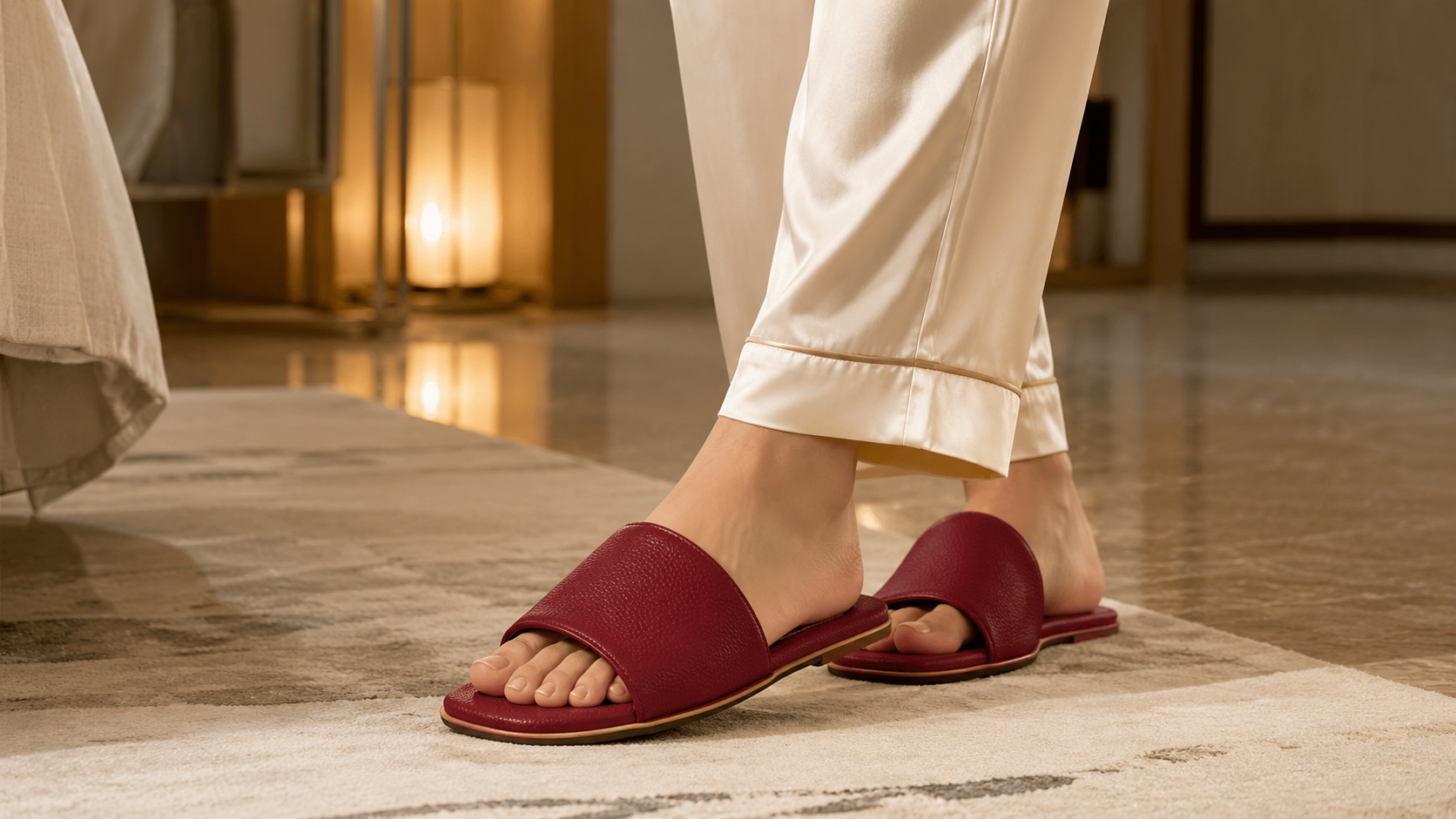
PU slippers are widely used because they work well across several real OEM scenes.
Hotel and Hospitality Projects
PU is often used in:
- hotel guest room slippers
- resort indoor slippers
- spa slippers
- serviced apartment welcome sets
The appeal is simple: the product looks cleaner, more refined, and more aligned with a branded guest experience.
Boutique Homewear and Lifestyle Retail
For homewear brands and design-oriented sellers, PU helps create:
- a quieter indoor luxury story
- a more premium-looking gift product
- a better shelf impression than basic plastic slippers
Family Indoor Use
Well-made PU slippers can also work well for families who want:
- easy-clean indoor slippers
- soft but not overly flimsy structure
- year-round home use
- a more polished indoor look
Cross-Border and Eco-Upgraded Listings
For export sellers targeting higher-value overseas consumers, newer recycled or eco-positioned PU slippers can support:
- sustainability messaging
- upgraded lifestyle positioning
- better perceived product differentiation
Care and Wellness Use
With quieter soles, wider fit options, and more supportive constructions, PU can also fit:
- recovery-oriented indoor use
- quiet-floor walking
- elderly indoor anti-slip programs
- wellness-focused homewear lines
PU vs Other Slipper Materials
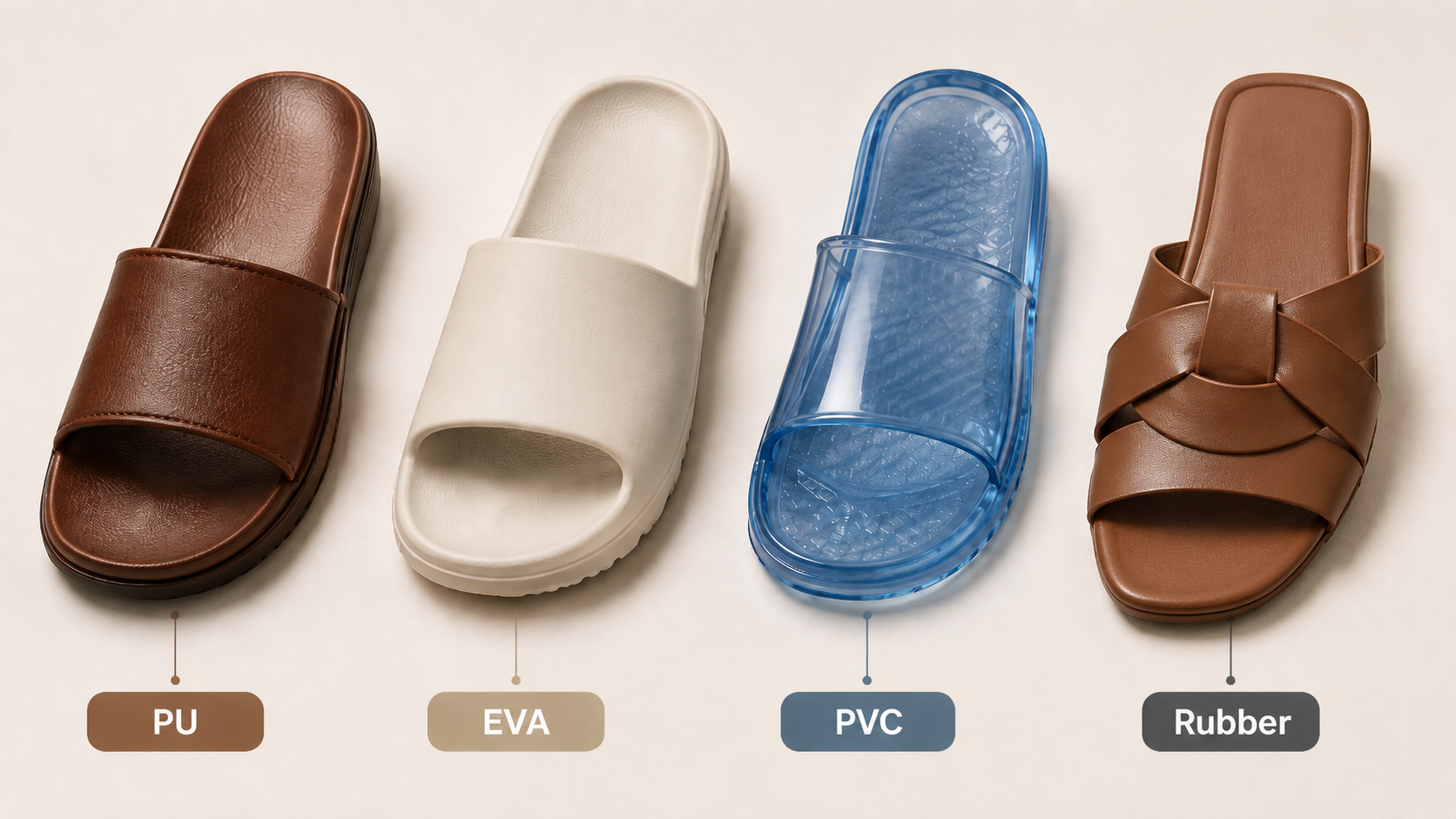
PU is usually evaluated alongside EVA, PVC, and rubber.
PU vs EVA
PU usually offers:
- stronger premium appearance
- more refined upper texture
- better structured indoor positioning
EVA usually offers:
- lighter weight
- softer foam comfort
- stronger casual comfort story
For the material-side explanation, continue with What Is EVA Material in Slippers? Properties, Manufacturing & OEM Guide. For the direct sourcing comparison, this topic will later connect naturally to PU vs EVA Slippers: Which Material Offers Better Value.
PU vs PVC
PU usually wins on:
- appearance
- softness
- perceived quality
- hospitality and lifestyle fit
PVC usually wins on:
- lower cost
- easier budget waterproof positioning
- mass-market entry pricing
For the lower-cost waterproof route, continue with What Is PVC Material in Slippers? Advantages, Disadvantages & OEM Guide.
PU vs Rubber
PU is often better for:
- indoor visual refinement
- lighter feel
- premium guest use
Rubber is often better for:
- wet-surface grip
- abrasion resistance
- outdoor or rough-use performance
If the project is more performance-driven than appearance-driven, continue with Rubber Sole Slippers: Durability & Anti-Slip Benefits.
Quick Comparison Table
| Material | Main Strength | Main Limitation |
|---|---|---|
| PU | Premium look and indoor positioning | Quality varies strongly by grade |
| EVA | Lightweight cushioned comfort | Less premium in some visual briefs |
| PVC | Low cost and waterproof use | Harder, heavier, more plastic-like |
| Rubber | Grip and durability | Heavier and less refined for indoor luxury |
For the full overview, return to our complete guide to slipper materials.
Conclusion
PU slippers matter because they solve a different kind of product problem.
They are not simply about low cost. They are about upgraded presentation, better indoor texture, stronger perceived value, and more flexible premium storytelling in OEM development.
That does not mean every project should use PU. If the brief is ultra-budget and fully waterproof, PVC may fit better. If the brief is light, soft, and foam-comfort driven, EVA may be the more natural answer. But when the goal is a cleaner premium image for homewear, hospitality, lifestyle retail, or elevated private label programs, PU is often one of the most practical material directions to evaluate.
For broader material planning, return to our complete guide to slipper materials. For adjacent material comparisons, continue with What Is EVA Material in Slippers? Properties, Manufacturing & OEM Guide, What Is PVC Material in Slippers? Advantages, Disadvantages & OEM Guide, Rubber Sole Slippers: Durability & Anti-Slip Benefits, and Fabric & Plush Slippers: Comfort & Winter Applications.
PU Slippers FAQ
What are PU slippers
PU slippers are slippers made with polyurethane-based materials, often including PU leather uppers and PU sole components. They are commonly used in indoor, hotel, and private label slipper programs because they combine refined appearance with practical everyday performance.
Are PU slippers good
Yes, PU slippers can be a strong choice for indoor lifestyle use, hospitality projects, and premium homewear collections. They are especially useful when buyers want a more polished look than basic budget slipper materials.
Are PU slippers waterproof
PU slippers are usually water-resistant rather than fully waterproof. They handle indoor moisture and easy-clean use well, but they are not always the best option for long soaking or purely low-cost shower slipper positioning.
Are PU slippers better than EVA slippers
PU usually offers a more premium surface look and stronger indoor lifestyle positioning, while EVA is usually lighter, softer, and more comfort-driven. The better choice depends on whether your project is led more by appearance or by lightweight cushioning.
What are the common problems with PU slippers
Common problems include limited breathability, peeling or cracking in low-grade material, slight odor in lower-end production, and possible shape changes under strong heat. Most of these risks depend heavily on material quality and supplier control.
When should OEM buyers choose PU slippers
PU is usually worth considering when the project targets premium indoor use, hotel or hospitality presentation, boutique private label positioning, or lifestyle retail collections that need better texture and perceived value than basic budget slippers.